IFMA-Approved Muay Thai Equipment
- Date
- 23/09/2026
- Labels
- IFMA, IFMA Approved, IFMA-godkjent
Sources checked on 23 September 2026. Rule version and scope are given below.
International IFMA or Norwegian class?
The equipment list depends on the competition class. IFMA's international requirements and the Norwegian NKF Muay Thai rules are not identical. Confirm the rule set before you choose headguard, chest guard and protectors.
IFMA equipment overview
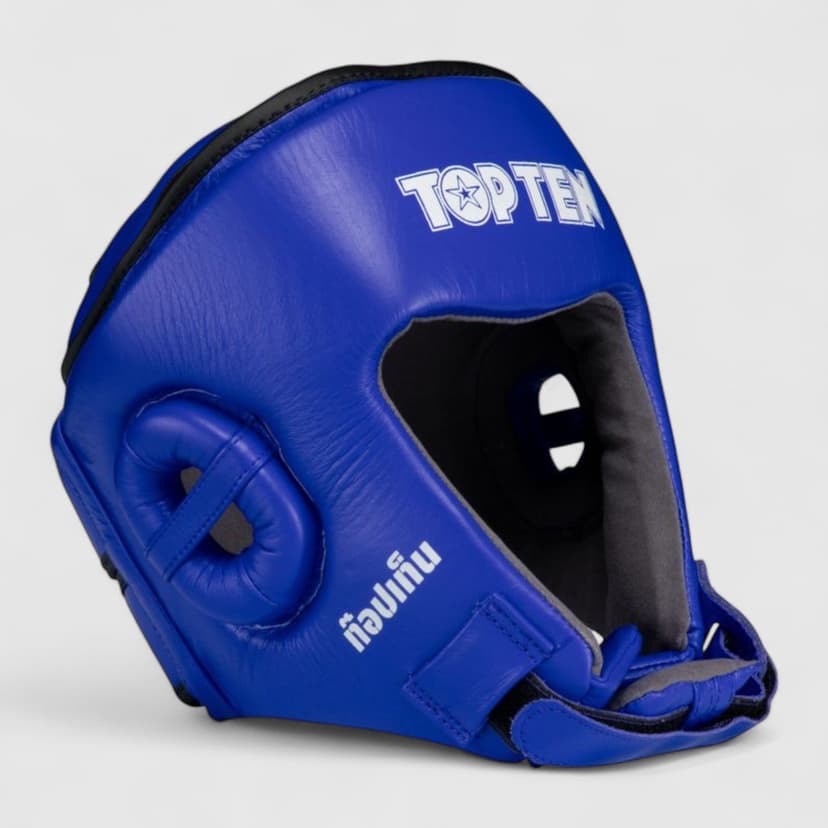
IFMA's coach guide lists approved red/blue 10 oz gloves, an approved headguard, shin and elbow protection, a fitted mouthguard and a groin guard. A body protector is mandatory for U23 and youth, but is not used in the senior class. Read IFMA's coach guide and the link to the full rules.
Differences in the Norwegian classes
The NKF rules, version 2.2 dated 3 October 2025, have their own equipment table in section 4.3: headguard in diploma, D class and C class, but not B class senior; chest guard in diploma, D and C junior, but not C senior or B senior. Elbow pads are required in the C and B classes. Gloves, shin guards, groin guard and mouthguard are part of every class listed. The IFMA class is described separately with reference to the international rules. See the NKF class overview, pages 11–12.
TOP TEN and IFMA
TOP TEN is also relevant for Muay Thai. In 2022 IFMA announced that TOP TEN had become an equipment licensee. Read IFMA's announcement. Budoland shows, among others, IFMA-marked «Dae» shin guards, «Sok» elbow pads and the «Jot Muay» body protector. See the manufacturer's models.
Use the class overview in this guide when you put the equipment together. An IFMA-marked chest guard, for example, does not by itself tell you whether a chest guard is worn in the Norwegian class the athlete will compete in.
For clubs: keep equipment for international IFMA competition separate from equipment for the Norwegian diploma, D, C and B classes. Note which class each set has been put together for.
Get to know TOP TEN · See our IFMA range
How to recognise the approval mark
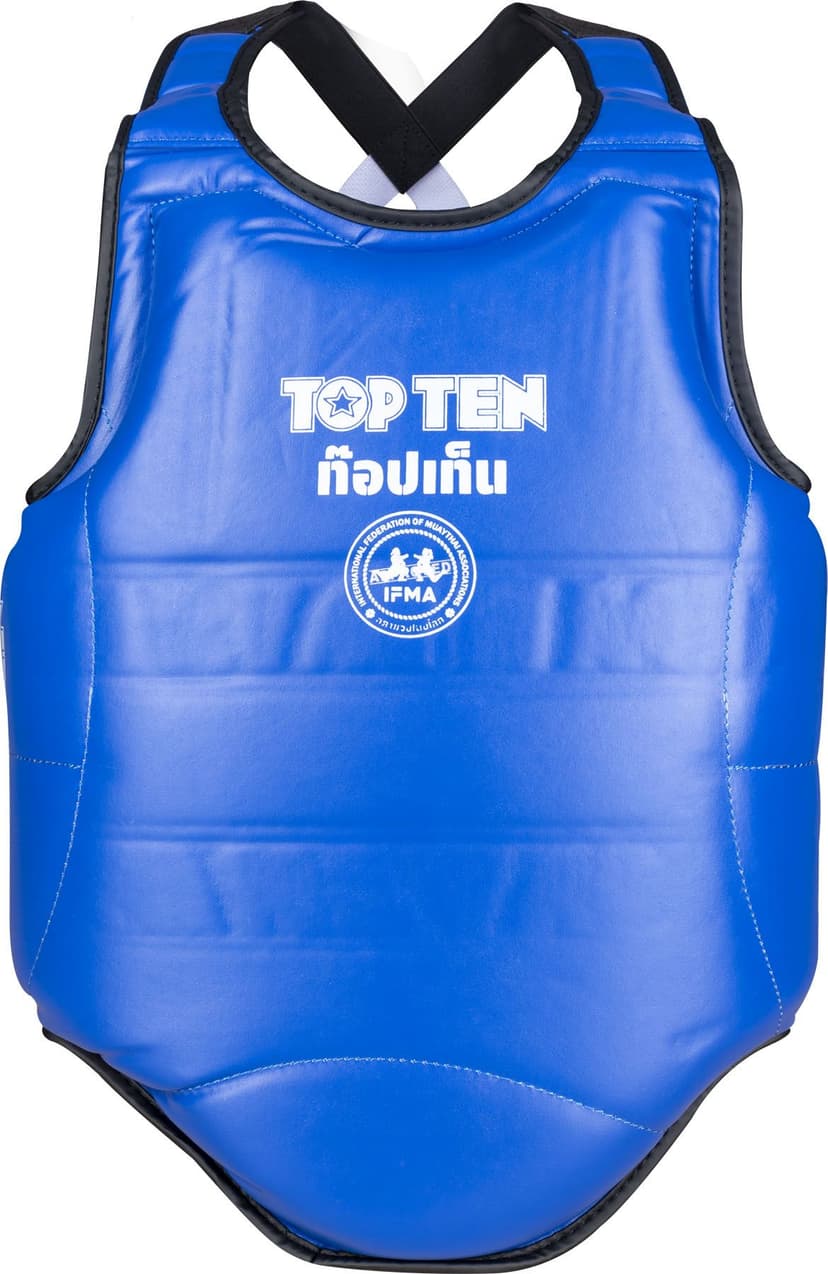
Compare the marking on your model with the documentation and the current competition requirements. The image shows a documented example; placement and design can vary between products. Feel free to take a photo of the label and item number when you ask your club or us.
Checklist before buying and competing
- Identify the event, rule set, discipline and class together with your coach.
- Check the exact model and item number, colour, size and any required label. A brand name alone is not sufficient documentation.
- Compare the product information with the federation's approval and the event invitation. Ask for documentation when anything is unclear.
- Find out what the organiser provides and what you need to bring yourself. Try the equipment on before the event.
For clubs and buyers
Make an equipment list per discipline and class before a group order. Record model, variant, documentation link and the date it was checked. Keep competition equipment separate from other training equipment, and check fit and wear before lending it out. If the requirements are unclear, send the organiser the model number and a photo of the label before you order.
Training, competition and product marking
For training, the choice of equipment should be agreed with the coach based on the drills and level of contact. A competition mark does not replace that assessment. The guide explains the rules; the product's own documentation must show what applies to the chosen variant. A clickable badge in the shop is a route to information, not a new certificate.
Sources and rule version
- Budoland: TOP TEN and Hayashi, product and approval information
- IFMA: TOP TEN as equipment licensee, 2022
- IFMA: A Coach and Manager’s Guide, Equipment
- IFMA Rules and Regulations, v2.02
- NKF Muay Thai: version 2.2, 3 October 2025, section 4.3
- NKF: overview of new rule editions
Contact us about products and documentation · See all approvals