
You often notice it first on competition day. The helmet sits a little loose, the gloves feel wrong, or the foot protectors are a type that does not match the rules at the club or the event. When it comes to ITF-approved taekwondo sparring gear, it is not enough for the gear to look right. It actually has to be right for the rules, fit your body and withstand fighting the way the sport is practised.
For many athletes, this is the point where small mistakes become expensive. You do not want to be standing in the hall and discover that you are missing one approved piece, or that the size you trained with at home does not work when the pace picks up. That is why it pays to choose sparring gear with the same seriousness as you choose your dobok or fight strategy.
What is meant by ITF-approved taekwondo sparring gear?
In ITF taekwondo, sparring gear is not just a recommendation. It is part of the framework for safe and fair competition. What counts as approved is governed by the rules, federation practice and often requirements from the organizer or club. This means you have to look at more than just the product name.
In practice, ITF-approved taekwondo sparring gear means that the gear is made for ITF sparring, meets the requirements for type of protection and in many cases comes from brands or models that are used and accepted in organised competitions. Here it is also important to distinguish between training and competition. Something that works well at regular club training is not necessarily what you are allowed to use in competition.
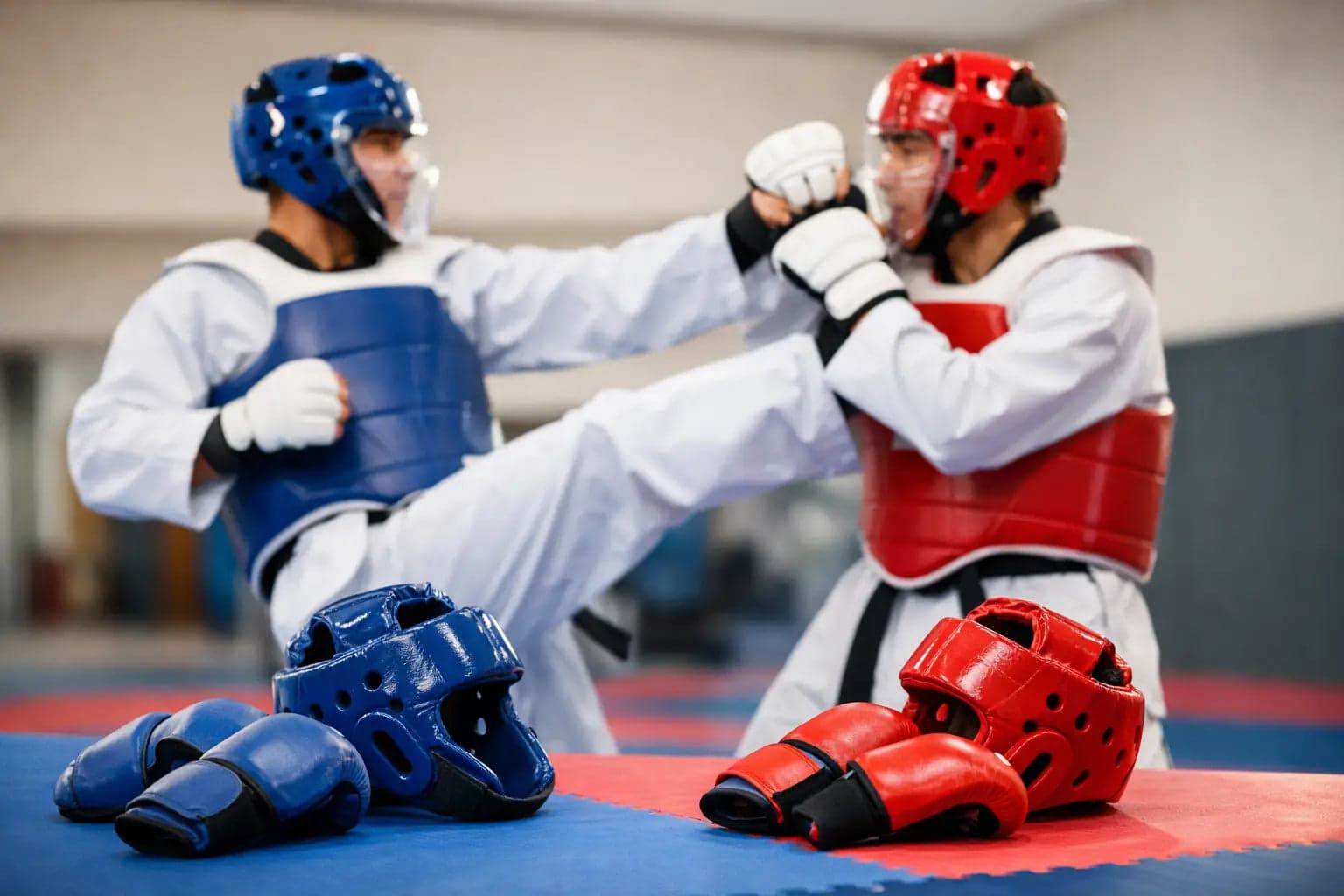
The most common setup includes a helmet, gloves, foot protectors, a mouthguard, a groin guard and often shin and forearm protection, depending on level, club and competition format. For children and younger athletes it is often even more important to check local requirements, because some clubs apply a stricter safety policy than the minimum requirement.
The gear you actually need for ITF sparring
It is easy to think that all protective gear is more or less the same. That is not true. In ITF sparring, movement, striking surface and type of contact are different from, for example, kickboxing or WT taekwondo, and so the gear must be assessed accordingly.
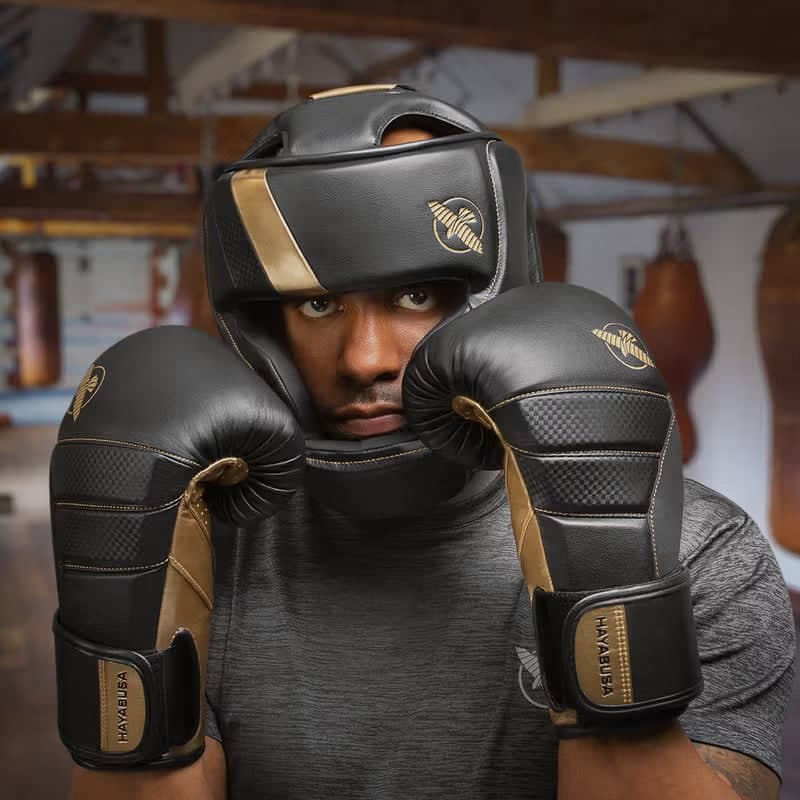
Helmet
The helmet should protect without stealing your field of vision. This is where many people go wrong. A helmet that is too big slides back or rotates on impact. A helmet that is too tight becomes uncomfortable and makes it hard to stay focused through several rounds. A good fit means the helmet sits stably without you having to tighten it unnaturally hard.
In ITF sparring it is also important that the helmet has the right shape and coverage for the sport. Too much volume can make it bulky, while too little padding gives less safety. The right choice is the model that fits snugly, stays in place and is recognised in the setting where you will actually compete.
Gloves
Gloves for ITF sparring are not the same as boxing gloves. They are made to give the necessary cushioning while allowing speed, precision and correct use within the rules. Many beginners buy gloves that are too heavy or too big because they think more padding is always better. The problem is that large gloves can affect timing and technique negatively.
What you want is gloves that fit closely around the hand, give good wrist control and do not slip when you open and close your hand during a bout. For children this is extra important, since a poor fit quickly creates uncertainty in both blocking and attacking.
Foot protectors
Foot protectors are among the most important parts of ITF sparring, and also among the parts most people choose wrongly. They must give coverage over the foot without interfering with the kicking movement. If they sit loosely, they move on impact. If they sit too tightly, they can restrict mobility and cause discomfort over the instep.
In practice you should be careful with both size and closure system. A model that works well in light training can start to slip when the intensity increases. For athletes who compete often, durability is as important as approval.
Mouthguard and groin guard
This is gear few people talk much about, but nobody should be careless with. A mouthguard should fit well enough that you can breathe and communicate, without it feeling loose. Poorly fitted models often end up left in the bag because they feel uncomfortable. Then they have no value.
A groin guard is a clear example of gear that has to work in motion. It should protect without hindering explosiveness. Especially in sparring with a lot of forward movement and quick changes of direction, you quickly notice the difference between a model that is just there and a model that is actually made for active use.
How to choose the right size and fit
Approval is only half the job. Fit decides whether the gear works when the bout starts. Too many purchases are made based on age or general clothing size, but that is rarely precise enough when it comes to sparring gear.
A helmet must be measured against head circumference and tried with realistic tightening. Gloves and foot protectors must be assessed based on both hand and foot shape, not just length. Some athletes have a narrow hand with long fingers, others have a wide foot with a high instep. Then two products in the same size can feel completely different.
It is also wise to think one level ahead. If you train once a week and go to a local competition now and then, you can prioritise comfort and all-round use. If you train hard several times a week or compete regularly, you should put more emphasis on durability, stability and models that are well proven in competition.
Common mistakes when buying sparring gear
The most common mistake is buying gear from the wrong martial arts category. Many products look the same on screen, but are made for completely different rules and loads. Another classic is choosing too big so the child can grow into it. That can work for a hoodie, but rarely for a helmet or foot protectors.
Some also focus too much on design and too little on use. That is understandable. Gear should look good. But in sparring, function is always most important. A simple, correct and well-fitting product is better than a great-looking model that does not suit the level or the requirements.
A third mistake is not checking with the club or organizer before buying. The ITF community is well organised, but there are variations in practice. That is why it is smart to check what is actually required where you train and compete, especially before bigger events.
ITF-approved taekwondo sparring gear for children and adults
The needs are not quite the same for a beginner in a children's class and an experienced senior athlete. Children first and foremost need gear that fits securely, is easy to put on and take off, and withstands frequent use. Parents are often keen to buy one package that covers everything, but the most important thing is that the key pieces fit properly from the start.
For teens and adults, the differences in preference become clearer. Some want maximum mobility, others want more padding and a sense of security. Neither is wrong, but it must suit the amount of training, technical level and competition plan. An athlete who fights fast, offensive bouts will often prioritise differently from someone who trains more recreationally.
This is where expert guidance is worth a lot. A specialist shop like Combat Store can often help you distinguish between what is enough for regular training and what is smart to invest in if you compete regularly.
When should you replace your gear?
Even approved gear does not last forever. Foam that is compressed, hook-and-loop closures that come loose, seams that start to give, or a helmet that has lost its shape are clear signs. Protective gear breaks down gradually, and the problem is that many people get used to the wear along the way.
If the gloves slide more than before, the foot protectors twist, or the helmet no longer sits as it did, it is often a sign that its lifespan is nearing the end. For active athletes this is not just a question of comfort, but of safety and readiness to compete.
The same applies to hygiene and care. Gear that is poorly dried, stored damp or used hard without cleaning breaks down faster. If you look after your gear between sessions, you get both better durability and a more stable experience in training.
What is the right choice?
The right choice is rarely the cheapest, but not necessarily the most expensive either. You should look for gear that is relevant for ITF sparring, accepted in the setting where you train, and suited to your level. A beginner needs a safe and correct basic package. A competitive athlete often needs a more precise fit and greater durability.
If you are unsure, it is better to check one time too many than to buy wrong once. The right sparring gear should make you more confident, not less. When everything fits as it should, you think less about the gear and more about the fight. That is usually when you get the most out of both your training and your investment.