
The first training session often goes fine. It is session number three or four that reveals whether the uniform actually fits. Sleeves that slide down over the hands, trousers that stop above the calf or a jacket that pulls across the shoulders make training unnecessarily hard. So when you choose a children's taekwondo uniform size, it is not just about the age or height on the label, but about how the uniform fits in motion.
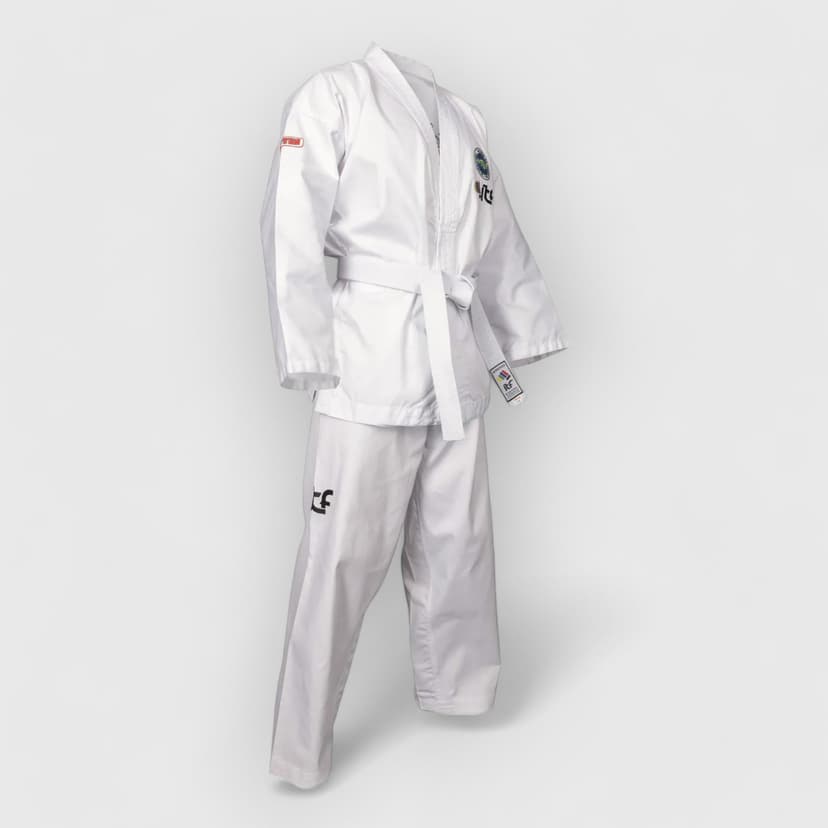
How to think about children's taekwondo uniform sizes
Many parents look at the child's age first. That is understandable, but in martial arts it rarely works well enough. Taekwondo involves kicks, squats, rotations and a lot of use of the hips and shoulders. A uniform that looks fine when the child stands still can be wrong as soon as training starts.
The most important rule is simple: measure the child before you order. Height is usually the best starting point, but build also matters. Some children are tall and slim, others are broader across the chest, seat or thighs. That is why size should always be assessed against both height and fit, not just the number on the label.
In taekwondo it is also common for sizes to follow the child's height in centimetres, for example 120, 130, 140 or 150. That makes the choice easier than with ordinary clothes, but not entirely risk-free. Different brands can have slightly different cuts, and some uniforms are made roomier for beginners, while others fit tighter and sportier.
What to measure before you buy
Start with the child's height. Have the child stand straight without shoes, and measure from the floor to the top of the head. This is the main measurement you use when assessing taekwondo uniform size.
Then look at the arms and legs in relation to the upper body. Children with long arms and legs often need a little more length, even if their overall height suggests a different size. If the child is between two sizes, this is often what decides it.
Weight can also give useful information. A child with a sturdier build may need more room in the trousers and jacket even if their height points to a smaller size. At the same time, the uniform should not be so big that the fabric hangs and interferes with technique. In taekwondo, too much fabric is quickly noticed, especially in turns, kicks and basic technique.
How a children's taekwondo uniform should fit
A good uniform should give freedom of movement without being baggy. The jacket should cover the body well and sit comfortably over the shoulders when the child raises their arms. It should not pull tight across the back or open abnormally wide at the front during movement.
The sleeves should normally stop somewhere around the wrist or slightly above. They should not be so long that the fabric falls over the hands. The same goes for the trousers. They should reach down towards the ankle area, but not so far that the child steps on them or loses clean footwork.
The fit should also be assessed with the belt on. A uniform can seem fine before it is tied, but sit completely differently when the jacket is held in place and the child starts kicking. If possible, think through how the uniform will work in actual training – not just how it looks when the child tries it on in the living room.
Should you go one size up?
The short answer is: sometimes. The slightly more precise answer is that it depends on how far the child is from the next size, how often they train, and how long the uniform is meant to be used.
For children who are growing fast, it can be tempting to go straight up one size. That can be smart if the child is right at the top of their current size range. If, on the other hand, the child is in the middle of the size, a uniform that is too big often just becomes impractical. Then you get more of a worn-out feel than actual use, and the child trains in a garment that never fits properly.
For beginners this is extra important. A uniform that is too big can make the first few months less comfortable than they need to be. Children quickly notice if something rubs, slips or gets in the way, and the gear should support the joy of training, not steal their attention.
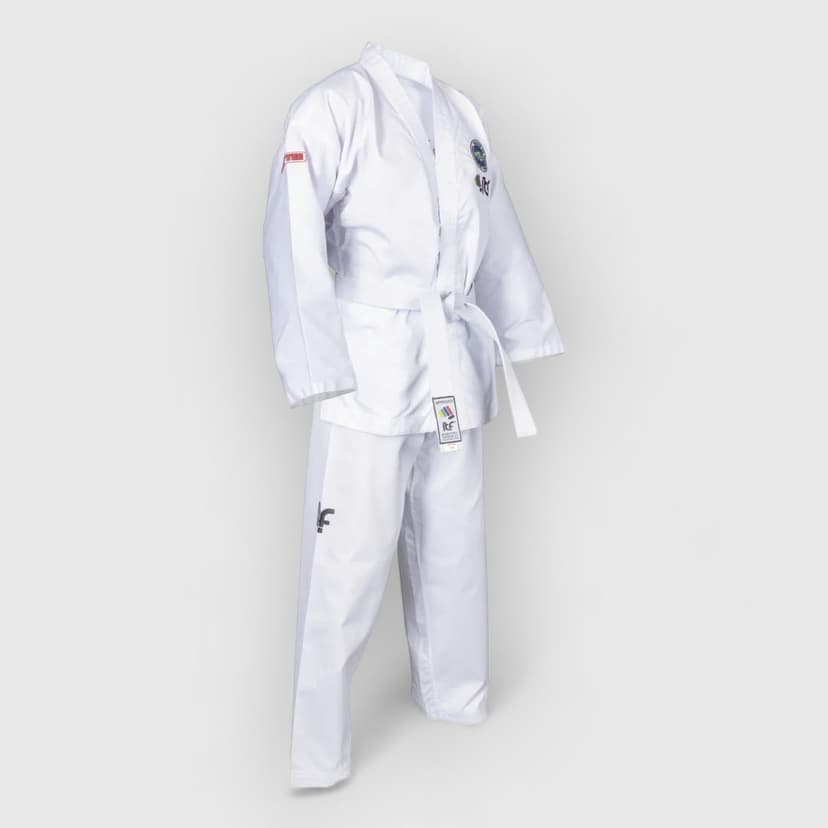
Club, style and rules can affect the choice
Not all taekwondo uniforms are the same, and not all clubs follow the same practice. Some train traditional taekwondo with clear expectations for cut, colour or type of collar. Others are more flexible for children at beginner level. If the club has its own requirements, you should clarify this before you buy.
In some settings there are also expectations of specific approvals or uniforms from approved manufacturers, especially if the child is going to take part in gradings or competitions later. Then it is not enough for the size to be right – the model must also suit its intended use. This is a classic trap: parents buy an affordable uniform that looks right, but later discover that it does not meet the club's or the event's requirements.
That is why it pays to think one step ahead. Does the child train just once a week as a beginner, or is it already clear that this will be an activity the child wants to commit to? The answer affects both which quality you should choose and how careful you should be with specifications.
Material also affects perceived size
Two uniforms in the same stated size can feel quite different. The reason is often the fabric. Lighter uniforms tend to be softer and more forgiving in fit, which suits children and beginners well. Heavier uniforms can feel firmer, more structured and a little less flexible until they are broken in.
This does not mean one type is better than the other. It means size cannot be assessed in isolation from the material. A child who is sensitive to stiff garments may be happier in a lighter uniform that moves more easily with the body. For children who train more regularly, durability and shape retention may weigh more heavily.
Washing also plays a part. Some cotton blends can shrink a little after the first wash, especially if they are treated roughly. When you assess children's taekwondo uniform size, it is therefore smart to allow for normal use and washing, not just the first fitting.
Signs that the size is wrong
If the child keeps pulling up their trousers, rolling up sleeves, adjusting their jacket or seems irritated during training, it is often a sign of poor fit and not just a habit. The same applies if kicks are restricted because the trousers are tight across the thighs or crotch.
A size that is too big often shows in the belt not holding the jacket neatly in place, the sleeves becoming heavy, or the child seeming to swim in the fabric. A size that is too small is often noticed in the shoulders, hips and crotch height. These are the areas that take the most strain in taekwondo.
Children do not always say that the uniform is wrong. Some get used to it, others think that is just how it is meant to be. That is why it is wise to watch how the child moves, not just ask whether it feels okay.
When you buy your child's first uniform
A first purchase is rarely about finding the most advanced model. It is about finding the right balance between fit, durability and suitability for the club. A uniform that fits well, withstands training and meets the club's requirements is usually the right choice.
It can be tempting to buy with a lot of room to grow to save money. Sometimes that makes sense. But in practice, a moderate growth margin is usually better than a whole size too big. Children learn technique more easily when the gear fits as it should.
At a specialist shop like Combat Store, this is exactly what separates expert guidance from guesswork. When gear is used in real training, small differences in fit quickly become big ones in use.
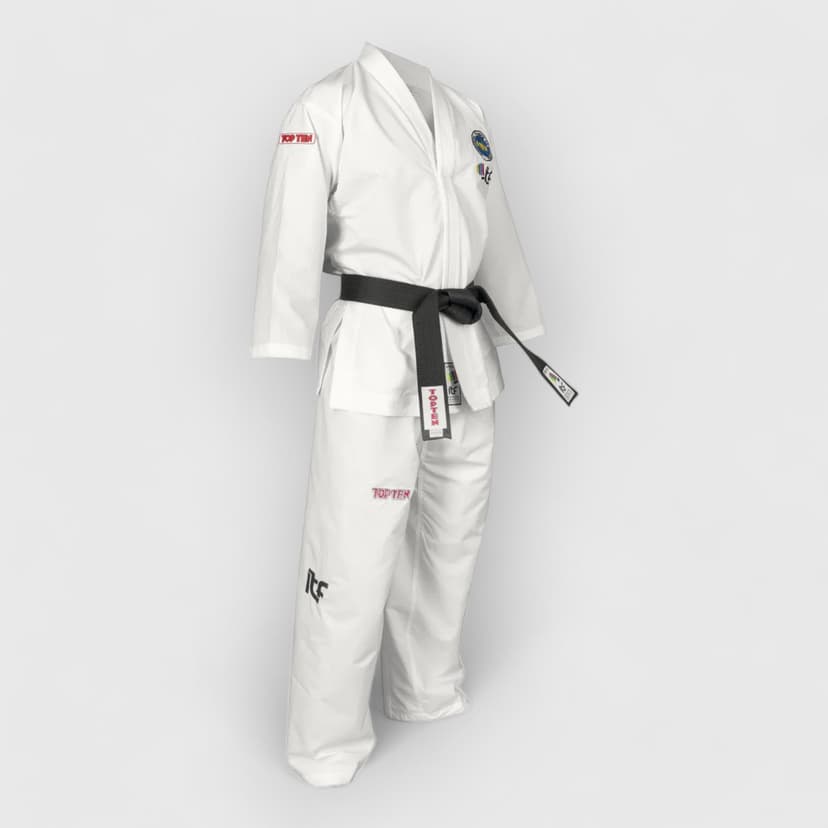
A safe choice is rarely a random one
The right size is the one that lets the child train naturally, safely and without unnecessary distractions. That does not mean the choice is always black and white. Between two sizes there is often real room for judgement, and then you should look at height, build, amount of training and club requirements together.
If you are in doubt, think as a coach would: Will this uniform help the child in motion, or become something that needs adjusting all the time? That question usually hits the mark better than the size guide alone. A uniform that fits well from the start simply gives a better experience on the mat – and both the child and the parents notice that quite quickly.