
When your coach says you need WKF-approved karate gloves, there is no room for guesswork. In training a lot can work, but at gradings and competitions the requirements are often clear. Then it is not enough for the gloves to look similar – they actually have to be approved for use in the right context.
For many athletes and parents, this is the point where choosing gear becomes unnecessarily confusing. There are several types of karate sparring gloves, different sizes, differences in fit and details that seem small in an online shop but make a real difference in the training hall. That is why it pays to know what you are looking for before you order.
What does WKF-approved karate gloves mean?
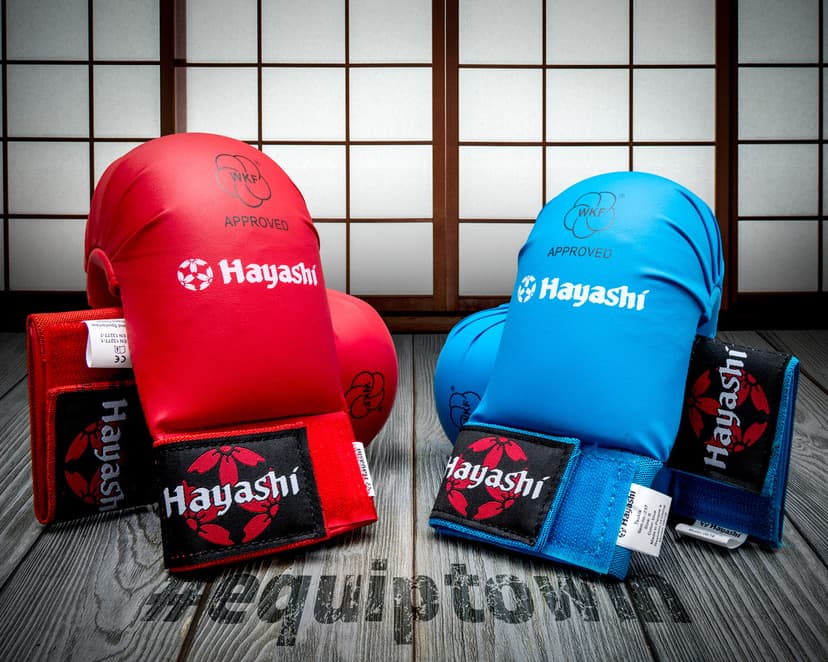
WKF stands for World Karate Federation. When we talk about WKF-approved karate gloves, we mean gloves that are made and approved according to the requirements used in WKF-regulated karate. It is not just about colour or appearance. The approval is linked to design, padding, closure, safety and use in competition.
The most important thing in practice is simple: If you are going to use the gloves at events or in settings that follow WKF rules, the gear must be approved according to these standards. Otherwise you risk turning up with the wrong gloves, even if the quality is otherwise good.
At the same time, it is worth distinguishing between competition requirements and training needs. Many people train perfectly well with gloves that are not WKF-approved, especially in clubs with their own routines. But if the goal is gradings, competing or training towards competition, it is smart to buy the right ones straight away.
When do you need WKF-approved gloves?
It depends on level and club. Some clubs are strict from the start and want children, teens and adults to use approved gear early. Others are more flexible in regular sparring, but require WKF-approved gloves when the athlete starts competing.
For competitive athletes this is usually not optional. There the point is to use gear that meets the rules and works the same across events. For beginners and recreational athletes it can be a question of how far ahead you want to think. If you buy the right gloves the first time, you often avoid having to upgrade after a short time.
Parents shopping for children are often in the same situation. Children grow fast, but it is still not very economical to buy a random model first and then new gloves when the coach asks for approved gear. If the child trains regularly and shows an interest in competing, it often makes sense to choose approved gloves from the start.
How to recognise the right karate gloves
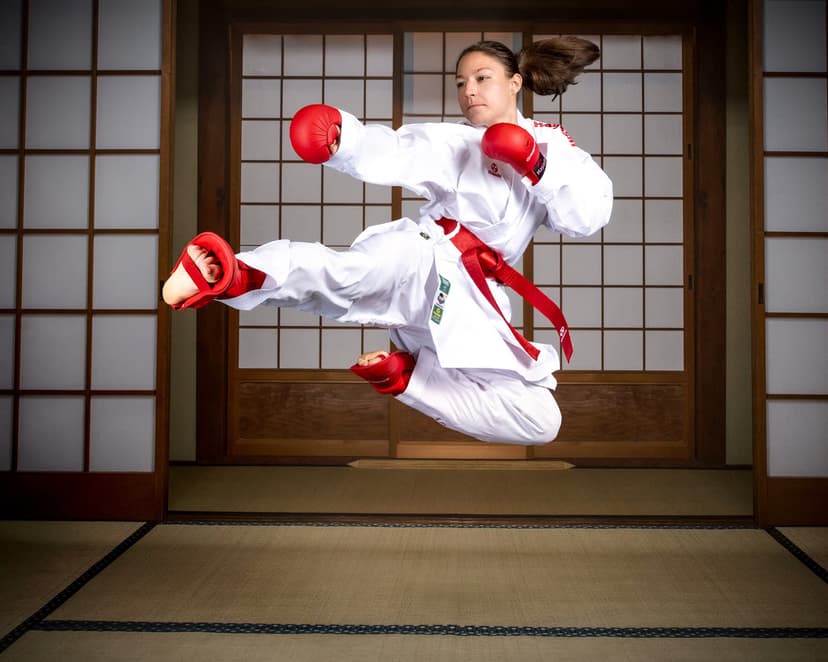
A good karate glove for WKF use is light, close-fitting and made for fast techniques. It should give protection without making the hand clumsy. Karate differs from many other martial arts here. You do not need a heavy glove with a lot of volume – you need a model that lets you move your hand naturally and strike precisely.
First, look for clearly stated approval from the manufacturer. It should not be vague or worded as the glove being "suitable for karate" if you actually need competition approval. Next, look at the closure and the wrist. The hook-and-loop strap should sit firmly without chafing, and the wrist needs enough support that the glove does not twist in use.
The padding should cover the knuckles well, but still feel supple. Too much stiffness affects feel and speed. Too little padding gives poorer safety for both you and your partner. This is where you quickly notice the difference between a serious competition glove and a cheap generic model. See our range of karate gloves to find the right model.
Fit is as important as approval
A glove can be right on paper and still wrong on the hand. This is a point many people underestimate. In karate the glove should fit tightly enough to follow the movement, but not so tightly that the fingers and hand are locked.
If the glove slips when you make a fist, you lose control. If it squeezes too much over the knuckles or around the thumb, it becomes uncomfortable in longer sessions. This applies especially to athletes who train several times a week. Small irritations become big ones after a few months.
Children need extra attention here. Many parents think it is smart to buy a little big so there is room to grow. With ordinary clothes that can work. With karate gloves it often gives poorer safety and poorer technique. A glove that is too big moves more than it should and is less precise on contact.
Which size should you choose?
Size varies between brands and models, so it is wise to follow the manufacturer's size guide when there is one. Still, there are some practical rules of thumb. The glove should be easy to put on and take off, but it should not feel loose when the strap is closed. The fingers should have natural room, and the padding should sit correctly over the knuckles.
For children and young athletes, it is often best to choose by actual hand size, not age alone. Two children of the same age can need completely different sizes. For adults it is often about the combination of hand width, finger length and how close a fit you prefer.
If you are torn between two sizes, the choice depends on use. For competition and focused kumite, most people want a more precise fit. For light club training, some may prefer a little more room. But the difference should be small – not so big that the glove floats around on your hand.
Red or blue – and why it matters
In WKF settings, red and blue gloves are normally used to tell the athletes apart in a bout. It is not just a visual detail, but part of the competition setup. That is why it is not enough to just buy "karate gloves" without thinking about colour if the goal is competition.
Many competitive athletes end up with both colours. That is often the most practical solution over time, especially if you compete regularly. For club training this varies more. Some train mostly with one colour, while others follow the same setup as in competition.
If you are buying for a child or teenager who has just started competing, it can be smart to check with the club what is expected. Some clubs have clear recommendations about which colours and which models are used most.
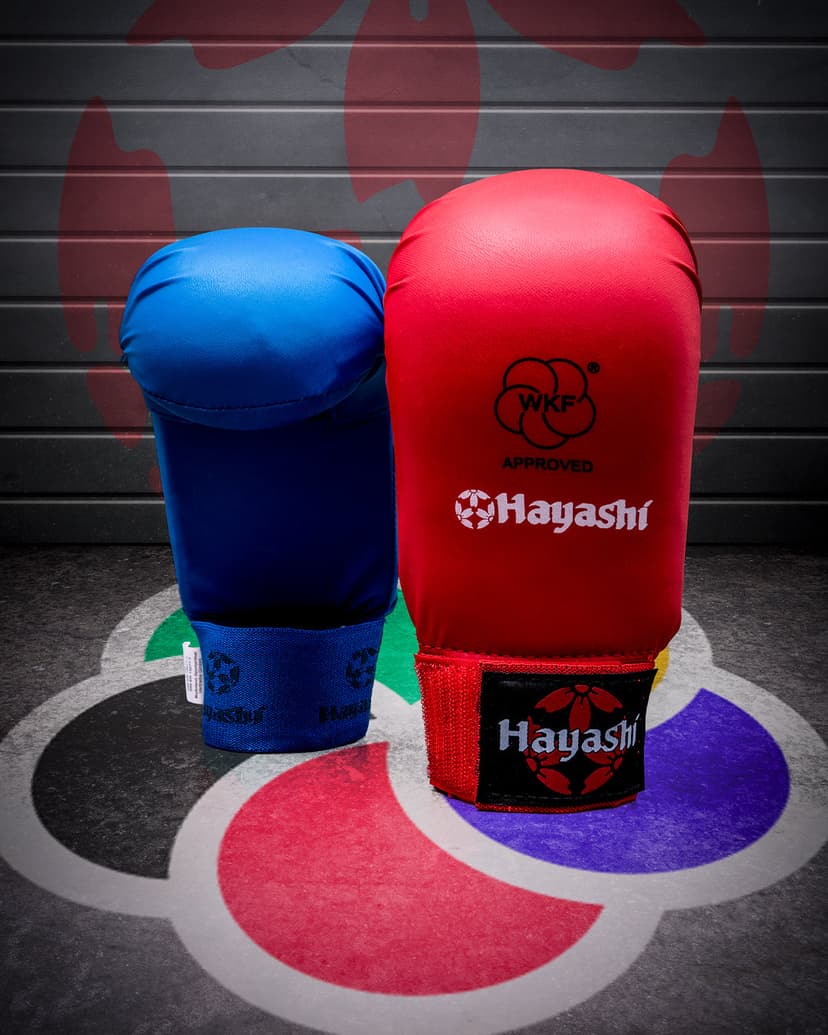
The difference between training and competition
It is easy to think that one glove should cover everything. Sometimes it does, but not always. A WKF-approved glove works well for a lot of training, especially technical sparring and preparation for competition. At the same time, some athletes also do sessions where they want slightly different padding or a different feel in the hand.
That does not mean you need several pairs right away. It just means the choice should be guided by use. If you train mostly towards competition, the competition glove should be your first choice. If you only do light sparring at the club and have no plans to compete, your needs may be different. But as soon as competition becomes relevant, the approval becomes decisive.
Quality, durability and what you are actually paying for
There are cheap gloves on the market that look right at first glance. The problem often shows after a few weeks of use. The hook-and-loop strap loses its grip, seams start to come apart, or the padding compresses faster than it should. Then a low price does not help much.
With serious karate gloves you pay for more than a logo and looks. You pay for documented approval, consistent quality, a better fit and materials that withstand real use. For athletes who train several times a week, that is usually the cheapest solution over time.
This is also where a specialist shop has a clear advantage. When the gear is chosen by people who know the difference between club training, gradings and competition, it becomes easier to buy the right thing the first time. Combat Store is built on exactly that kind of expert selection, which makes choosing gear safer for both beginners and experienced athletes.
Care that extends their lifespan
Even good gloves last less long if they are always left damp in the training bag. Karate gloves should be aired after every session and wiped lightly when needed. It takes little time, but does a lot for smell, hygiene and the durability of the materials.
Avoid pressing them hard together with belts, shin guards and other gear while they are still wet. The hook-and-loop straps should be closed before storage, so they do not collect lint and lose their grip. Small routines like these help the gloves keep their shape better and feel more stable over time.

Choose gear that suits your goal
The best glove is not necessarily the cheapest one or the one that looks toughest in a photo. The best glove is the one that fits your hand, your level and the rules you actually have to follow. For karate athletes who train seriously towards gradings or competition, WKF-approved karate gloves are a concrete requirement – not a detail.
If you are unsure, think ahead before you buy. The right glove gives better flow in training, fewer wrong purchases and less stress when competition day comes. That is usually where good choices begin.