Karate is one of the most established martial arts in Norway, with clubs in small and large municipalities and a clear structure for grading, competition and coach education. For many it is the first martial art they encounter, often as children.
This guide covers the practical side: what gear you need to start, what WKF approval actually means, how the belt system works, and what sets the different styles apart.
Karate in Norway
Karate came to Norway in the 1960s and 70s and has since grown into one of the country's largest martial arts. The clubs are well organised, with regular gradings, national competitions and a clear progression from beginner to black belt.
The sport suits a wide range of people. Children get structure, discipline and motor skills training. Adults get technical development and good physical training. And because kata, i.e. pattern training, can be done entirely without contact, you can keep going for a long time.
The styles
Karate isn't one style, but an umbrella term. The most common in Norway:
- Shotokan. The most widespread. Long, deep stances and powerful, linear techniques.
- Wado-ryu. More movement and evasion, with elements of Japanese jujutsu.
- Goju-ryu. Combines hard and soft techniques, with more work at close range.
- Shito-ryu. Known for a large number of kata.
- Kyokushinkai. Full contact to the body without gloves, but without punches to the head.
The differences matter for how you train, but little for what gear you need as a beginner. Kyokushinkai is the exception: there the uniform is usually heavier, and the protective gear different.
Kata and kumite
Training is split into two main parts, and they have different requirements.
Kata are set sequences of movements performed alone. They are both a library of techniques and grading syllabus, and they are competed in separately, judged by referees. For kata you need nothing beyond the uniform, but many competitors choose a stiffer kata uniform that gives a clearer sound and sharper lines.
Kumite is fighting a partner. Under WKF rules it is controlled contact, where points are given for techniques that land correctly, with the right control. For kumite you need protective gear, and a lighter, more mobile uniform is an advantage.
The gear you need
Karate gi
The uniform consists of a jacket, trousers and belt. Beginner uniforms are light and affordable, and perfectly adequate for the first year. Later, many choose a uniform suited to kata or kumite. See traditional karate gi, kata uniforms and kumite uniforms.
Belt
White to begin with. The belt often comes with the beginner uniform, but not always. See karate belts.
Protective gear for kumite
- Kumite gloves in red and blue for competition.
- Shin and instep guards in the same colours.
- Mouthguard, mandatory. See mouthguards.
- Groin guard and, for women, a chest guard.
You will find all of this in karate protection.
What does WKF approved mean?
The WKF, World Karate Federation, is the international federation that sets the rules and gear requirements for competition karate. Approved gear has been tested against the federation's requirements and carries WKF marking.
| Regular gear | WKF approved | |
|---|---|---|
| Club training | Fine | Fine |
| National competitions | Usually not approved | Required |
| International | Not approved | Required |
| Marking | None | WKF label |
| Price | Lower | Higher |
If you know you are going to compete, it pays to buy approved gear from the start. If you are unsure, start simple. You can always upgrade.
The belt system
Karate uses kyu grades on the way to black belt and dan grades afterwards. Kyu counts downwards: 9th or 10th kyu is white belt, 1st kyu is the last grade before black.
The colour order varies between styles and clubs, but typically goes from white via yellow, orange, green, blue and brown to black. Some clubs use two-coloured belts for intermediate grades for children. Ask your club which system they follow before you buy a belt.
Our recommendations
First uniform
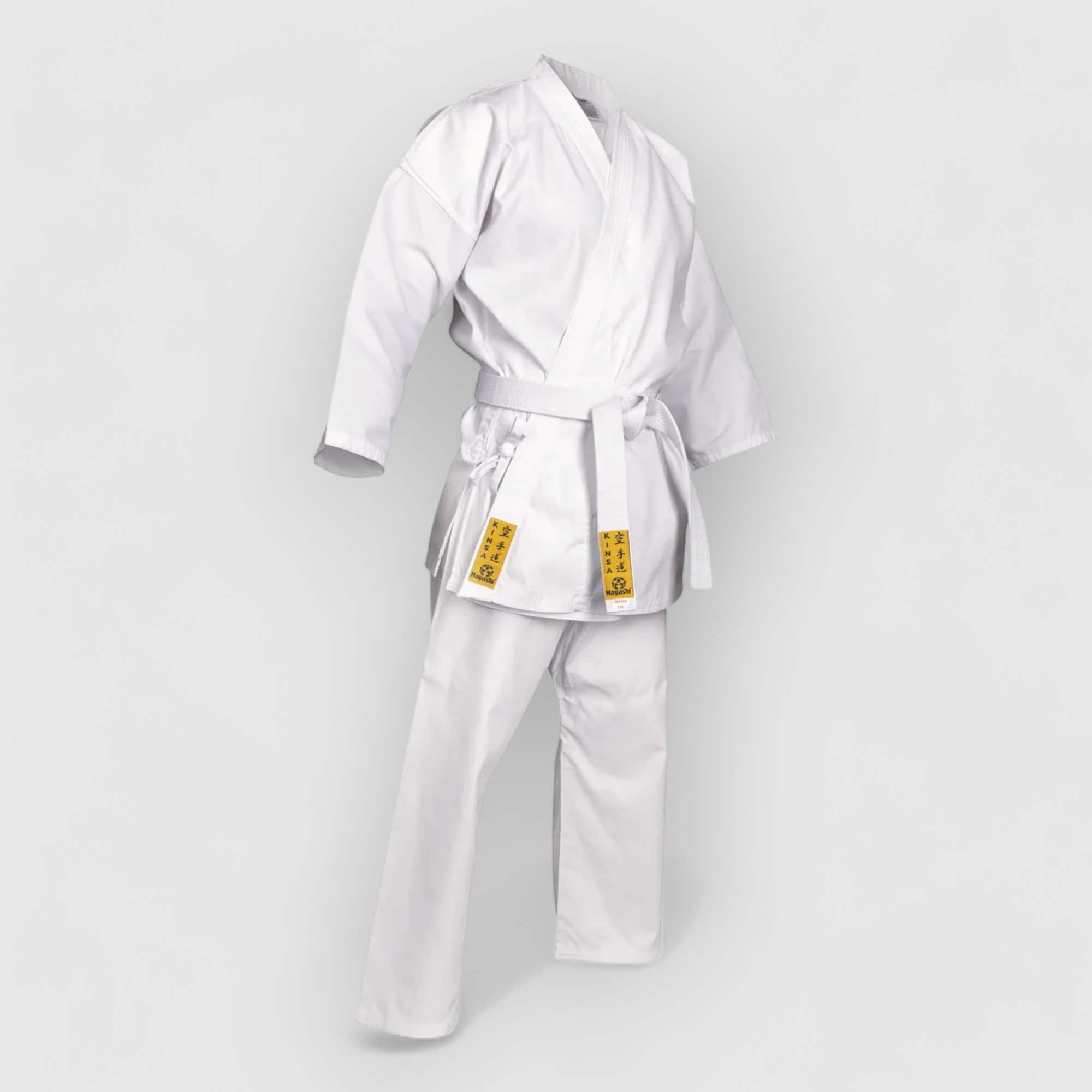
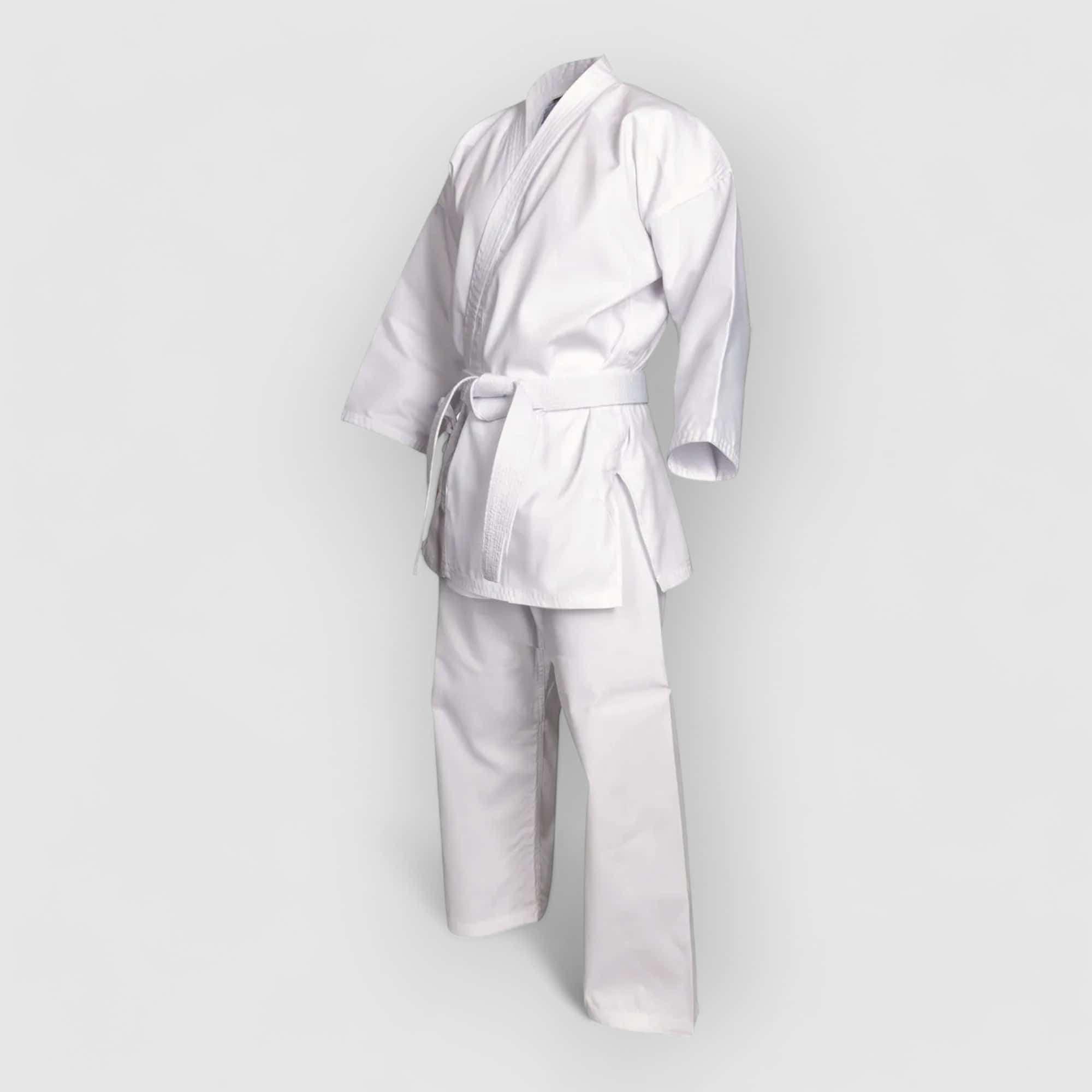
A light uniform that withstands frequent washing. Everything you need for the first year.
For children
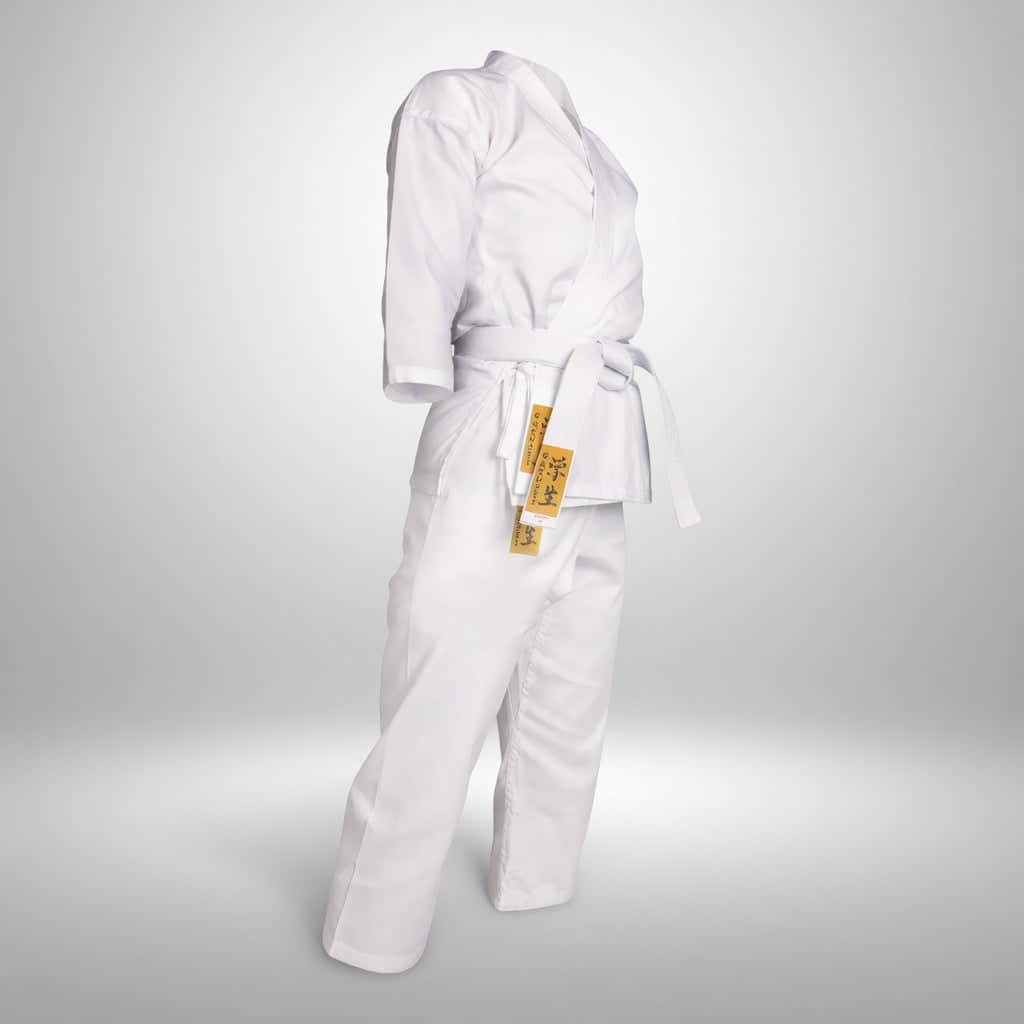
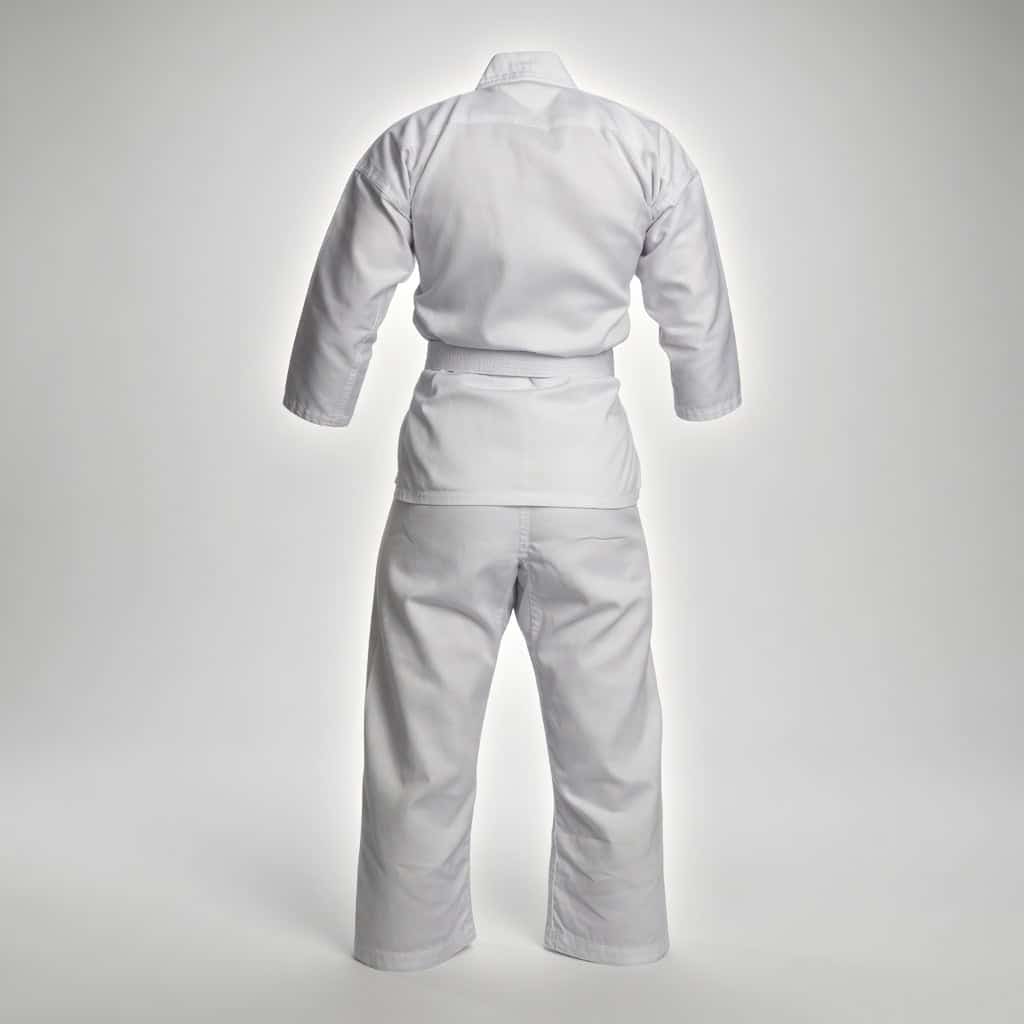
Children's sizes in a soft cotton blend. Consider choosing one size up if your child is growing.
Approved, affordable
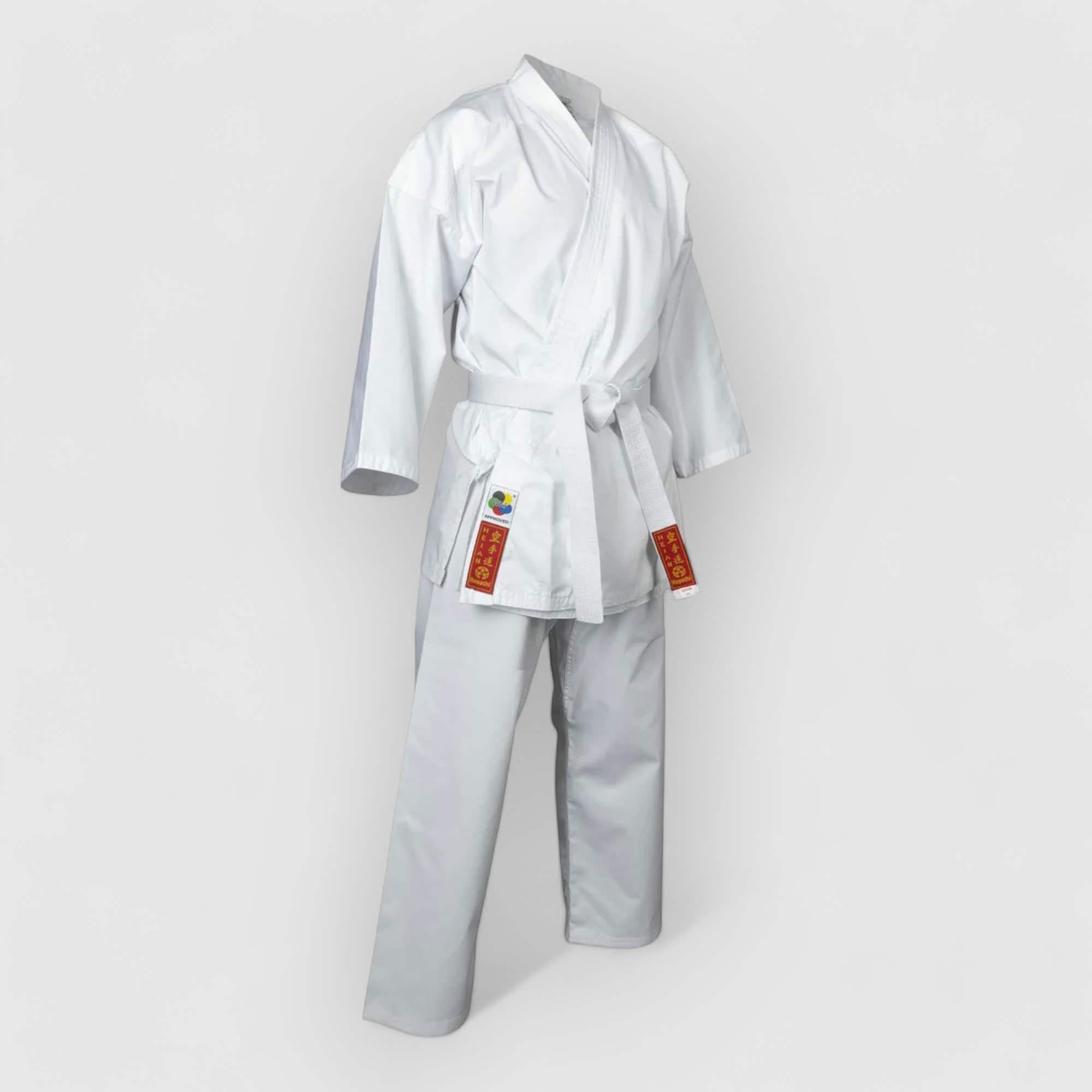
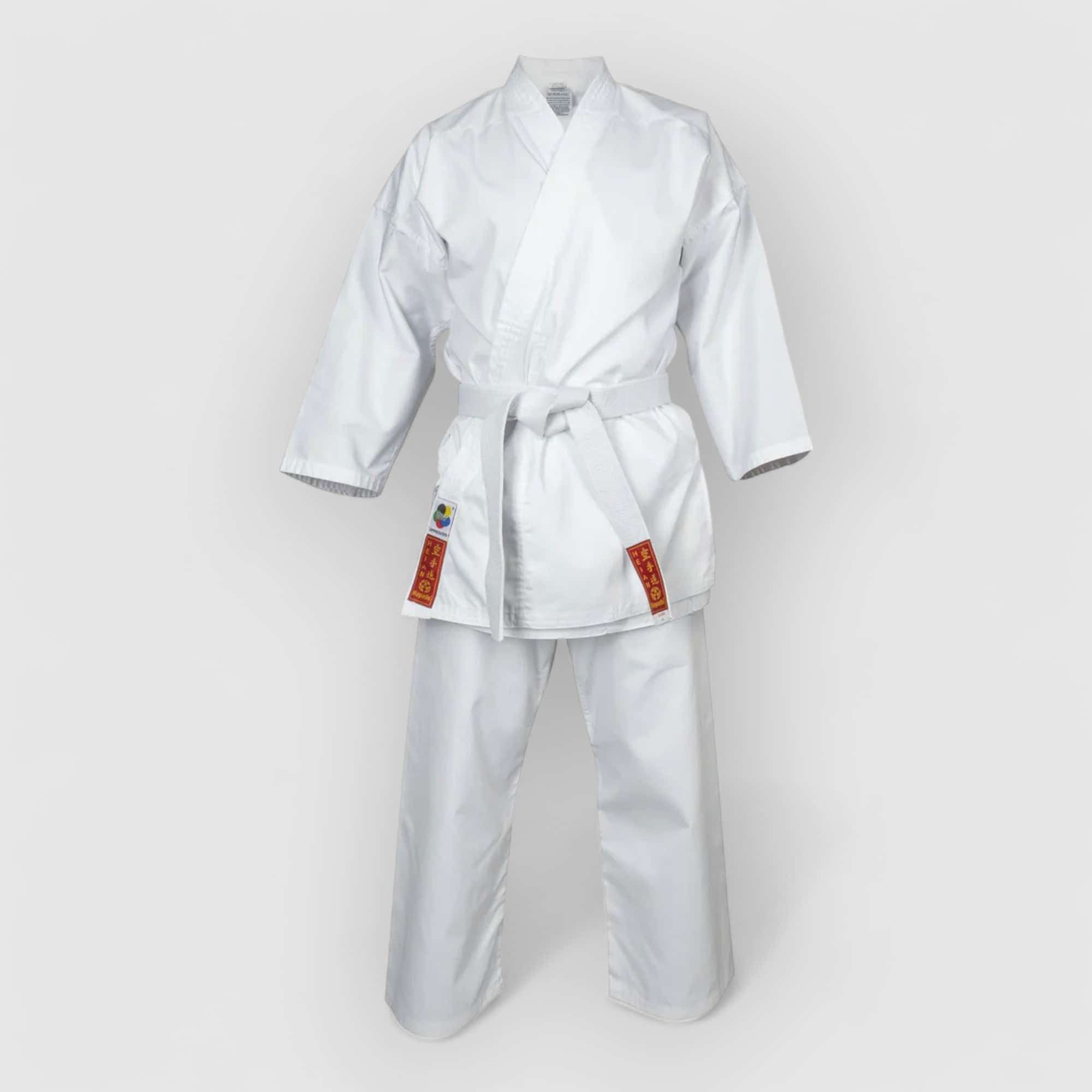
A WKF-labelled uniform at a price that makes taking part in competitions affordable.
For kumite
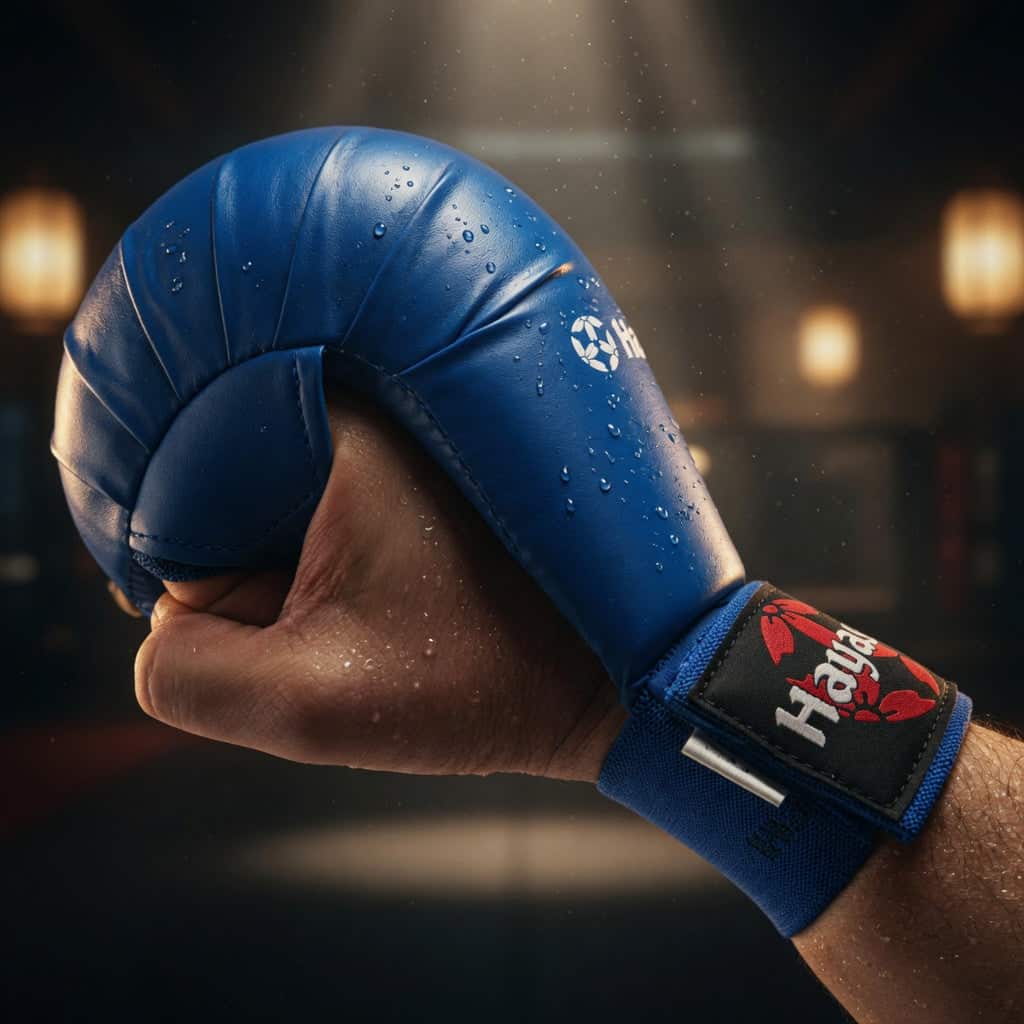
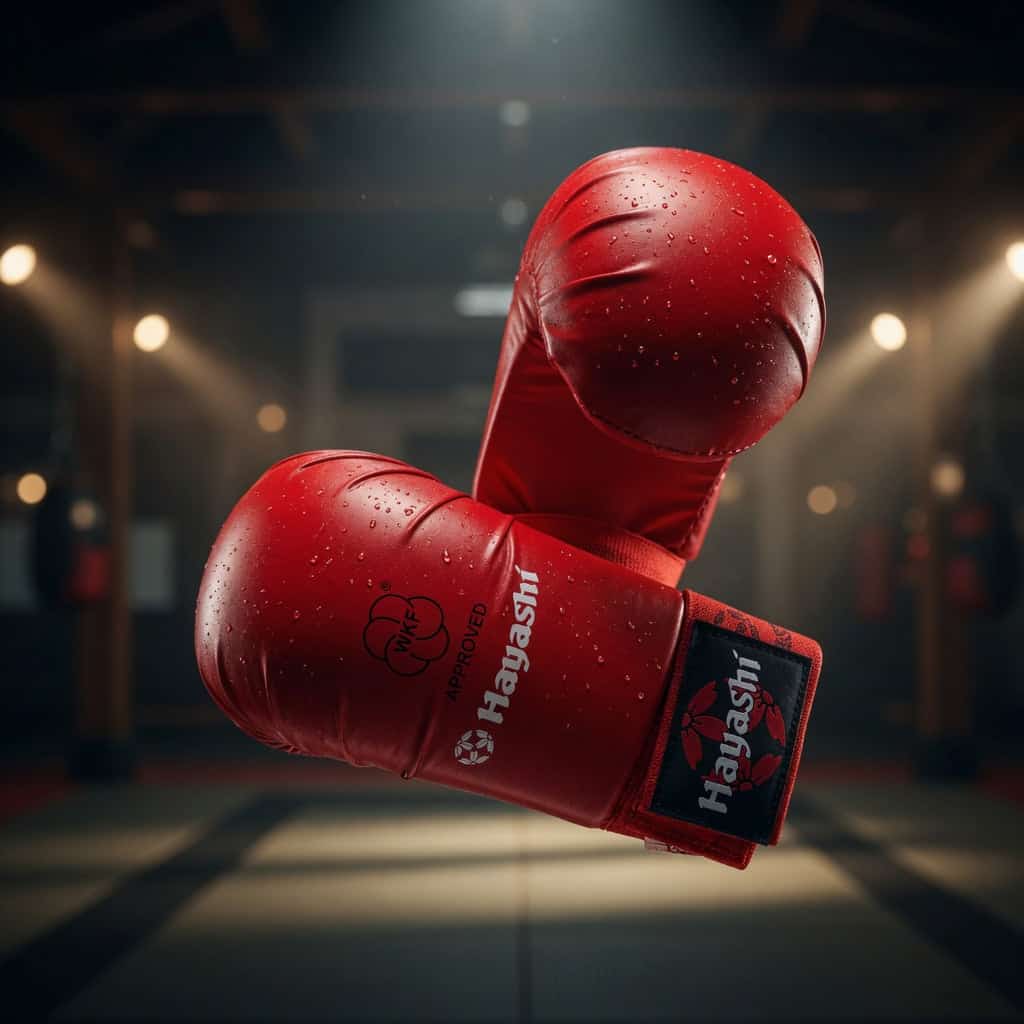


Approved for competition, and robust enough for regular club training.
Shin and instep
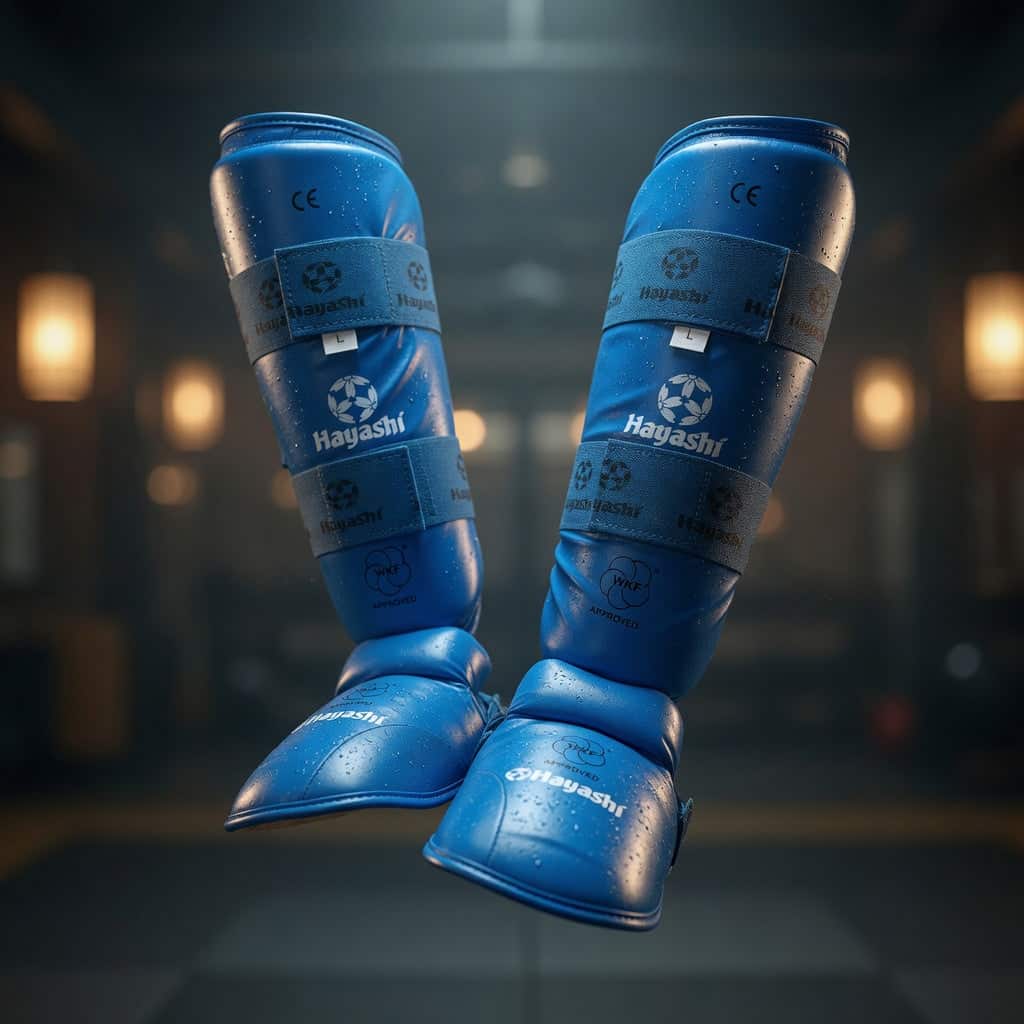
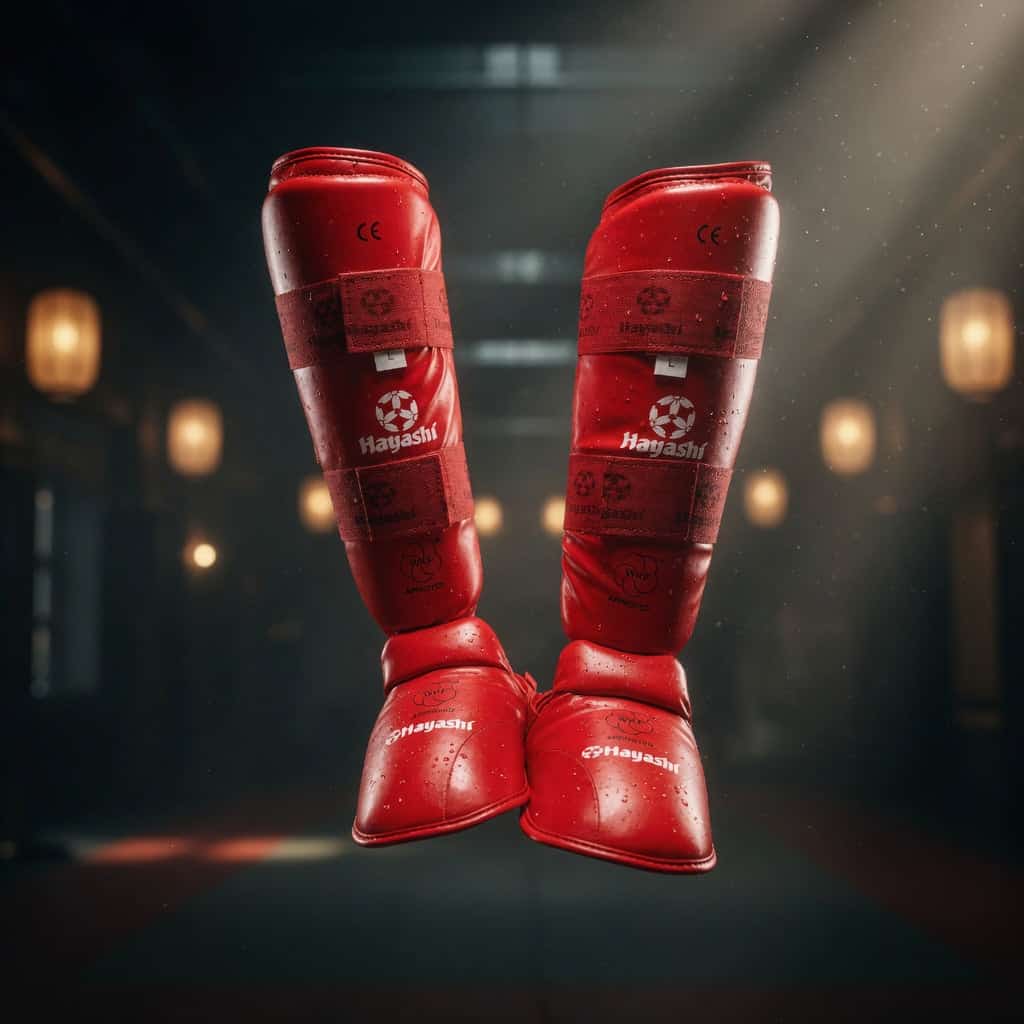


An approved shin and instep guard in red and blue.
Frequently asked questions
What do I need for my first session?
A karate gi and a white belt. Many clubs let you try in ordinary training clothes the first few times.
What size gi should I get?
Karate uniforms are measured in centimetres by body height. If you are between two sizes, choose the larger, especially for growing children.
Does the gear have to be WKF approved?
Only if you are going to compete in events under WKF rules. For club training, regular gear is fine.
What is the difference between a kata and a kumite uniform?
The kata uniform is stiffer and heavier and gives a clearer sound in the techniques. The kumite uniform is lighter and more mobile.
From what age can children start?
Many clubs take children from age five or six in dedicated children's classes. Ask your club.
How long does it take to get a black belt?
With consistent training it usually takes four to six years. It varies with the style and club.
Build your starter kit – everything for your first session, with 10% off