
You notice quickly when your shin guards do not fit. They slide down after a few rounds, rotate when you check a low kick, or feel hard and bulky when the pace picks up. If you are choosing shin guards for kickboxing, it is smart to look past design and brand first. What counts in practice is fit, level of protection, fastening and whether the model actually works for the training you do.
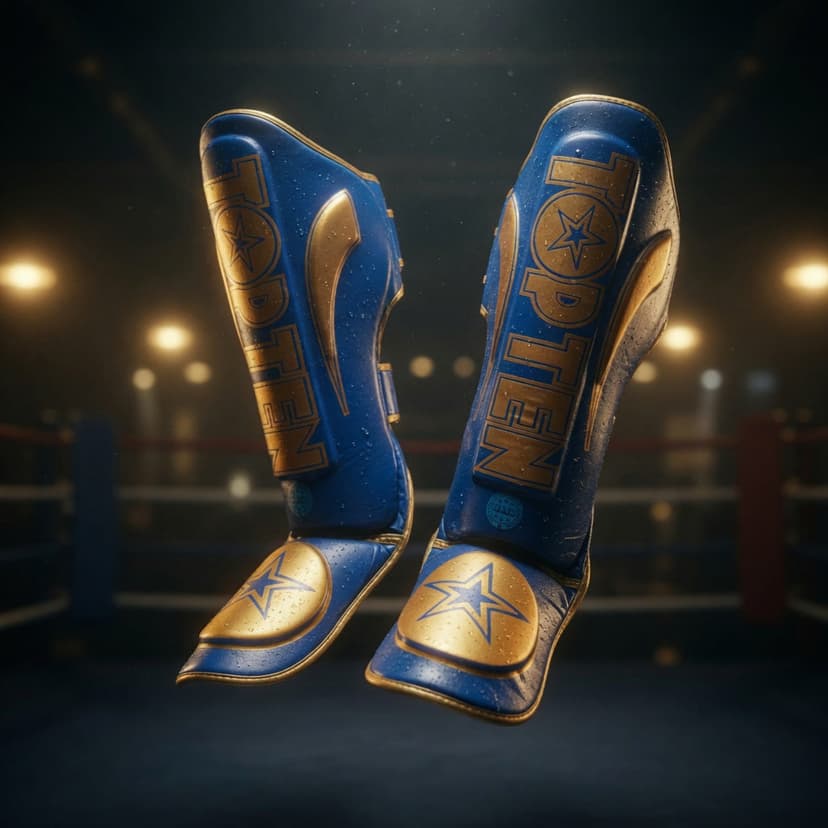
How to choose shin guards for kickboxing
The best starting point is to think about three things at once: level, use and fit. Many people buy either guards that are too light because they want something flexible, or models that are too heavy because they think the most padding is always best. Both can be wrong.
If you are a beginner doing regular club sessions with technique, partner drills and light sparring, you usually need an all-round model with good shock absorption and an easy fit. If you do hard sparring several times a week, or combine kickboxing with Muay Thai sessions with a lot of blocking, you should go up a level in protection.
For many athletes, kickboxing also places slightly different demands than pure Thai boxing. You still need good coverage of the shin and instep, but not always the most massive model on the market. If the focus is footwork, combinations and mobility, many feel better with a slightly more compact guard that still absorbs impacts well.
Fit: length, calf circumference and instep
The most common mistake is choosing a size based on what you usually wear in other gear. Shin guards have to be assessed based on three measurements: the length of the shin, the circumference around the calf, and how the foot section sits over the instep. A model can be the right length, but too narrow around the calf. Then it tends to start twisting when you move.
| Height | Starting point | Go one size up if |
|---|---|---|
| Under 170 cm | S | you have muscular calves |
| 170–185 cm | M | you have muscular calves or wear tights underneath |
| Over 185 cm | L | your shin is long and the guard stops high up |
The table is a starting point, not a definitive answer. Brands cut differently, and two athletes of the same height can differ by several centimetres around the calf muscle. Measure yourself, and you avoid the guesswork.
- Measure the length
Measure from just below the kneecap down to where the foot begins. That is the length the guard should cover.
- Measure the circumference
Measure around the widest part of the calf muscle. This is the measurement that most often decides whether a model stays in place or twists.
- Test in motion
The guard should cover the shin without pushing up into the knee, and the foot section should sit naturally over the instep without pulling the whole guard down.
If you have to adjust them several times during a session, the fit is wrong, even if the size guide in theory is right. If the guard rotates around your shin, it is either too wide or too short. If you feel pressure in the back of your knee when you lift your knee, it is too long.
Material, cushioning and construction
There is a big difference here between an affordable model for light use and a more thoroughly made model for regular sparring. Good cushioning is not just about thickness. Foam quality, layering and shape matter at least as much.
Dense and responsive padding often gives a better balance between protection and mobility than very soft padding that compresses quickly. If you train often, you will notice the difference. Cheaper foam can feel fine for the first few weeks, but lose its shape quickly. Then you get less protection and a poorer fit over time.
The outer material also plays a part. Synthetic materials can be durable and affordable, especially for beginners and children. Genuine leather or premium synthetic leather is often a better choice if you train a lot and want a longer lifespan. The most important thing is that the seams, edges and attachment points hold up under real use.
Foot coverage and ankle straps
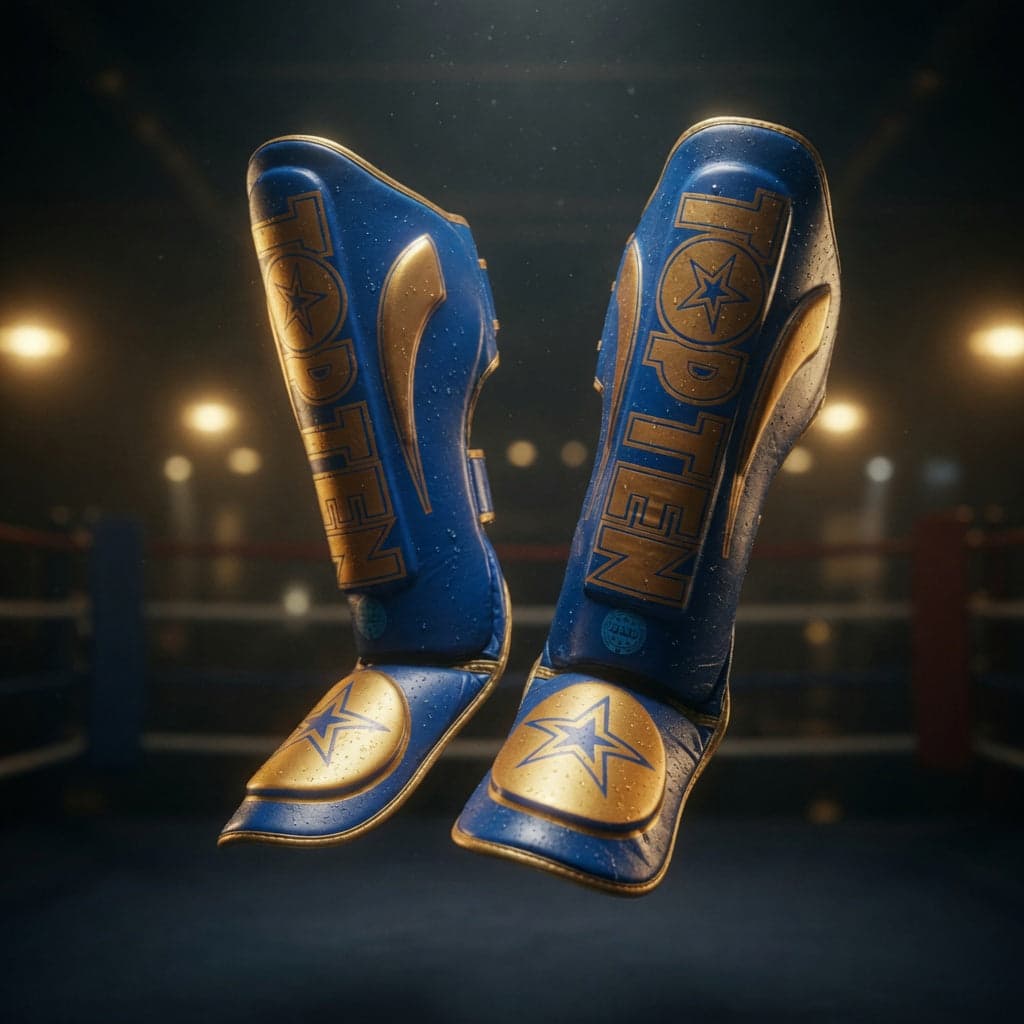
Many people only look at the part that covers the shin, but the instep is at least as important. In kickboxing the top of the foot takes a beating, especially in drilling and sparring. A foot section that is too short or thin often causes more discomfort than people expect. At the same time, it should not be so big that it hinders footwork.
Look for a model where the foot section follows the instep closely. Elastic straps under the foot and behind the heel should add stability without becoming an irritation. If the strap under the foot is too thin or badly placed, it wears quickly. If the heel strap is weak, the whole guard starts to slide.
Hook-and-loop, fastening and stability in sparring
The strap system often decides whether the guard works well after 20 minutes, not just when you put it on. Two solid hook-and-loop straps around the calf are standard, but the quality varies a lot. Wide straps with a good grip hold better than narrow solutions that lose their hold after a lot of use.
For harder sparring, stability is absolutely crucial. When you block kicks or move back and forth a lot, the guard has to stay still. If it rotates, you lose protection at the wrong moment. Some like a very tight fit to lock everything in place. That can work, but if you go too tight, it quickly becomes uncomfortable and you lose mobility.
Five models, five needs
The range is large, and the differences are mostly about how much you train and whether you are going to compete. Here are five models that each cover a different situation.
For one to two sessions a week
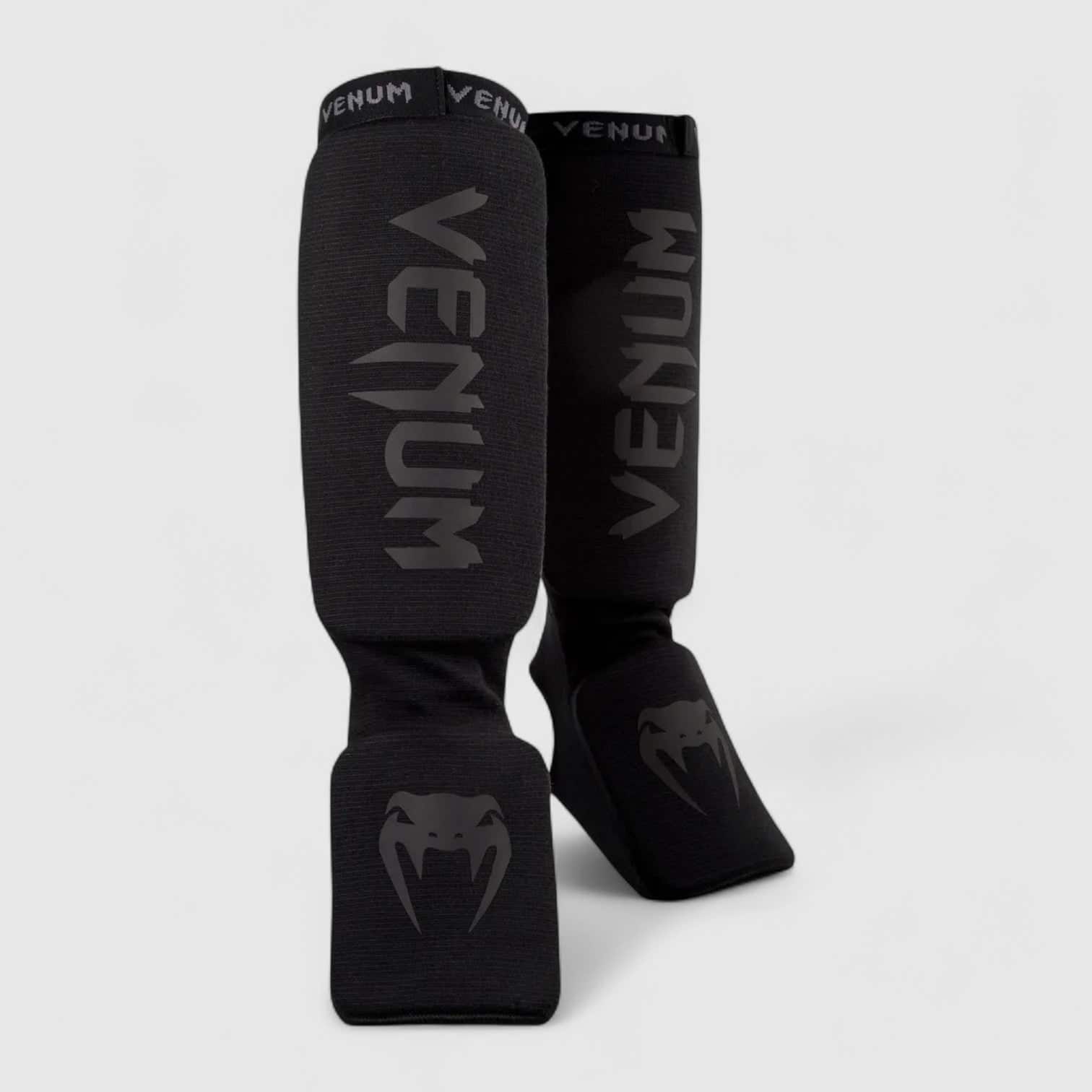
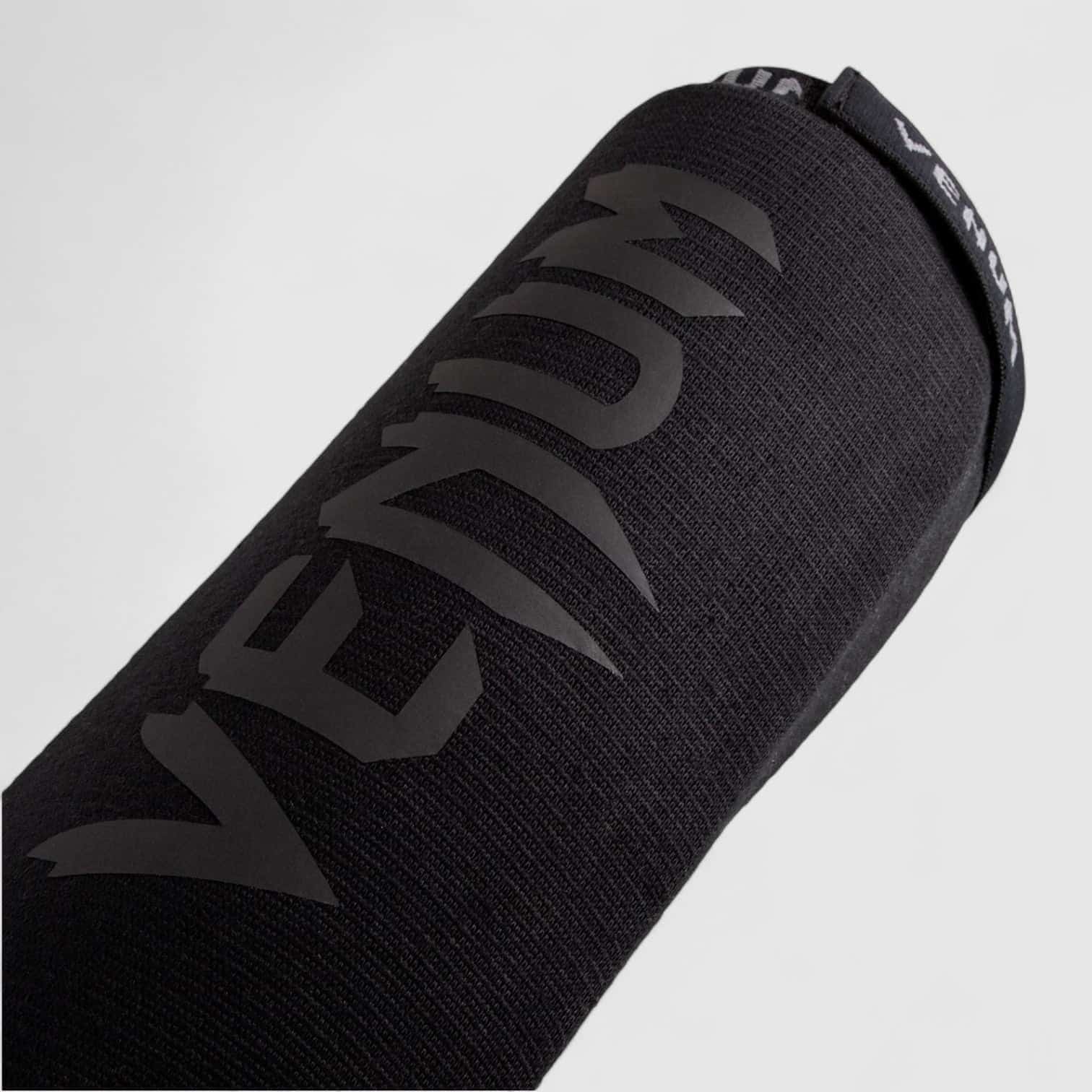
A simple, well-padded all-round model. Covers technique sessions and light sparring without you paying for features you do not use.
For regular club training
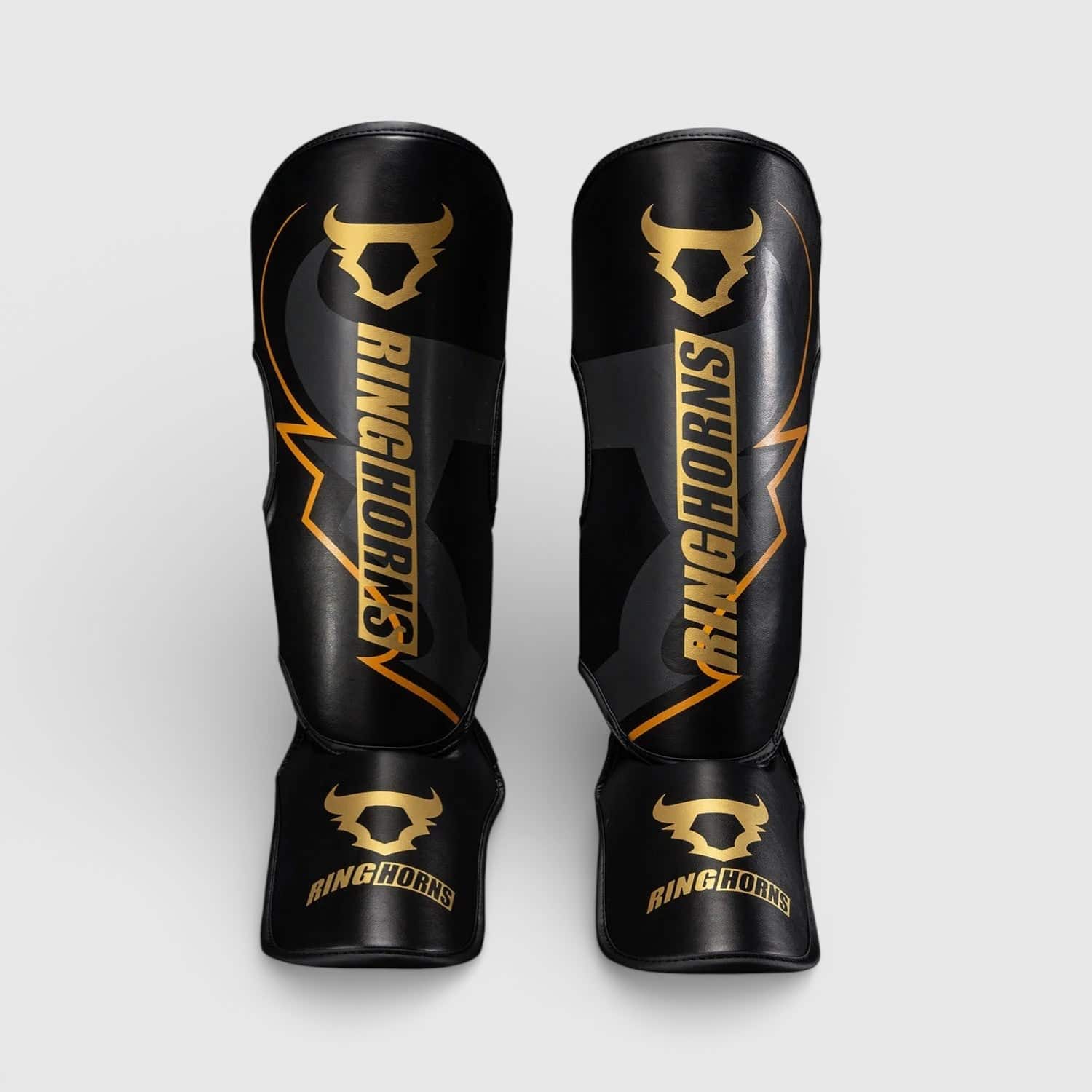
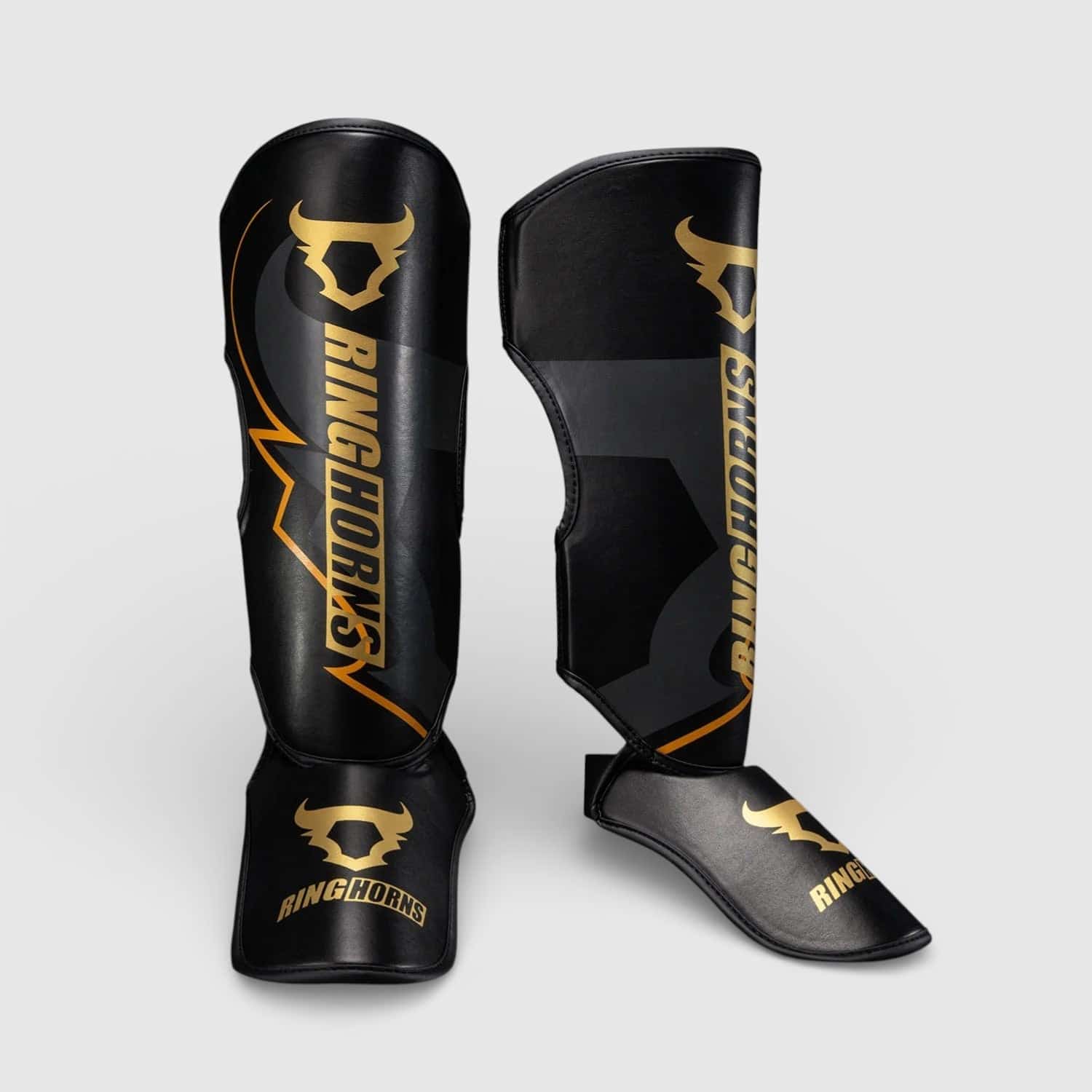


Denser foam and wider straps than the entry-level models. A sensible place to land if you train two to three times a week.
For training and sparring
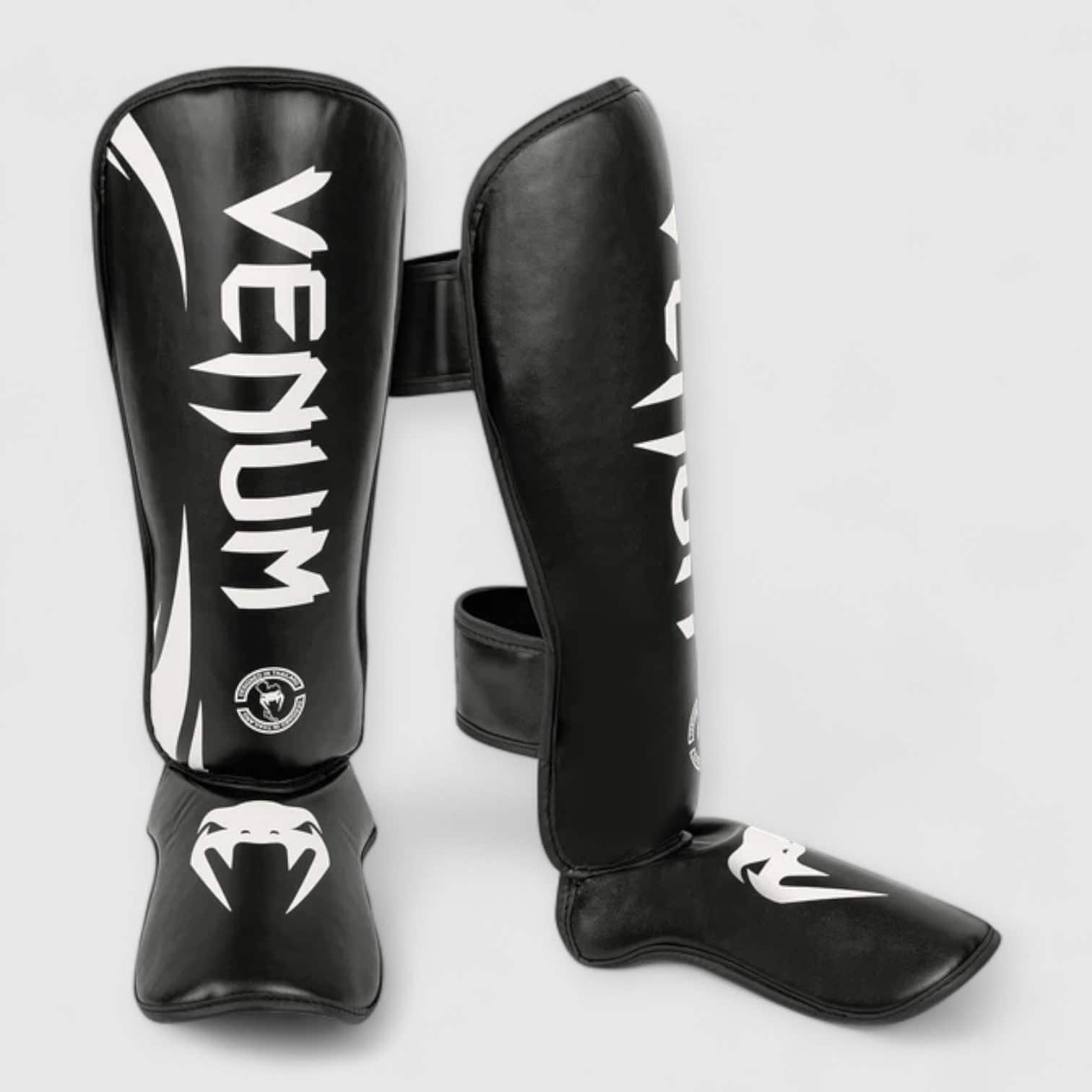
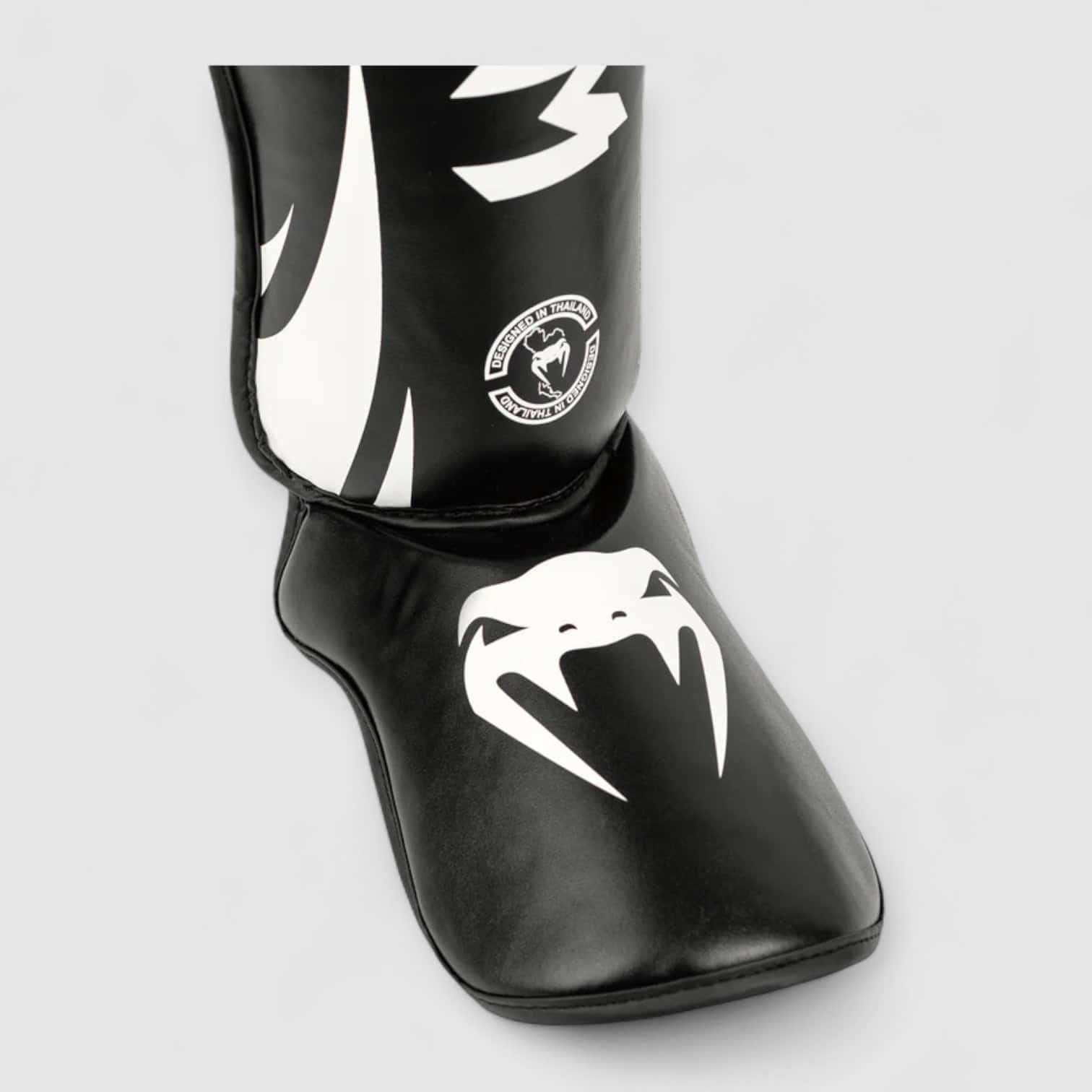


The shop's best-selling shin and instep guard. A good balance between cushioning and mobility for athletes who spar regularly.
For Muay Thai competition
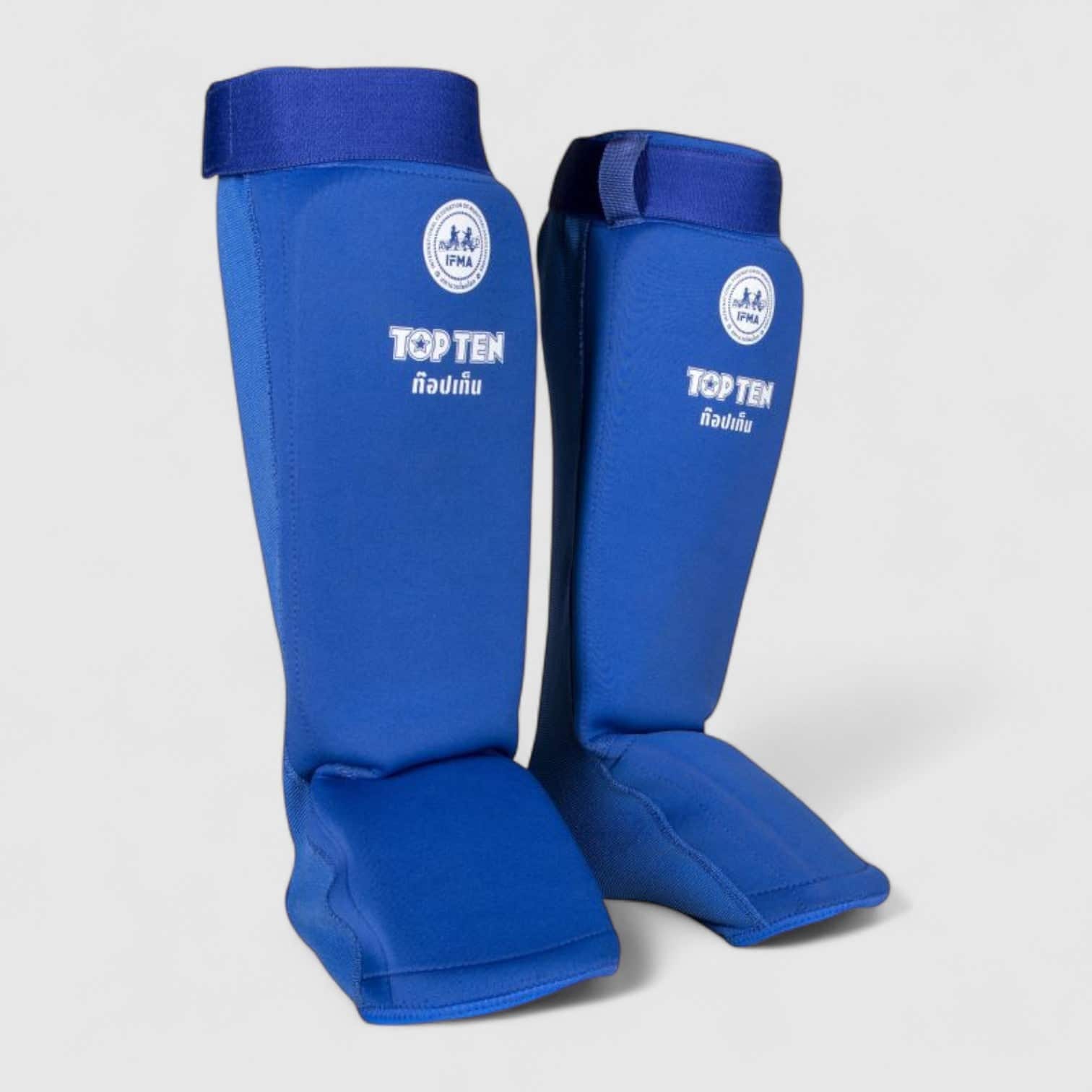
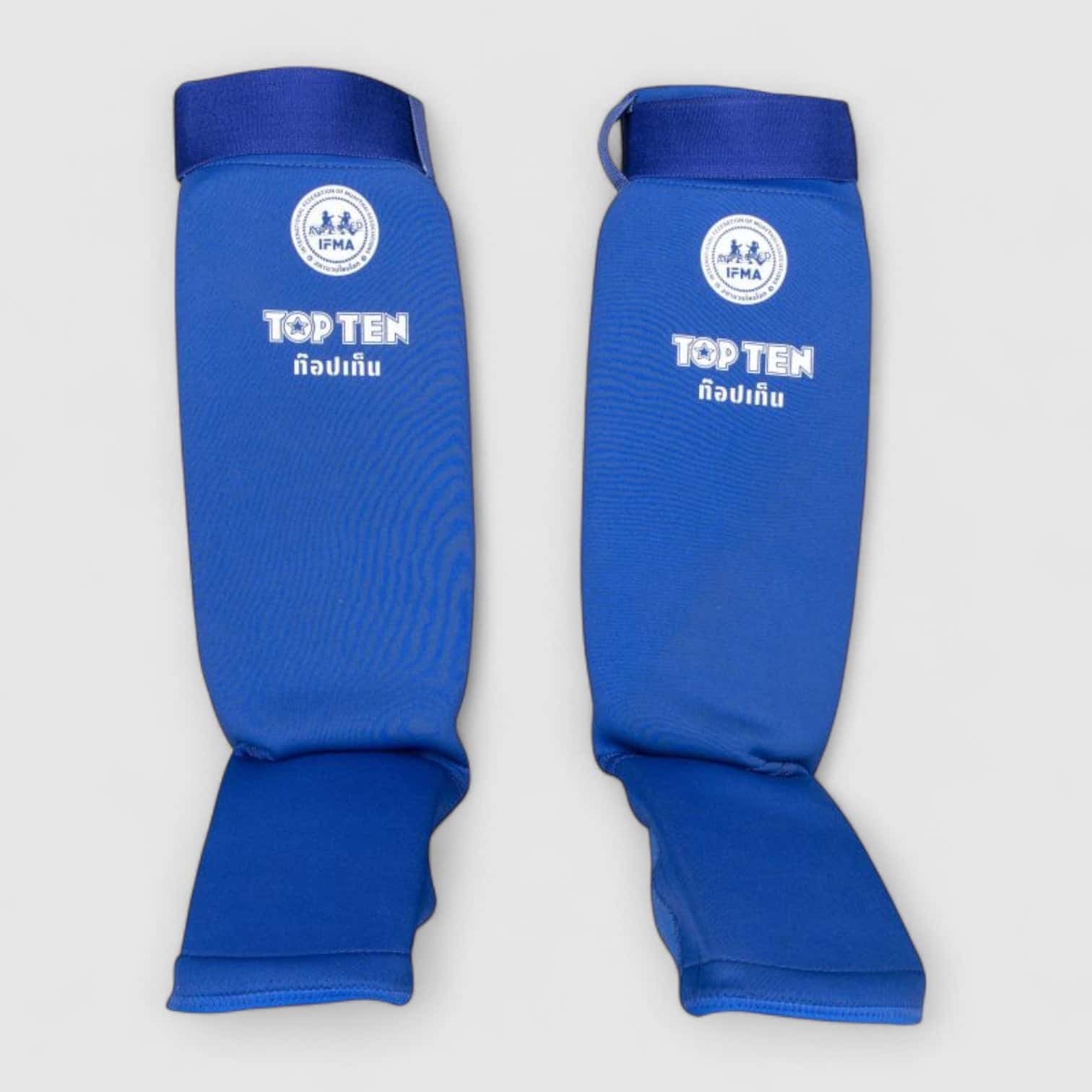


Built for the IFMA rules. The natural first choice if you compete in Muay Thai rather than kickboxing.
| Model | Suits | Competition label |
|---|---|---|
| VENUM Kontact | Technique and light sparring | None |
| RINGHORNS Charger | Regular club training | None |
| VENUM Challenger | Training and regular sparring | None |
| TOP TEN Star Light | Kickboxing events | WAKO UV label |
| TOP TEN IFMA | Muay Thai events | IFMA |
If your child trains kickboxing, the same features are available in smaller sizes. A guard in the right children's size gives better control and more real protection than an adult model the child is supposed to grow into.
Competition requirements
If the shin guards are to be used at an event, you must check the requirements with your club, federation or the organizer. Not all models are approved everywhere, and the rules vary between disciplines and competition formats. Here it is not enough for the gear to look right.
For many athletes this means they end up with one pair for training and another for competition. That is not necessarily overkill. Training gear and competition gear often fill slightly different needs.
Common mistakes when people buy shin guards
The first mistake is choosing too cheap when the amount of training really calls for something better. The second is buying too big a size. The third is underestimating how much the fastening system matters. And many people choose based on design alone, even when the fit is mediocre.
Another classic is buying heavy Muay Thai models for training where you actually want more mobility, or the opposite: choosing a very light model for hard sparring. Neither is automatically wrong, but it has to suit the use.
Care and lifespan
Shin guards absorb a lot of sweat, and it is the sweat that breaks them down fastest. Wipe them after every session and let them air out completely before they go back in the bag. If they are left damp in a closed bag, both the smell and the lifespan go the wrong way.
Check the hook-and-loop regularly. When it collects lint and hair, it loses its grip, and the guard starts to slide long before the foam is worn out. A little cleaning of the hook-and-loop noticeably extends the lifespan.
You usually recognise when it is time to replace them by the foam having become permanently compressed, or by having to tighten harder than before to get them to stay in place. Then the protection is poorer than it looks.
A good sign that you have chosen correctly is that you almost stop thinking about them during the session. See the full range of shin and instep guards, or go straight to guards for kickboxing and Muay Thai.
Frequently asked questions about shin guards
Which size shin guards should I get?
Start from your height, but adjust for calf circumference. Under 170 cm, most land on S, 170 to 185 cm on M, and above that on L. If you have muscular calves, choose one size up.
What is the difference between shin guards and shin and instep guards?
Plain shin guards only cover the shin and stop at the ankle. Shin and instep guards also have a foot section that covers the instep. In kickboxing and Muay Thai the latter is standard, because the top of the foot hits both pads and the opponent's blocks.
Can I use Muay Thai shin guards for kickboxing?
Yes, for training it works fine. Muay Thai models are often a little more heavily padded, which is an advantage when there is a lot of blocking. For competition you must follow the rules of the discipline in question, and there the requirements differ.
Do the shin guards have to be WAKO-approved?
Only if you are going to compete at WAKO-regulated events. Regular club training has no labelling requirements. If you know you will compete during the season, you save yourself a double purchase by choosing a labelled model straight away.
How long does a pair of shin guards last?
With two to three sessions a week, a good pair will typically last two to four years. With daily hard sparring, the lifespan can be under a year. What goes first is usually the hook-and-loop or the strap under the foot, not the padding itself.
Should shin guards be worn over or under the trousers?
Over. They need to be quick to adjust between rounds, and they should not be held in place by fabric that changes the pressure. If you wear compression tights underneath, that is fine, as long as the guard sits directly against that layer.