
Weight is the single factor that most decides how a punching bag feels. A bag of the right weight gives resistance when you hit it, moves a little, and swings back in time for the next punch. A bag of the wrong weight feels either like a pendulum you chase around the room, or like a wall that sends the impact straight into your wrist.
Here you get a concrete recommendation based on body weight, how to adjust it for what you train, and what to do if the bag you already have is too light.
The main rule
Half your body weight. The rule has stuck because it works for most people, and because it takes into account what actually matters: how much force you can put into the bag.
A heavier person hits harder and needs a bag that absorbs that force without flying off. A lighter person hits with less mass behind them and needs a bag that gives enough for the punch to feel like a hit and not a collision.

Recommended weight by body weight
| Your weight | Recommended bag weight | Typical length |
|---|---|---|
| Under 50 kg | 20 to 25 kg | 100 to 120 cm |
| 50 to 65 kg | 25 to 32 kg | 120 cm |
| 65 to 80 kg | 32 to 40 kg | 120 to 150 cm |
| 80 to 95 kg | 40 to 48 kg | 150 cm |
| Over 95 kg | 48 kg and up | 150 to 180 cm |
The figures are a starting point, not a definitive answer. If several people in the household will use the same bag, go by the heaviest of you. A bag that is slightly too heavy for the lightest person is less of a problem than one that swings out across the room when the heaviest person hits it.
Adjust for what you train
- Boxing. Stick to the main rule. You work mostly with your hands and need movement in the bag to practise distance.
- Muay Thai and kickboxing. Add five to ten kilos. Roundhouse kicks set far more mass in motion than a punch, and a bag that is too light gets knocked out of position.
- MMA. A heavier bag, ideally a long model that reaches down towards the floor, so you can work on knees and low kicks.
- Conditioning and speed work. A slightly lighter bag. Then you get more punches in and a bag that follows your rhythm.
- Children and young people. Clearly lighter, and always with hand wraps and gloves that fit. An adult bag is both too tall and too hard.
What happens if you get it wrong?
A bag that is too light. It swings uncontrollably after every punch, and you spend half the session waiting for it to come back. You also learn to punch without putting power behind it, because the power just sends the bag away. Combinations become hard to practise.
A bag that is too heavy. It barely moves, and every punch stops abruptly. That strains the wrists, elbows and shoulders, and teaches you to hold back on the punch to avoid the impact. If the bag is also packed hard at the bottom, the risk of injury is real.
Free-standing bags
For a free-standing bag, the bag's own weight is almost irrelevant. What matters is how much you fill the base with. A base filled with water typically takes 100 to 150 litres, and sand is heavier still for the same volume.
The rule is simple: fill the base completely. A half-full base makes the bag tilt a long way and come back late, and that is the most common reason people are disappointed with a free-standing bag. Sand gives more stability than water, but is heavier to empty when the bag needs moving.
How to make a bag that is too light heavier
If you already have a bag that swings out too easily, there is usually a fix.
- Top it up. Most hanging bags can be opened at the top. Add textile scraps and pack firmly from the bottom up.
- Use a spring in the hanging kit. The spring absorbs the jolt and makes a lighter bag behave more calmly.
- Anchor the bottom. If the bag has a loop at the bottom, it can be anchored to the floor. That removes most of the swing without making the bag hard.
- Fill the base of a free-standing bag completely. That solves the problem in most cases.
Our recommendations
The standard choice
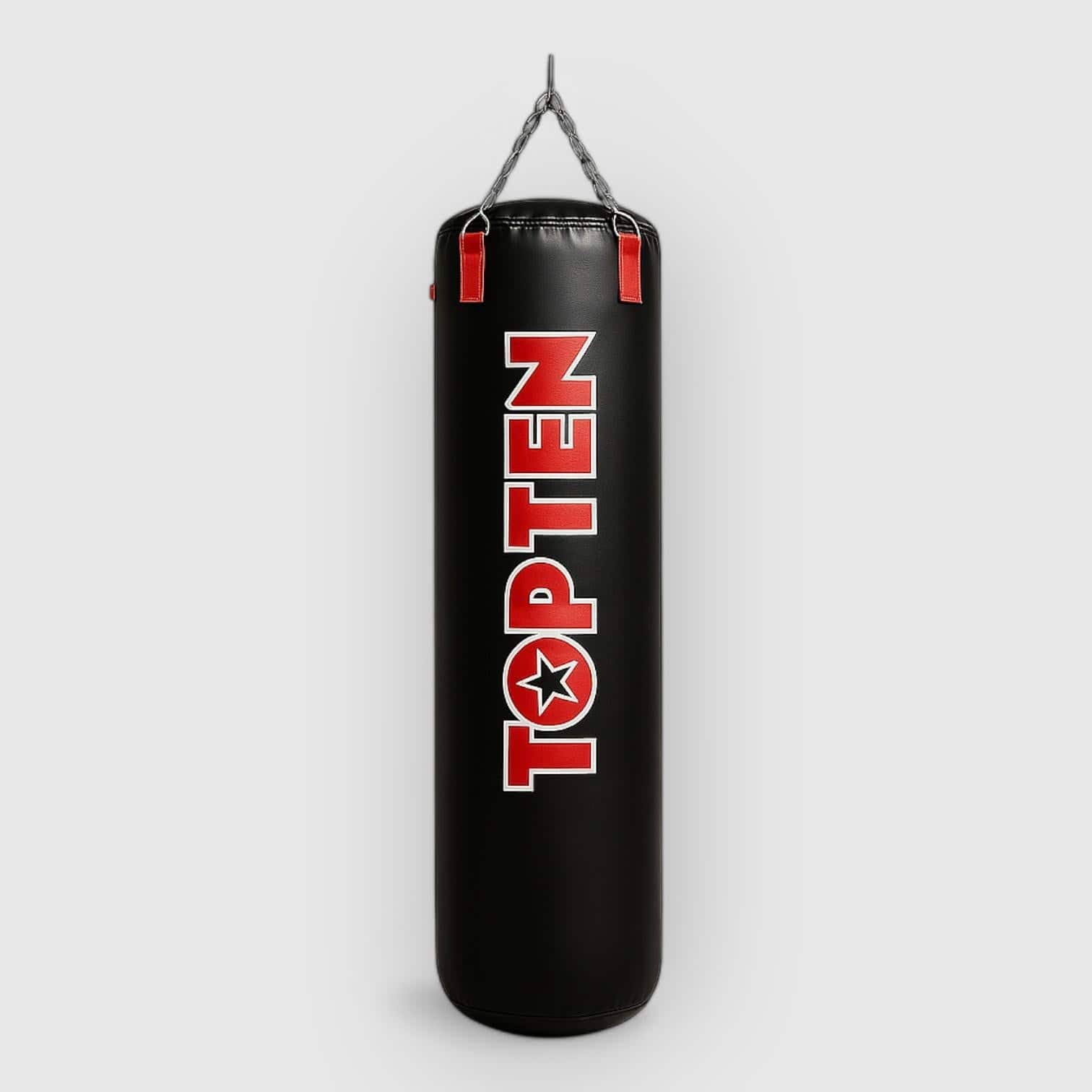
The length that suits most adults between 165 and 185 cm. Requires a solid ceiling mount.
You control the weight
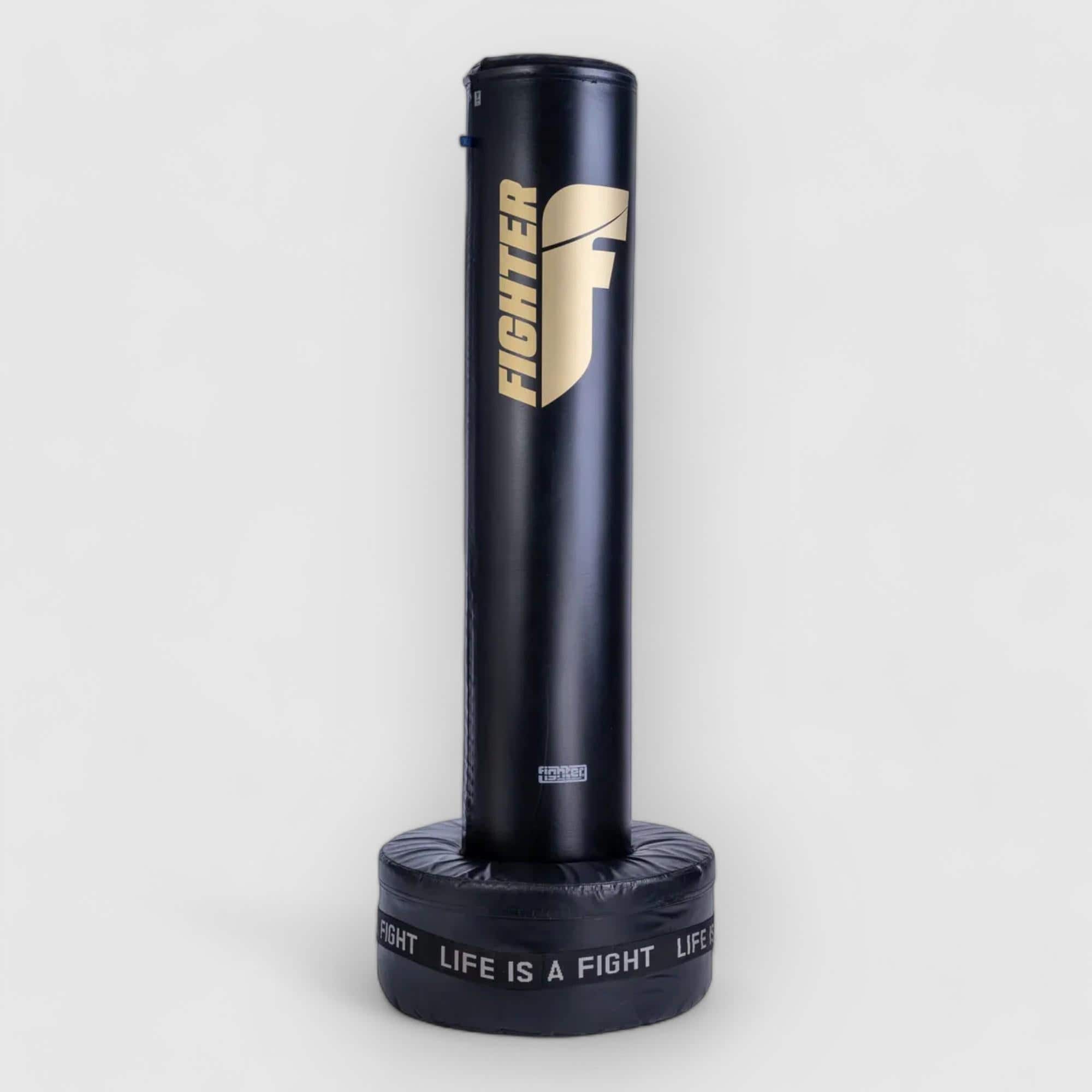
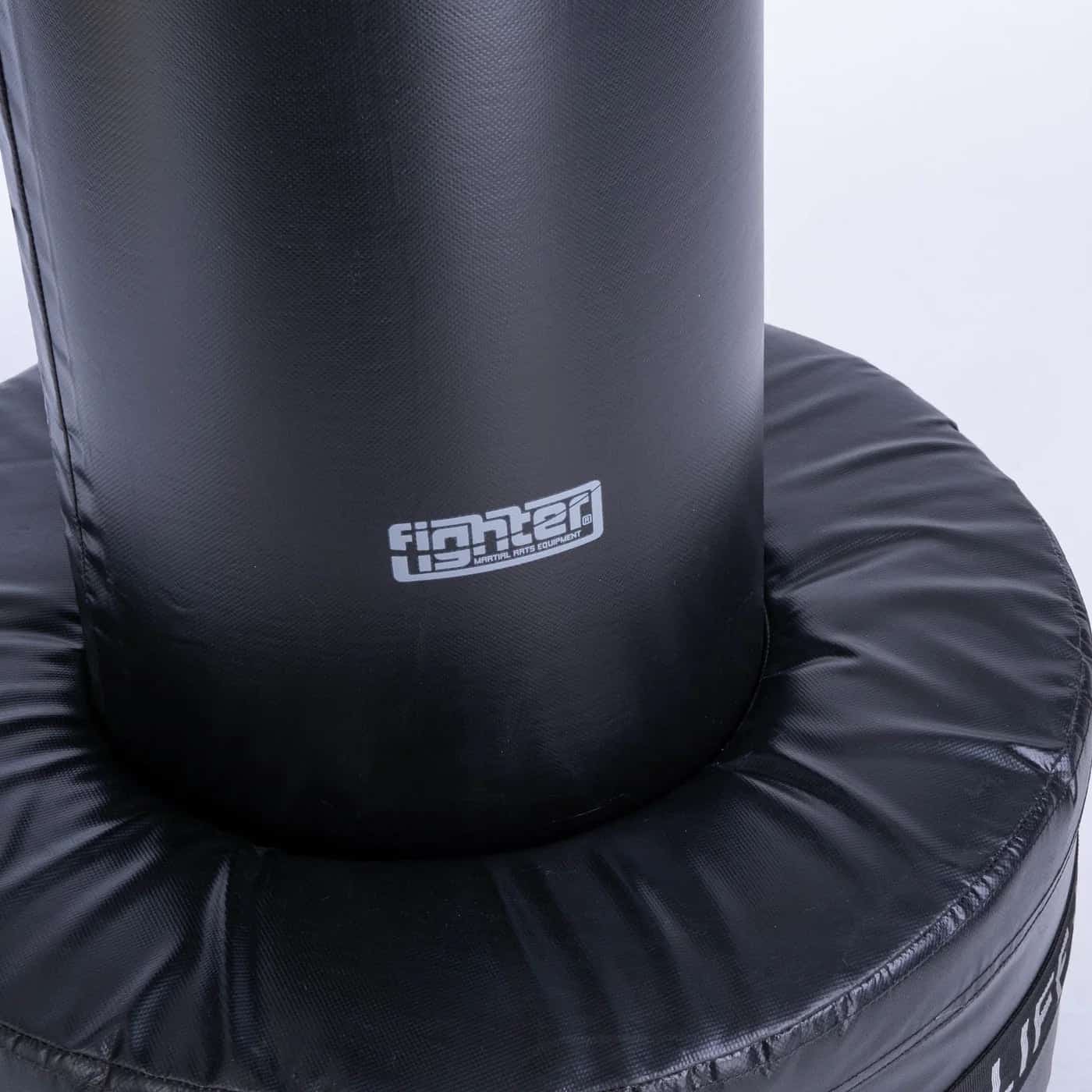
Fill the base with water or sand and set the resistance yourself. No drilling needed.
For kicks and knees
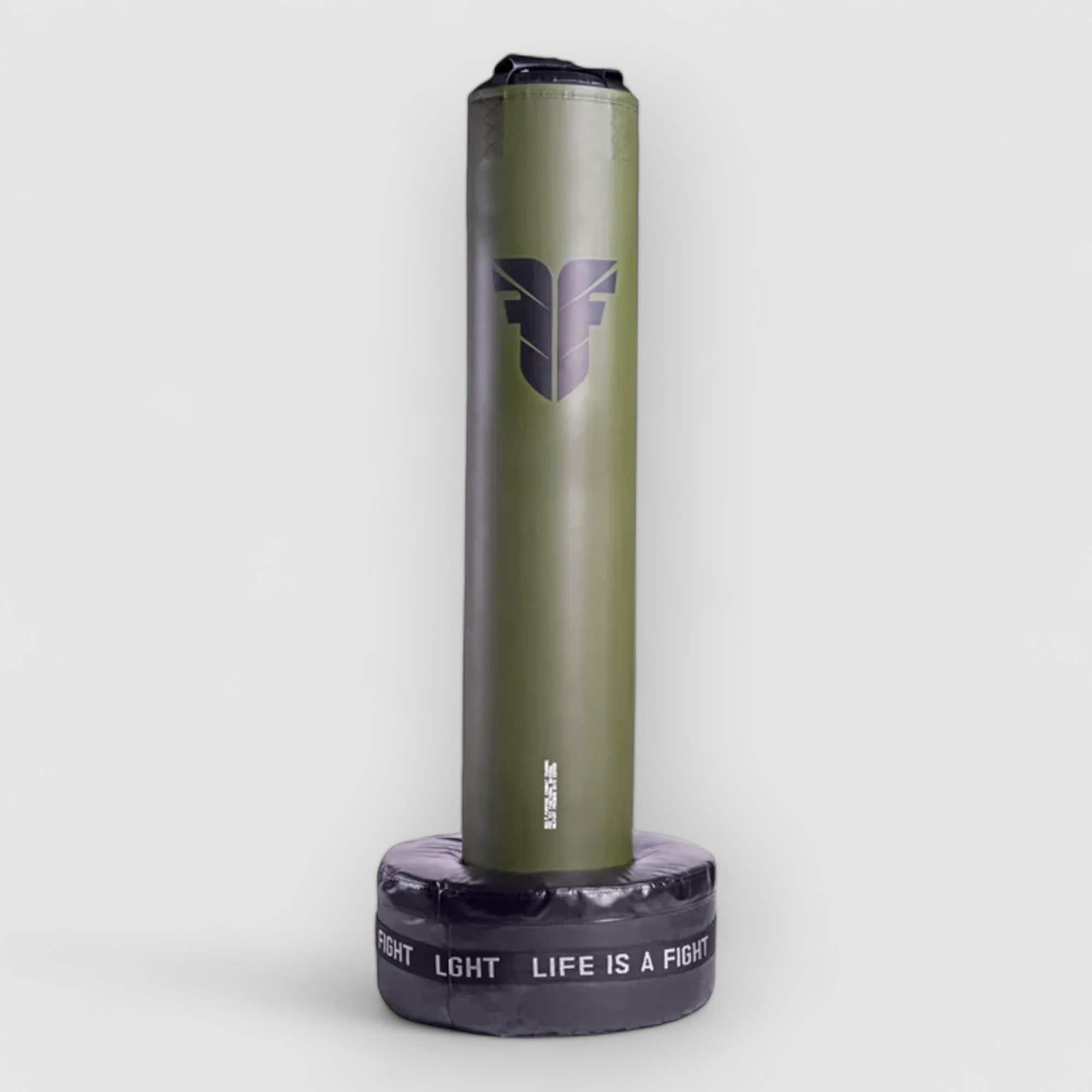
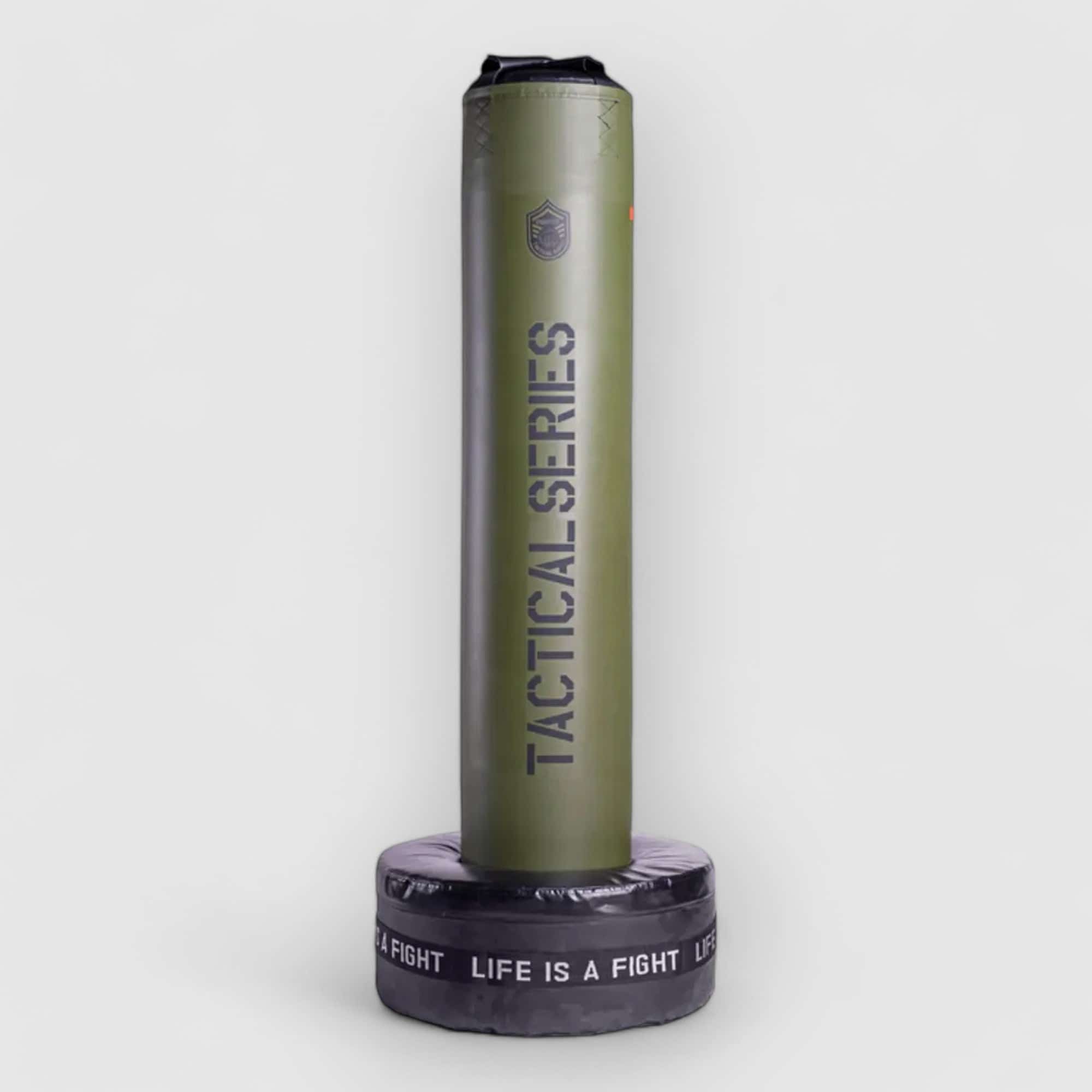
Three target heights in one bag, so low kicks, body punches and head height each get their own surface.
Calmer swing
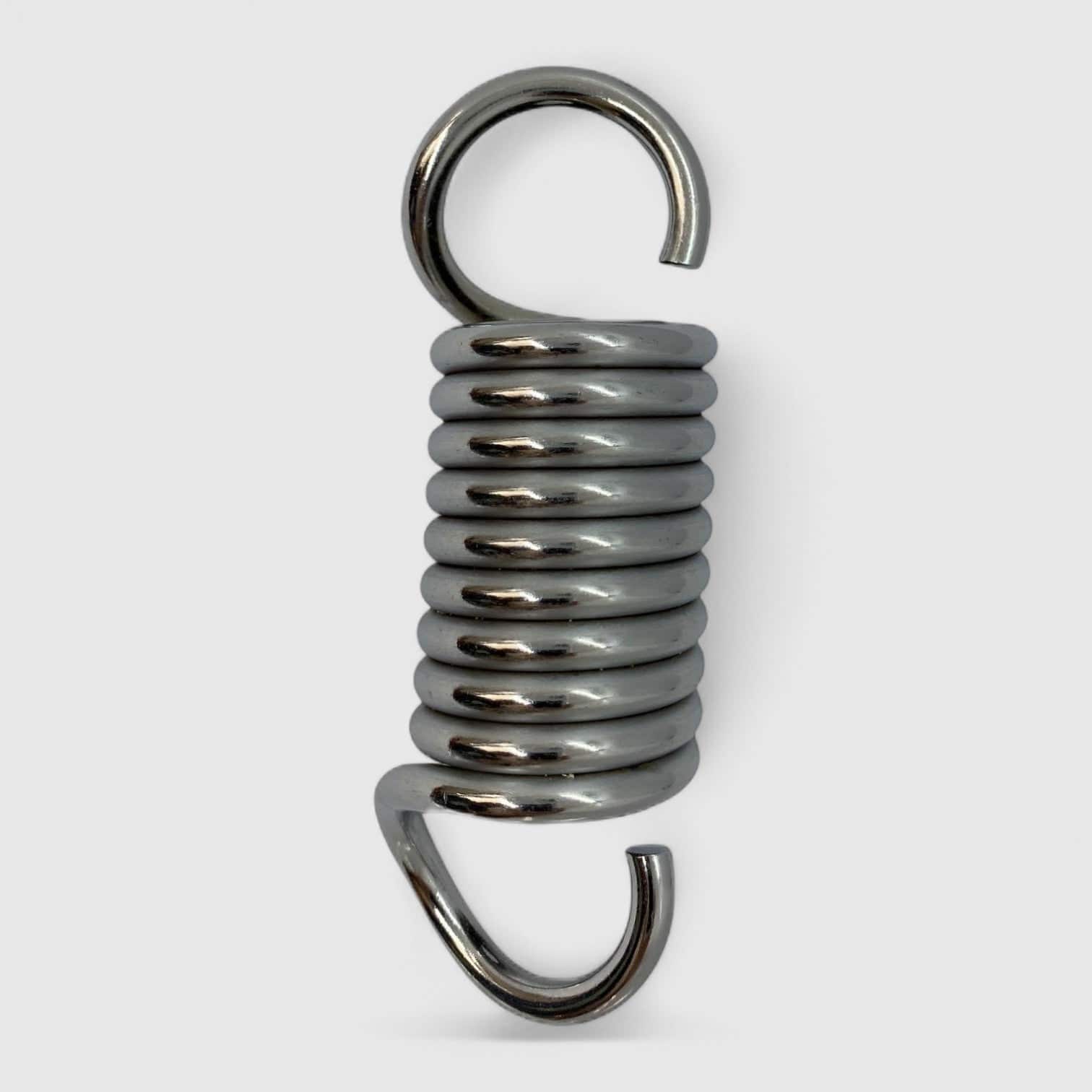
Absorbs the jolt at the mount and makes a lighter bag more predictable to work against.
Hanging kit
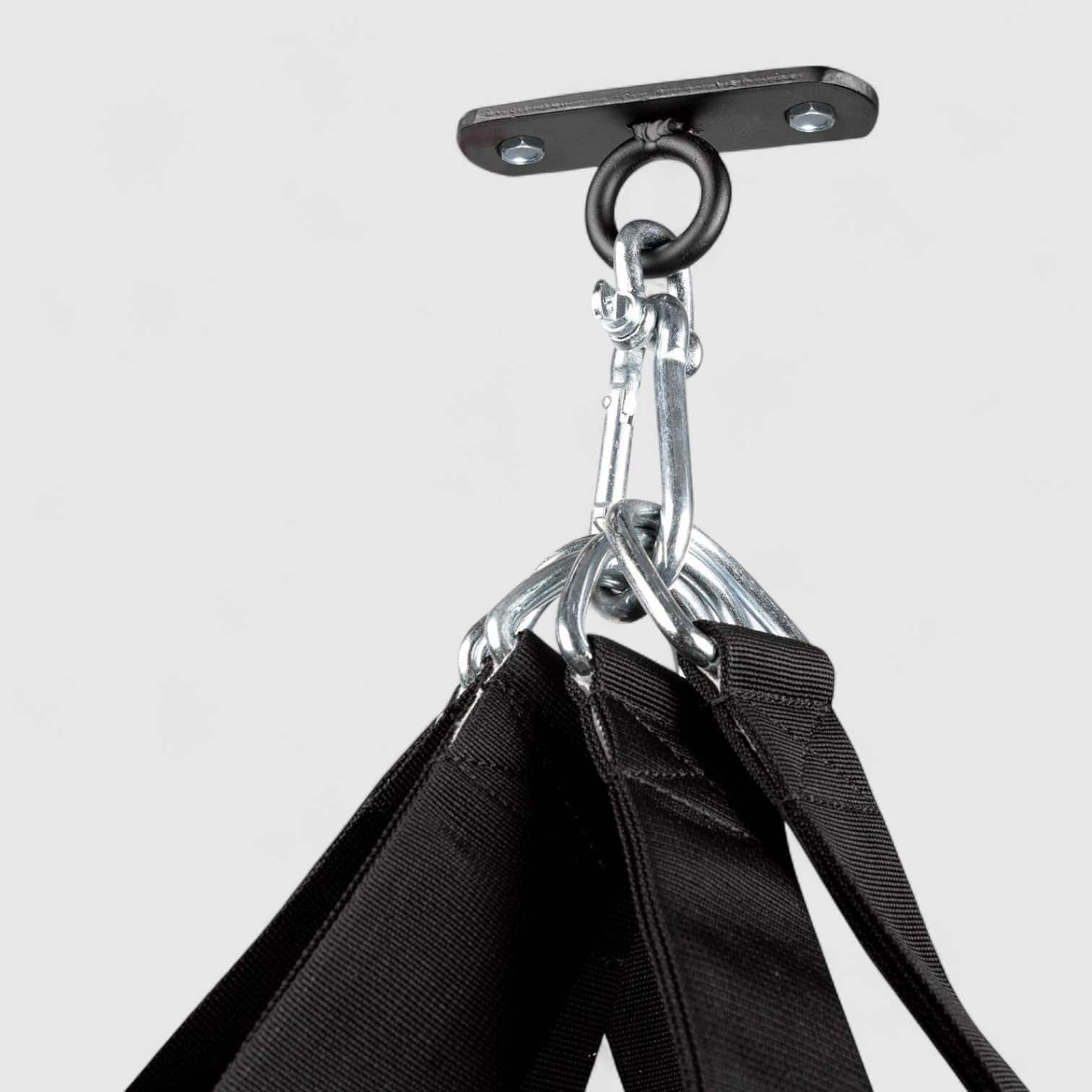
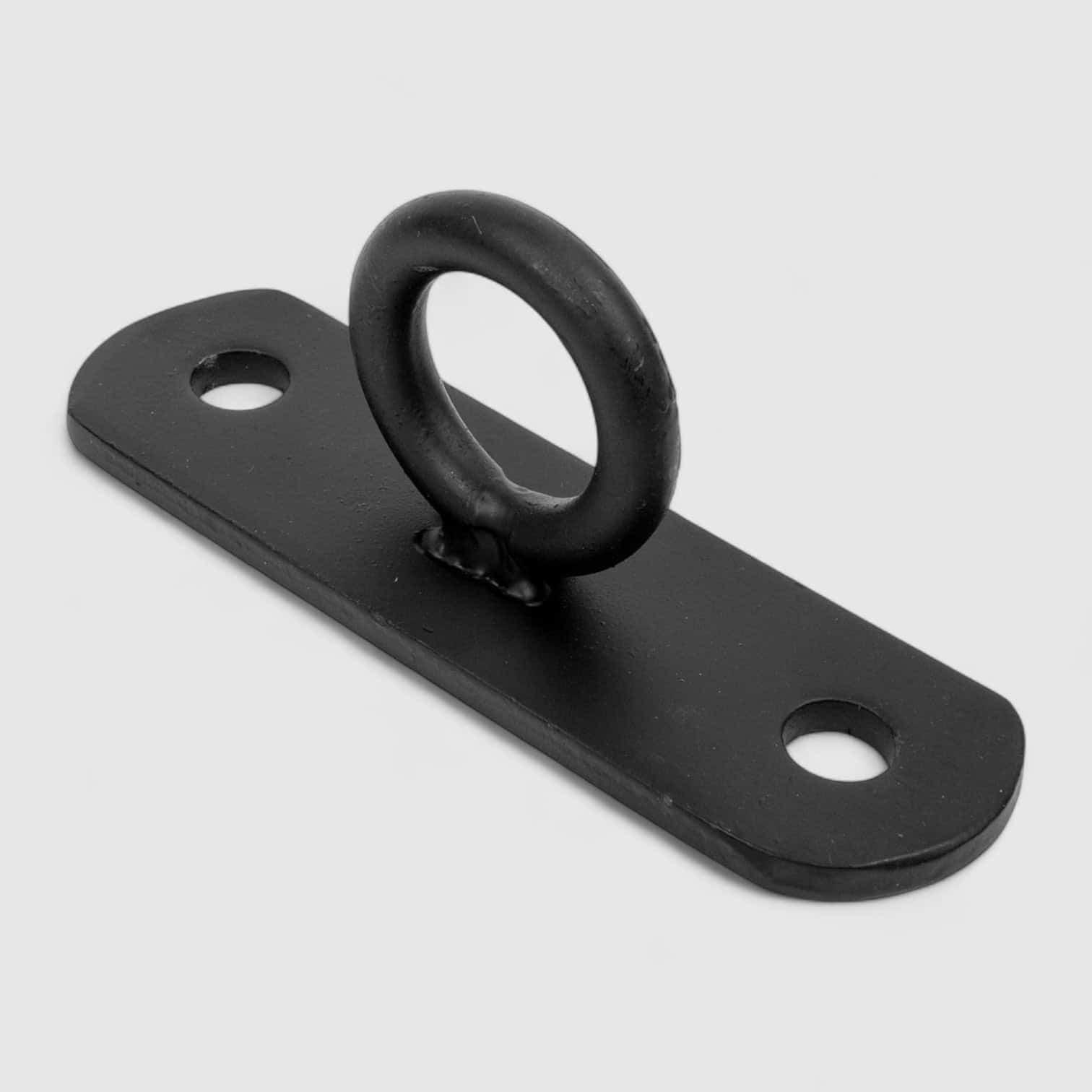
Chain and mount for a hanging bag. Buy it with the bag, not afterwards.
Frequently asked questions
How heavy a bag do I need if I weigh 70 kilos?
Around 35 kilos. If you kick a lot, you can happily go up towards 40.
Is a heavy bag always better?
No. A bag that is too heavy stops the punch abruptly and strains the wrists and shoulders. Movement in the bag is part of the training.
How do I know if the bag is too light?
It swings a long way after every punch and comes back late, so you can't practise combinations in rhythm.
What do I fill the base of a free-standing bag with?
Water is simplest and easiest to empty. Sand gives more stability, but makes the bag heavier to move.
Do children need their own bag?
Yes. An adult bag is both too tall and too hard for children. Choose a shorter and clearly lighter model.
What length should the bag be?
The top should reach your eye level and the bottom down towards your hips. See the guide to choosing a punching bag for the details.