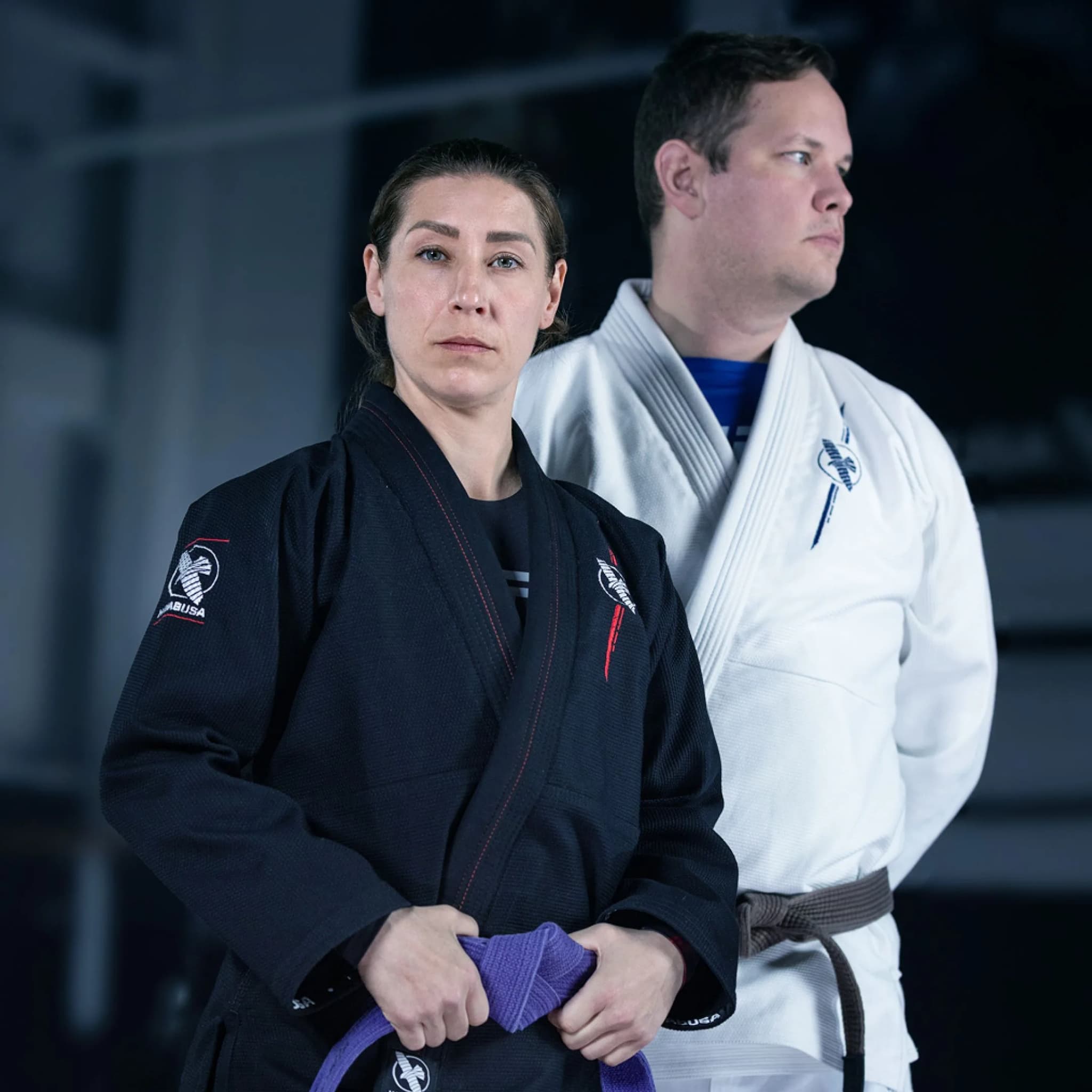

There is a particular kind of tired that only martial arts gives you. You are not out of breath the way you get on a long run. You are empty. Your arms hang, your shoulders burn, and you cannot lift your guard in the last minute of the round. There is nothing wrong with your fitness in the usual sense. You have just trained the wrong kind of fitness.
Why martial arts require a different kind of conditioning
A 40-minute run at a steady pace trains the body's ability to hold a moderate work rate for a long time. That is useful, but it is not what a round demands of you.
A round is short and hard, with a break that is not long enough. You work well above the pace you could hold for 40 minutes, and then you have to partially recover in 60 seconds before you do it again. The ability to recover in that break is what separates people who last five rounds from people who die in the third.
That is also why well-trained runners are often surprised the first time they spar. The engine is there, but it is tuned to the wrong revs.
Skipping rope: the most underrated session
Skipping rope is standard in boxing gyms for a reason. It trains conditioning, footwork, rhythm, timing and resilience in the ankles and calves at the same time. No other single exercise gives as much back per minute for a martial artist. It takes up the space of a doormat, costs little, and you can do it anywhere.
- Choose the right length
Stand with both feet in the middle of the rope and pull the handles up along your body. They should reach roughly to your armpits. If the rope is too long, you use unnecessary energy and get a poor rhythm.
- Start with a simple rope
Nylon or plastic is forgiving when you miss. Steel cable is faster, but punishes every mistake, and you miss a lot at the start.
- Jump low, use your wrists
Keep your elbows close to your body and turn the rope with your wrists, not your shoulders. Almost all beginners jump too high and use too much arm.
Progression over seven weeks
| Period | Session | Goal |
|---|---|---|
| Weeks 1–2 | 5 x 1 min, 1 min rest | Be able to skip continuously. If you miss, start again without stopping the clock. |
| Weeks 3–6 | 5 x 2 min, 1 min rest | Variation: 30 sec regular, 30 sec running steps, 30 sec high knees, 30 sec regular. |
| From week 7 | 5 x 3 min, 1 min rest | Matches round length. Add 15 sec at maximum pace at the end of each round. |
For those starting out
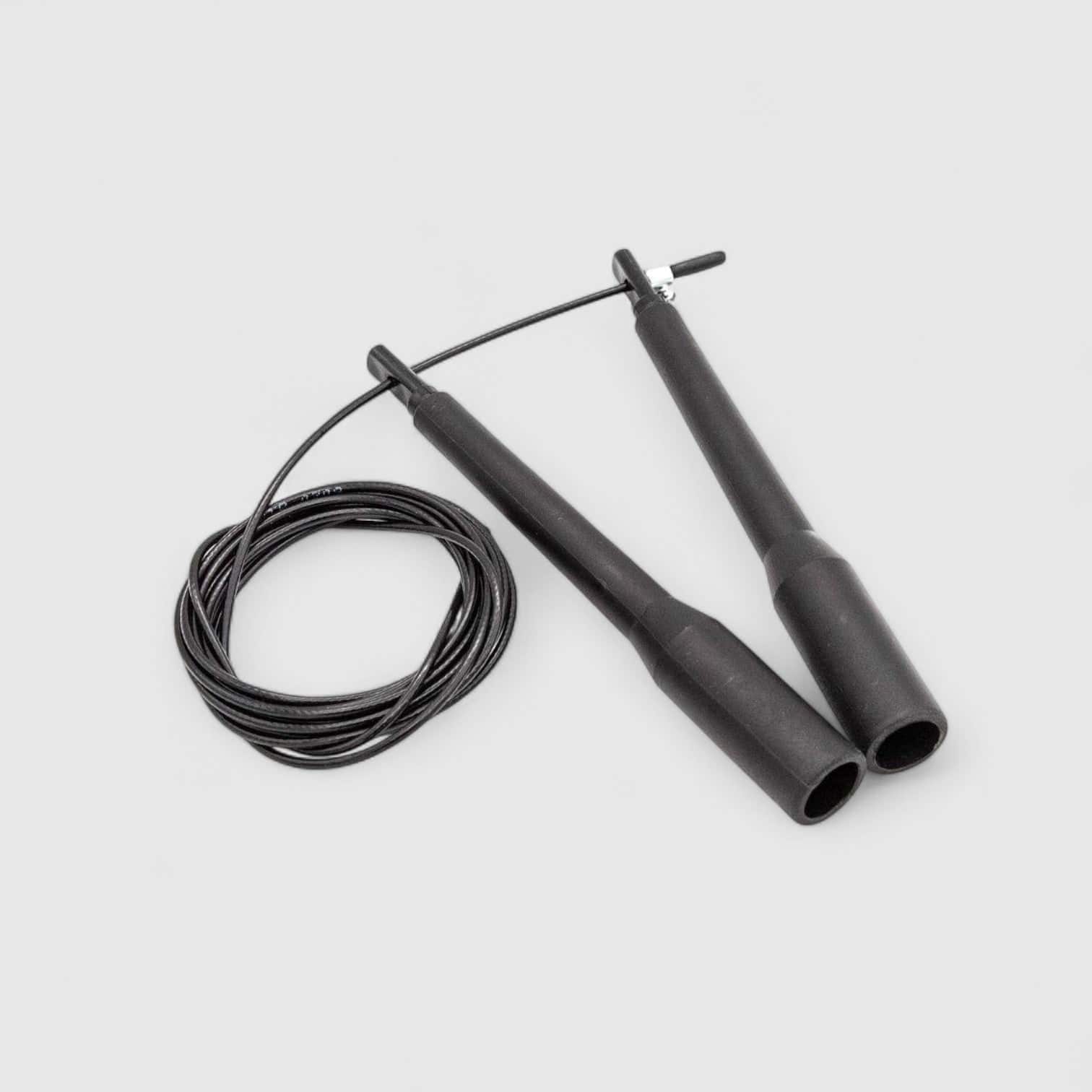
A simple rope that is easy to find your rhythm with. The right place to start if you have never done structured rope work before.
For everyday use
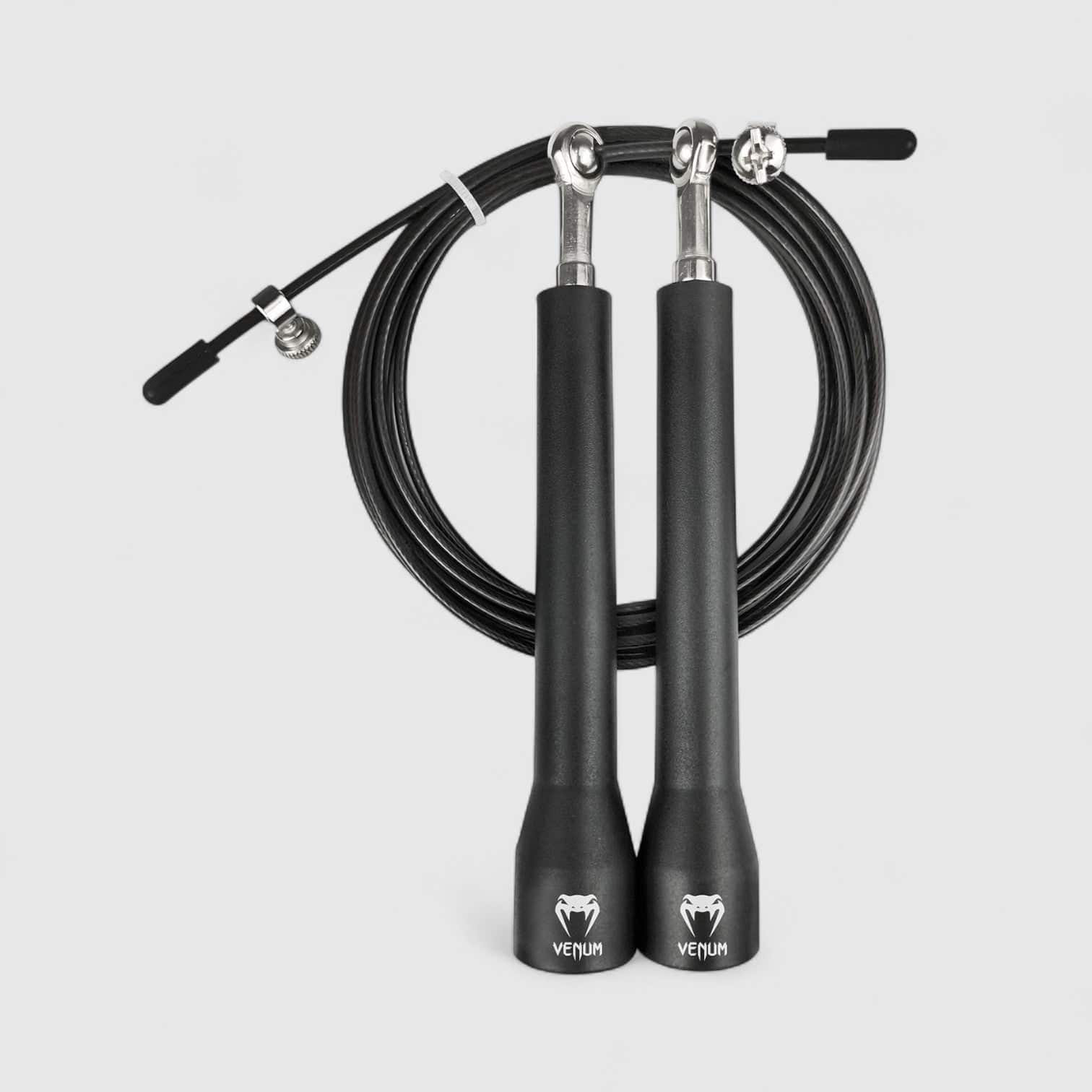
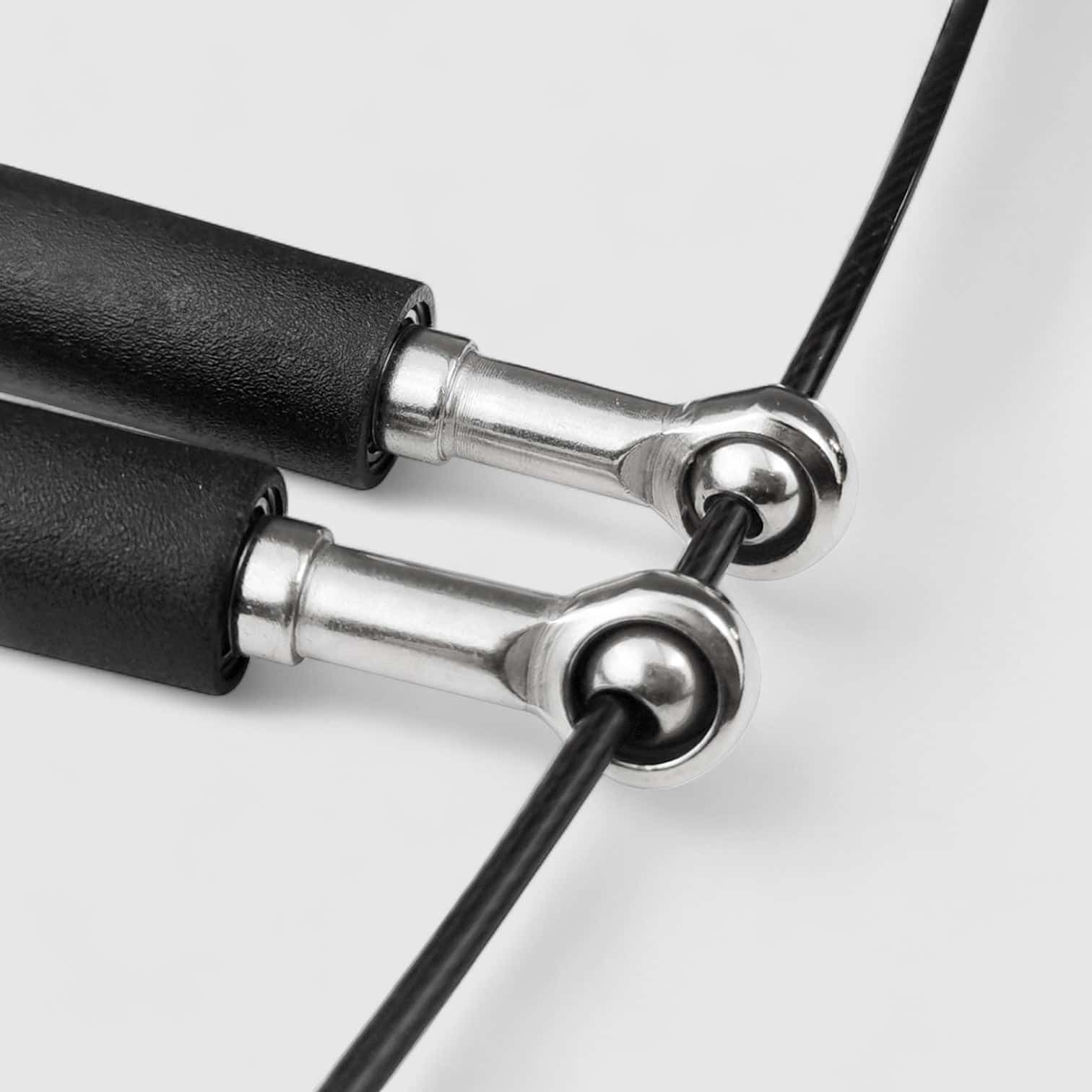
A light standard rope that can live in your bag and be used every session. A good compromise between speed and control.
When your technique is solid
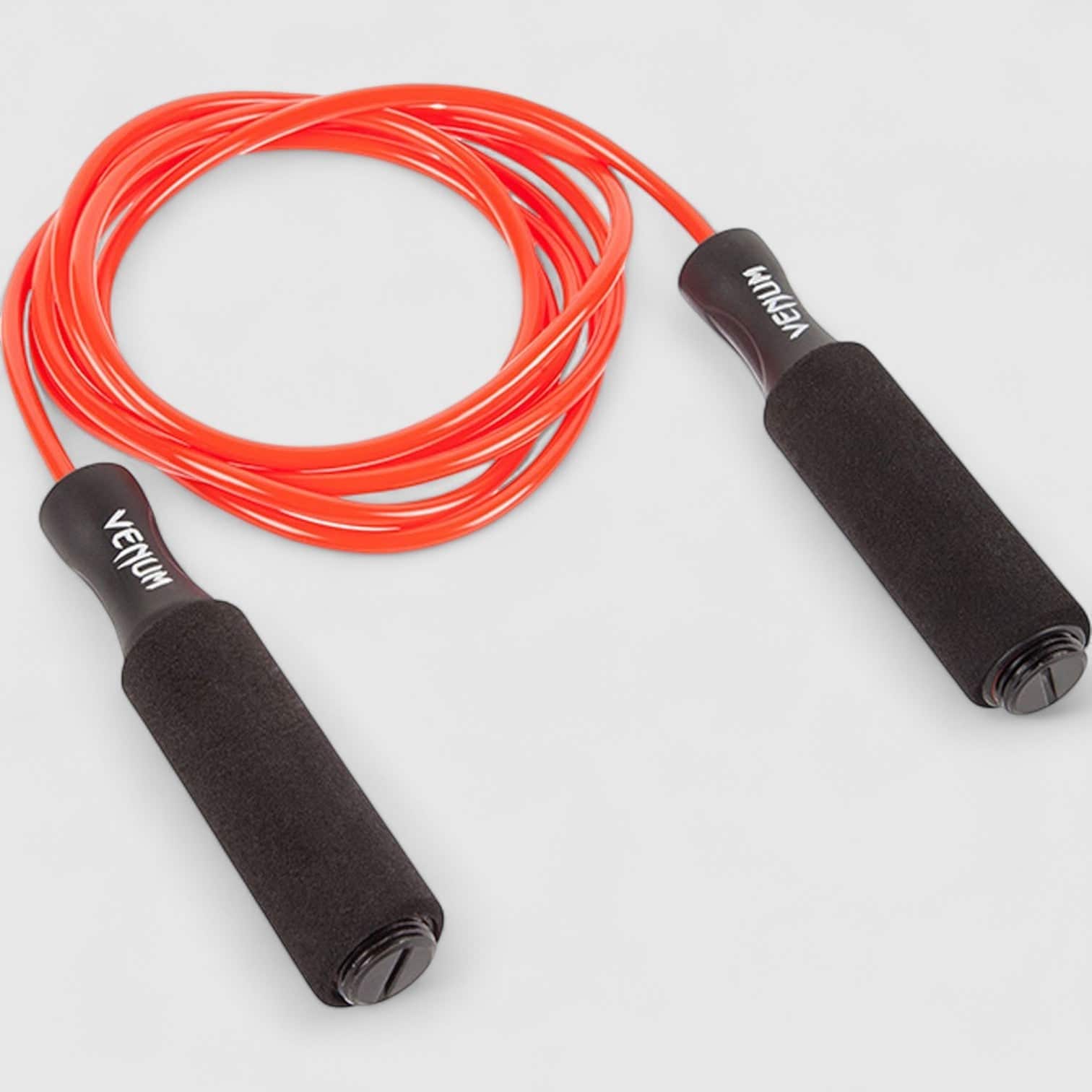
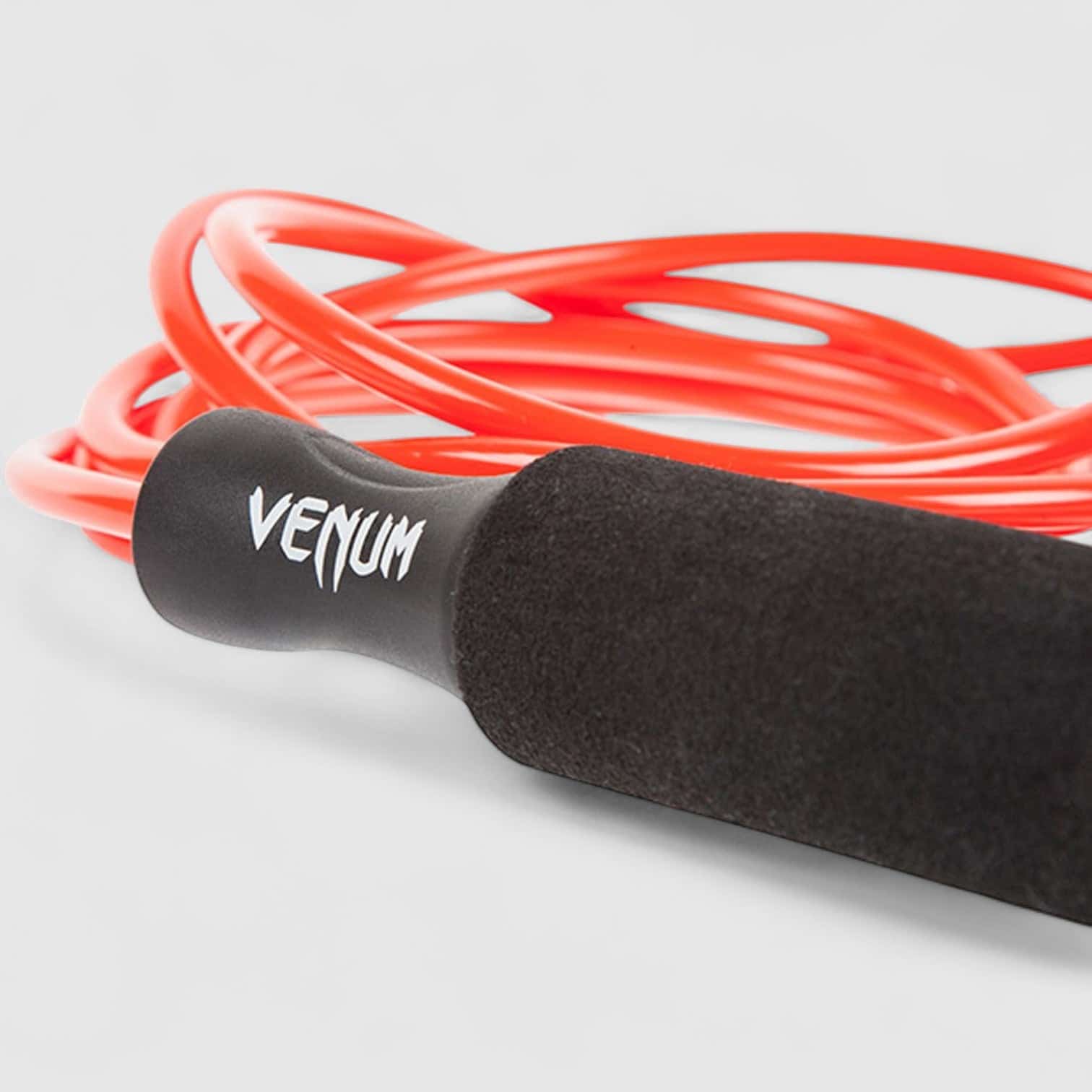
Gives more work to the shoulders and forearms. Wait until your rhythm is solid – weighted ropes punish poor technique.
See the full range of skipping ropes.
Intervals that match your round length
The principle is simple: train in the same work-to-rest ratio as you compete or spar in. If your club does 3-minute rounds with 1 minute of rest, the main part of your conditioning work should look like that.
| Format | Rest | Suits | Feels like |
|---|---|---|---|
| 3 x 3 min | 1 min | Boxing, kickboxing, point fighting | You should dread round three, but not stop in round two. |
| 2 x 5 min | 90 sec | Muay Thai, MMA | Builds the ability to hold your technique when you are tired. |
Both can be done with a skipping rope, on a bag, on a rowing machine or as hill runs. Two such sessions a week, in addition to club training, is enough for the vast majority. If you add more, the conditioning work competes with your technique training for recovery, and then technique loses.
Bag work as a conditioning session, not a technique session
The bag can be used for two completely different things, and most people mix them up without thinking about it.
| Technique session | Conditioning session | |
|---|---|---|
| Pace | Calm, controlled | Continuous movement for 3 minutes |
| Focus | Hip use, balance, clean single strikes | Work density – you never stand still |
| Heart rate | Kept low on purpose | High throughout the round |
| Technique | Should be precise | Gets worse as you tire, and that is fine |
If you mix the two, you get a mediocre session of both. Decide before you start which one the day is about.
If you train at home, a bag is the most complete investment you can make. We have guides to choosing the right punching bag and how heavy the bag should be. See also the range of punching bags and kick and strike pads if you train with a partner.
How to fit it in alongside club training
Conditioning work should supplement club training, not compete with it. Here is a week that works for most people who do two to three club sessions:
| Day | Session |
|---|---|
| Monday | Club training |
| Tuesday | Skipping rope, 5 x 3 minutes |
| Wednesday | Club training |
| Thursday | Easy movement or rest |
| Friday | Club training |
| Saturday | Intervals, 3 x 3 minutes on the bag or on a hill |
| Sunday | Rest |
If you only have one club session a week, you can add a third conditioning session. If you have four or more, cut down to one. Club training already contains a lot of this.
Recovery and the most common mistakes
The most common mistake is making every session moderately hard. Two really hard sessions and the rest easy gives better progress than five moderate sessions. The body adapts to what you do rarely and hard, not what you do often and half-heartedly.
The second most common is skipping the rest periods in intervals because they feel too long. The rest is not a break, it is part of the training. It is during the rest that the body learns to recover, and that is the ability you are after.
The third is increasing too fast. Add at most one session a week, and hold that level for three weeks before you increase again. Tendons and ligaments take months to adapt, while muscles take weeks – which is why you can feel strong long before your body can handle the volume.
Sleep does more for your conditioning than any supplement. If you consistently sleep under seven hours, you will notice it in your recovery between rounds before you notice it in anything else.
If you want more background on why martial arts are such an effective form of training, we have written about what martial arts do for body and mind.
Frequently asked questions about conditioning in martial arts
Is long-distance running a waste of time for martial artists?
No, but it should not be the main work. An easy long run once a week builds a base that helps you recover faster between hard sessions. It is the intervals that build the specific capacity rounds demand.
How long should I skip rope?
Start with 5 x 1 minute and build up to 5 x 3 minutes over six to eight weeks. More than 15 to 20 minutes continuously adds little for a martial artist.
Which skipping rope should I start with?
A simple nylon or plastic rope. They are forgiving when you miss and easy to find a rhythm with. Steel cable and weighted ropes are better once your technique is solid, but make learning unnecessarily frustrating.
Can I build conditioning without gear?
Yes. Hill runs, shadowboxing and bodyweight intervals give a lot. A skipping rope just makes it easier and more specific, and it is the most affordable training gear there is.
How long does it take to notice progress?
Four to six weeks with two structured sessions a week gives a clearly noticeable difference in how you feel in round three. Full adaptation takes several months.
Should I do conditioning before or after club training?
After, or on a separate day. If you go into technique training tired, you learn less and make more mistakes. If time is a constraint, put the hard conditioning session straight after club training on the same day.