
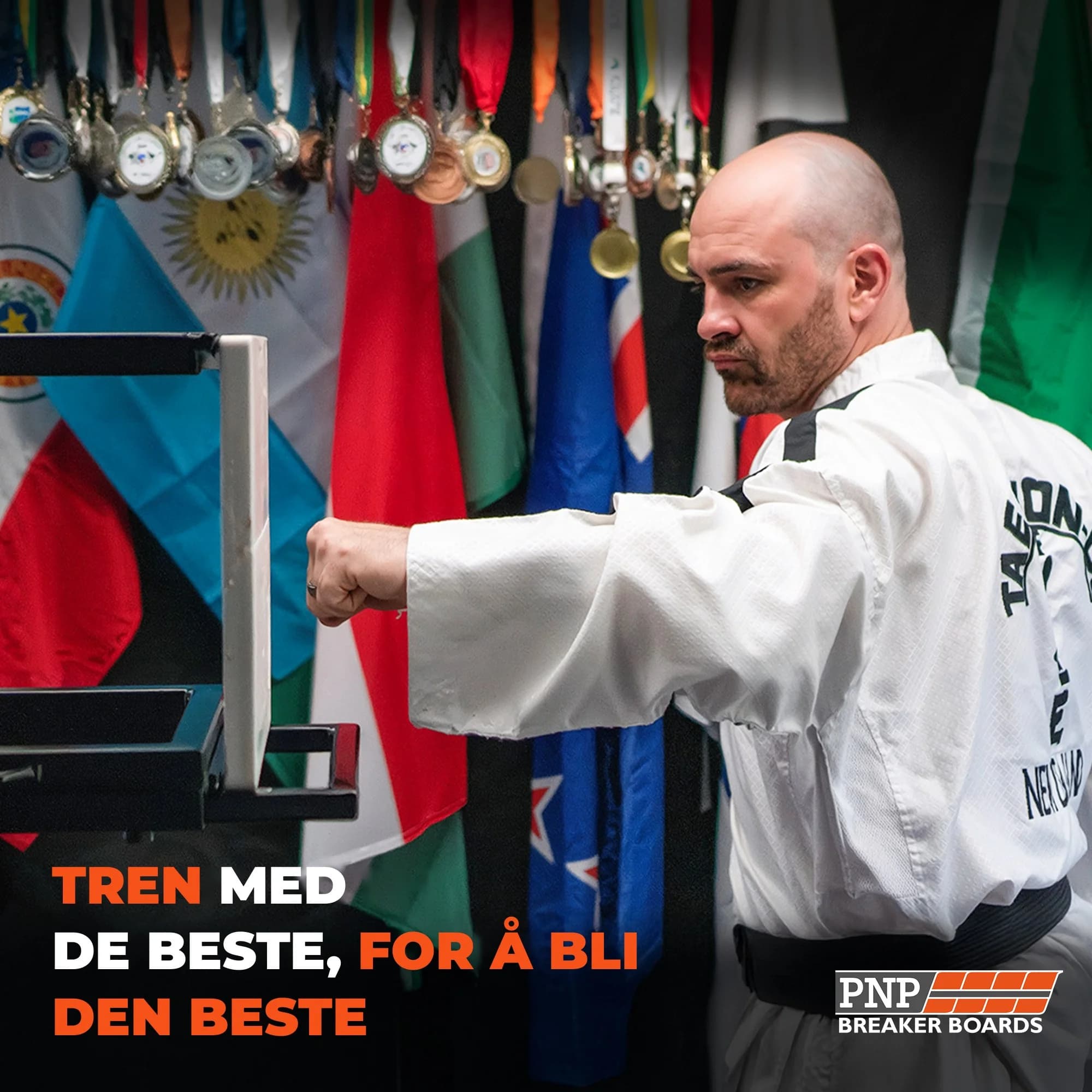
The first breaking board a child strikes through is remembered for a long time. The first board that refuses to break is remembered too – and then the problem is rarely technique, but that the board was too hard. The right level is the difference between a student who looks forward to the next grading and one who dreads it.
PNP Breaker Boards makes reusable breaking boards in five levels, from a padded board for the youngest to a black board for power breaking. Here is what sets them apart, who each level suits, and how to move up safely from one level to the next.
What is a reusable breaking board?
A reusable breaking board consists of two halves of impact-resistant technical polymer that lock together along a groove. When the strike has enough power and lands correctly, the halves separate. You slide them back together, and the board is ready for the next strike. Corners and edges are rounded, and there are no splinters. PNP boards are made in the UK.
Strength is given in ft-lb (foot-pounds): how much energy it takes to break the board. The higher the number, the harder the board. Converted to joules, 12.5 ft-lb is approx. 17 J, 25 ft-lb approx. 34 J, 50 ft-lb approx. 68 J and 80 ft-lb approx. 108 J.
Wooden boards or reusable breaking boards?
Wooden boards have been used for breaking for generations, and many value the tradition. But wooden boards have some practical drawbacks, which is why many clubs have switched to reusable boards. Here is how they compare:
| Wooden board | Reusable breaking board | |
|---|---|---|
| Use | Can only be used once | Reusable – the halves slide back together after each break |
| Resistance | Varies with grain, knots and moisture in the wood | Even and predictable from strike to strike |
| Safety | Can splinter and leave sharp edges | No splinters, rounded corners and edges |
| Cost over time | The club constantly has to buy new boards | One board lasts for many breaks, and the cost falls over time |
| Material | Wood, usually pine or similar | Impact-resistant polymer designed to mimic the resistance of wood |
For a club, this means the student can practise on the same board all evening, and a failed break is about technique – not about that particular board being harder than the last one. Reusable boards are used today in clubs, at gradings, in competitions and at demonstrations.
The five levels
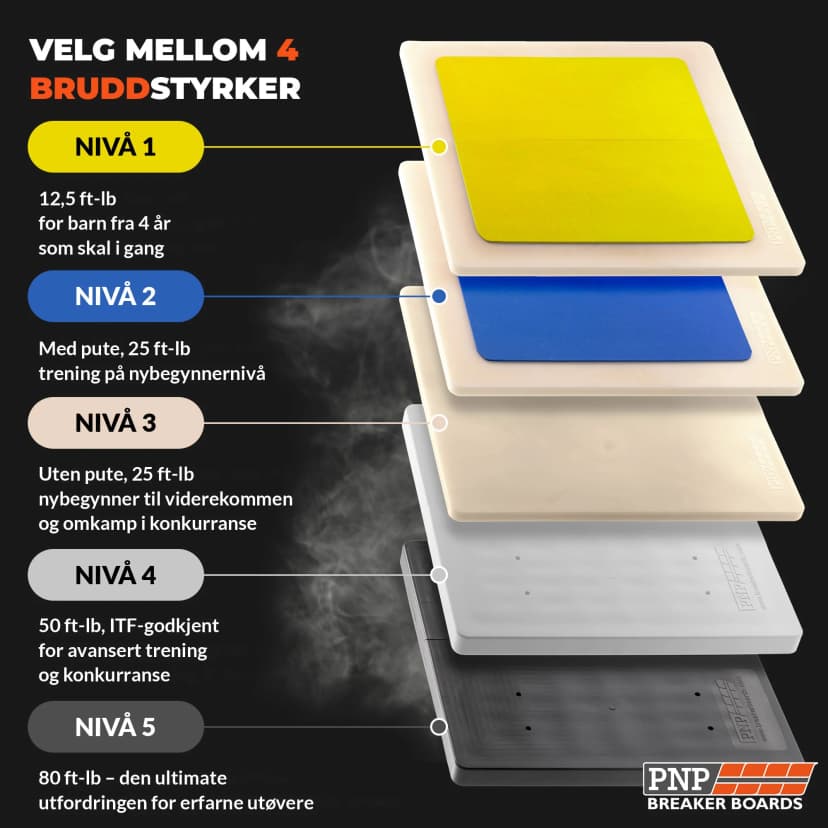
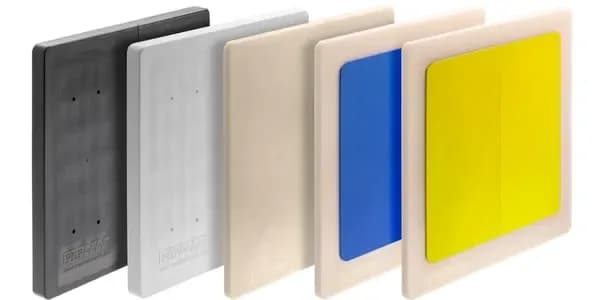
| Level | Board | Breaking strength | Suitable for |
|---|---|---|---|
| 1 | Natural with yellow pad | 12.5 ft-lb (approx. 17 J) | Children from age 4 and beginners, supervised by an instructor |
| 2 | Natural with blue pad | 25 ft-lb (approx. 34 J) | Next step after 12.5: double the resistance, still with a pad |
| 3 | Natural without pad | 25 ft-lb (approx. 34 J) | Intermediate students, gradings and the deciding board (tie-break) in competition |
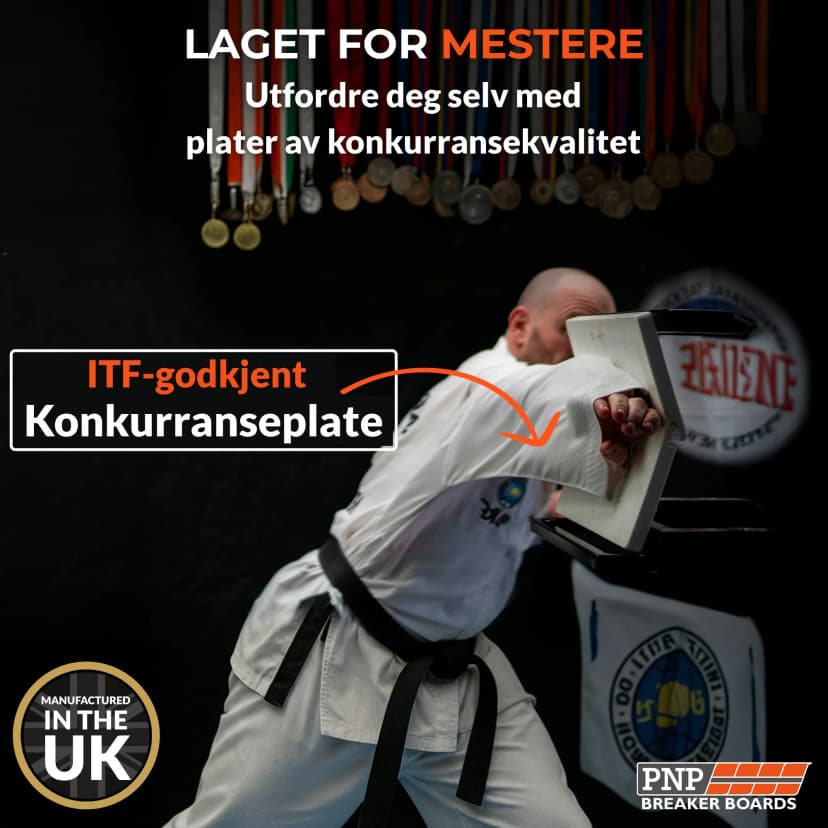
| 4 | White | 50 ft-lb (approx. 68 J) | Advanced athletes. ITF-approved for competition |
| 5 | Black | 80 ft-lb (approx. 108 J) | Elite athletes and power breaking. The hardest in the series |
The steps are bigger than the numbers might suggest: 25 takes twice as much as 12.5, 50 twice as much as 25, and 80 is 60 per cent harder than 50. Levels 1 and 2 have a foam pad on the striking surface, which cushions the impact on hand and foot. Level 3 has the same resistance as level 2, but without a pad and with a slimmer profile – the way a board feels at a grading.
Which level suits whom?
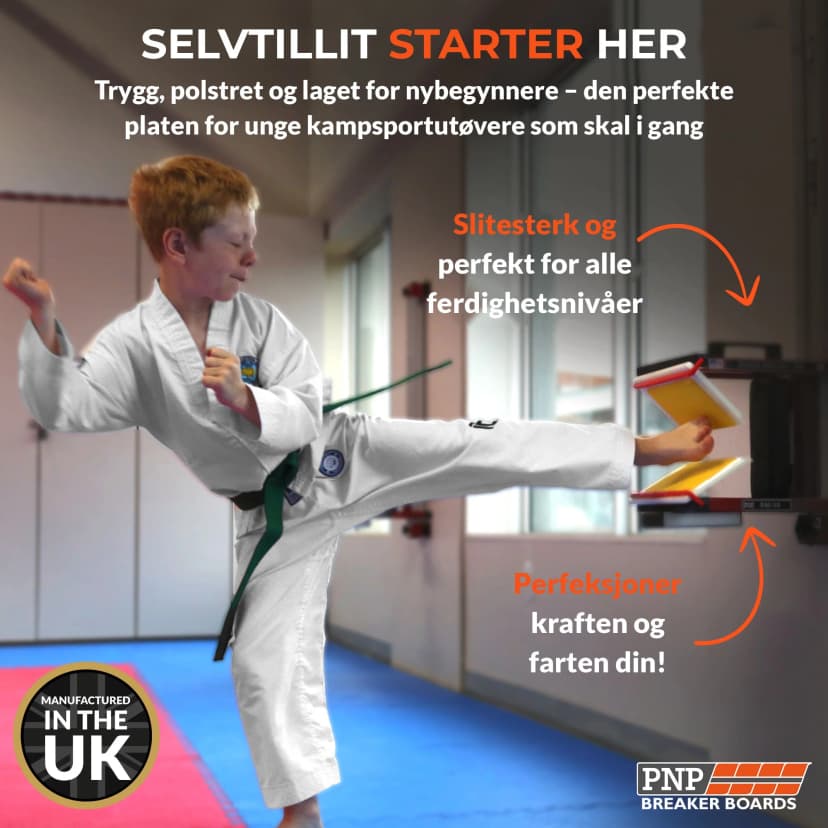
- Children and complete beginners: Start at level 1 with the yellow pad. The resistance is manageable, and the pad makes it easier to dare to strike through. The manufacturer recommends it from age 4, always supervised by an instructor.
- Students who break 12.5 consistently: Level 2 with the blue pad is the bridge onwards – double the resistance, but still padded.
- Gradings and intermediate students: Level 3 in natural is the 25 board without a pad, and is often used at gradings and as the deciding board in competition.
- ITF competition and advanced athletes: The white 50 board is the only one in the series that is ITF-approved. If you are training for an ITF taekwondo competition, it makes sense to practise on this one.
- Power breaking and demonstrations: The black 80 board is for experienced athletes with strong striking technique, including when several boards are stacked. It is not for beginners.
Beware of cheap copies
If you search for breaking boards online, you will find reusable boards at a fraction of the price – often mass-produced imports with no known manufacturer. Some of them probably work perfectly well. But when you do not know who made the board, you do not know what you are getting either, and there are some risks worth knowing about:
- Undocumented or inconsistent breaking strength. A board marked «25» can, at worst, break like a 15 or a 40. That gives a misleading picture at gradings, and a board that is much harder than stated can injure a child who strikes with full confidence.
- Brittle material. Plastic that is not made for repeated strikes can crack and leave sharp edges.
- Halves that do not lock. If the halves slide apart in the holder before the strike, the board is both useless and unsafe.
- No approval. If the board is to be used at a competition, it must be approved by the federation.
PNP boards are made in the UK, have five levels with stated breaking strength, and are designed to give the same resistance from strike to strike.
How to break safely
- Children always break under the supervision of an instructor.
- Warm up, and practise the technique on a pad or mitts before moving on to the board.
- Hold the board steady. Use a breaking board holder, or an experienced holder who grips the outer edges with their fingers away from the striking surface.
- Check that the halves are fully together before each strike.
- Aim through the board, not at it. A strike that slows down on impact loses its power. Keep your eyes on the target point and complete the movement.
- Do not skip levels. If the board is too hard, technique suffers and the risk of injury increases.
When is it time for the next level?
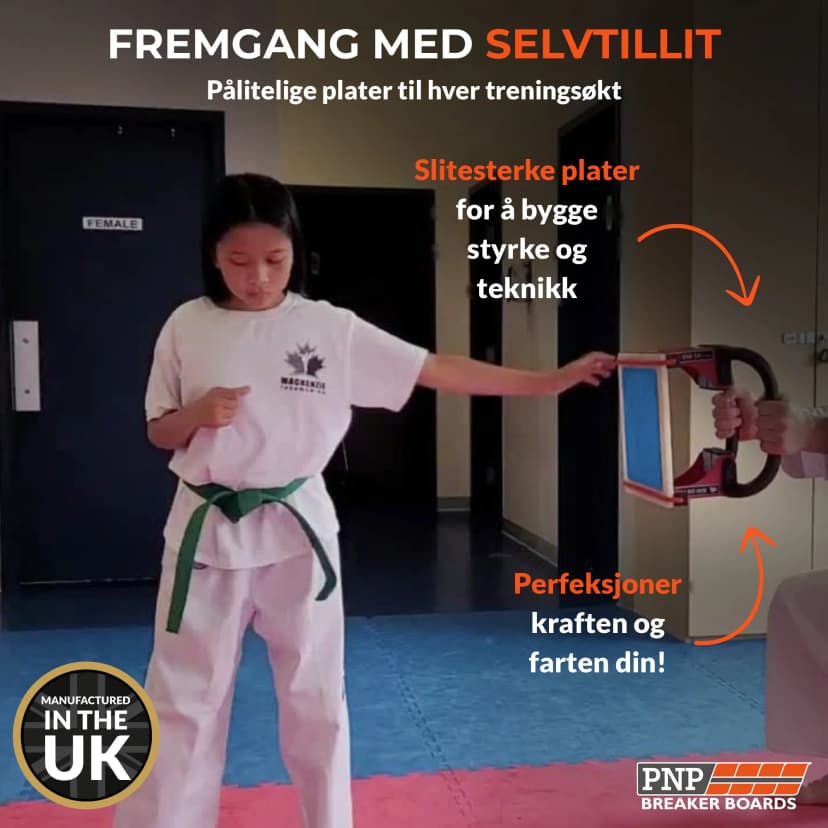
One successful break does not mean the student is ready for the next level. Look for this instead:
- The board breaks every time, including under pressure and with different techniques
- The technique is stable: good balance, the right striking surface and full follow-through
- The student no longer hesitates before the strike
- The instructor thinks the student is ready
Between 12.5 and 25, we recommend going via the blue 25 board with a pad before the natural one without a pad. That way the resistance increases first, and the pad disappears afterwards – one step at a time. And a failed break is not a defeat. It is information about what needs practising.
The boards in our shop
Level 1 – first break
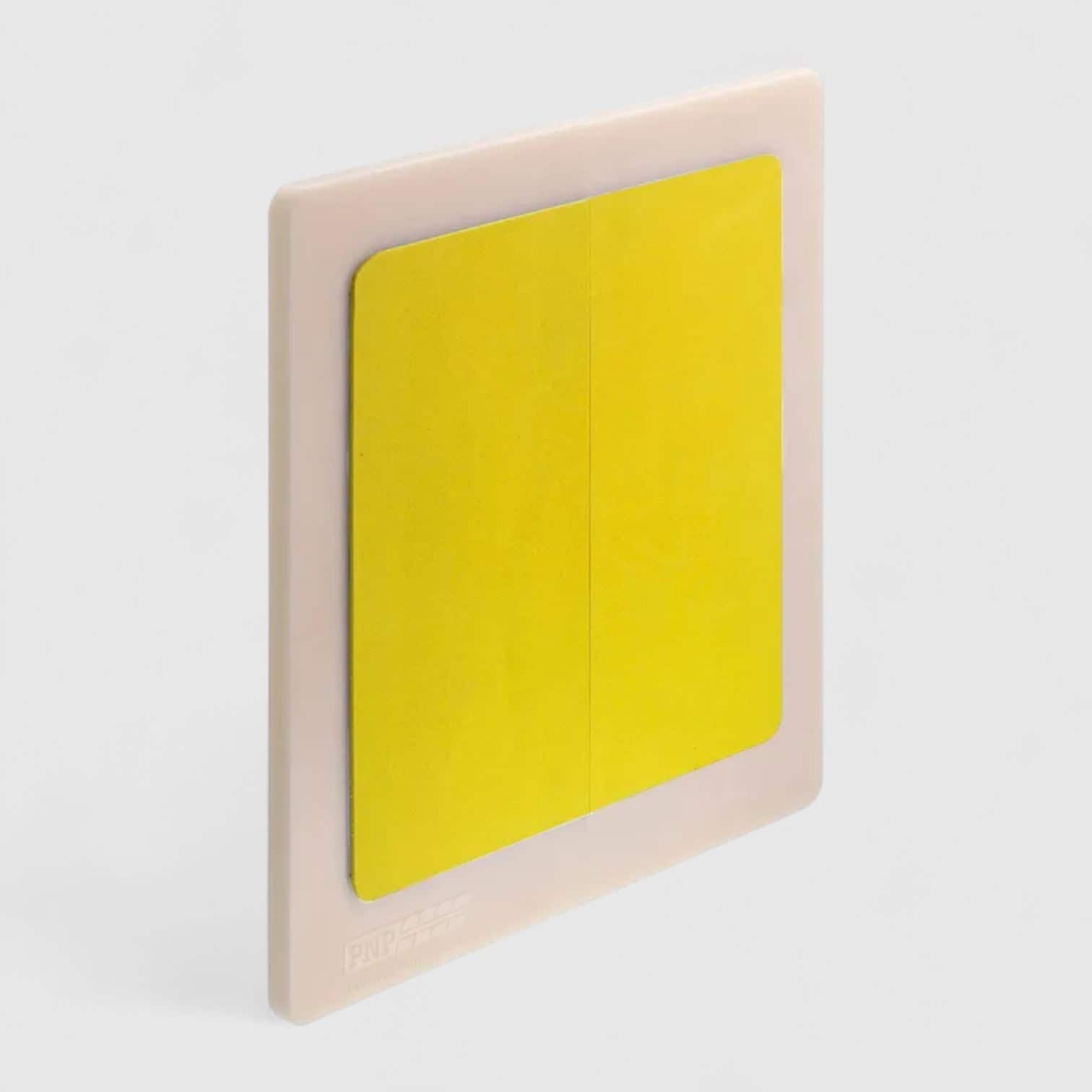
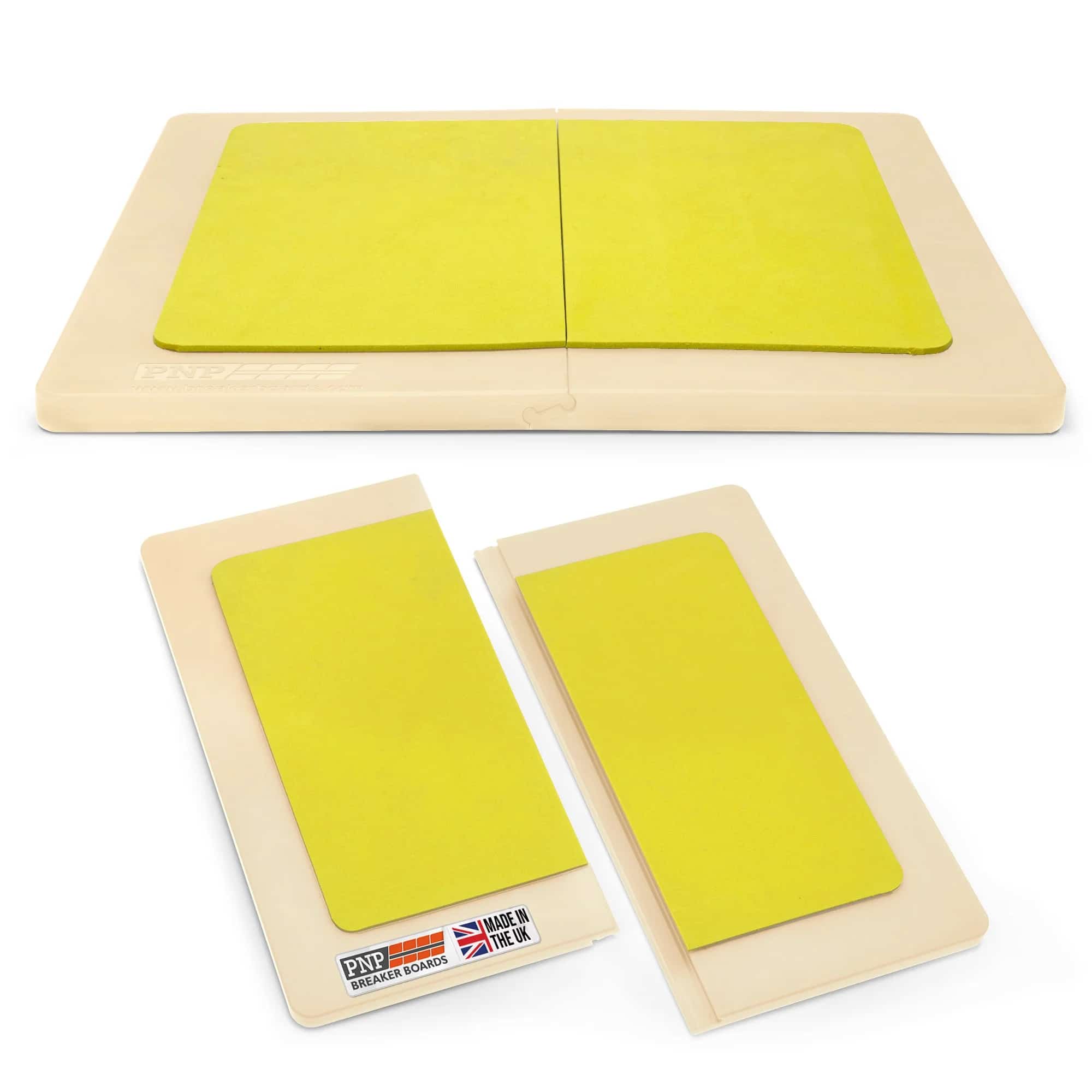
For children from age 4 and beginners. The foam pad cushions the impact, and the resistance is manageable.
Level 2 – next step
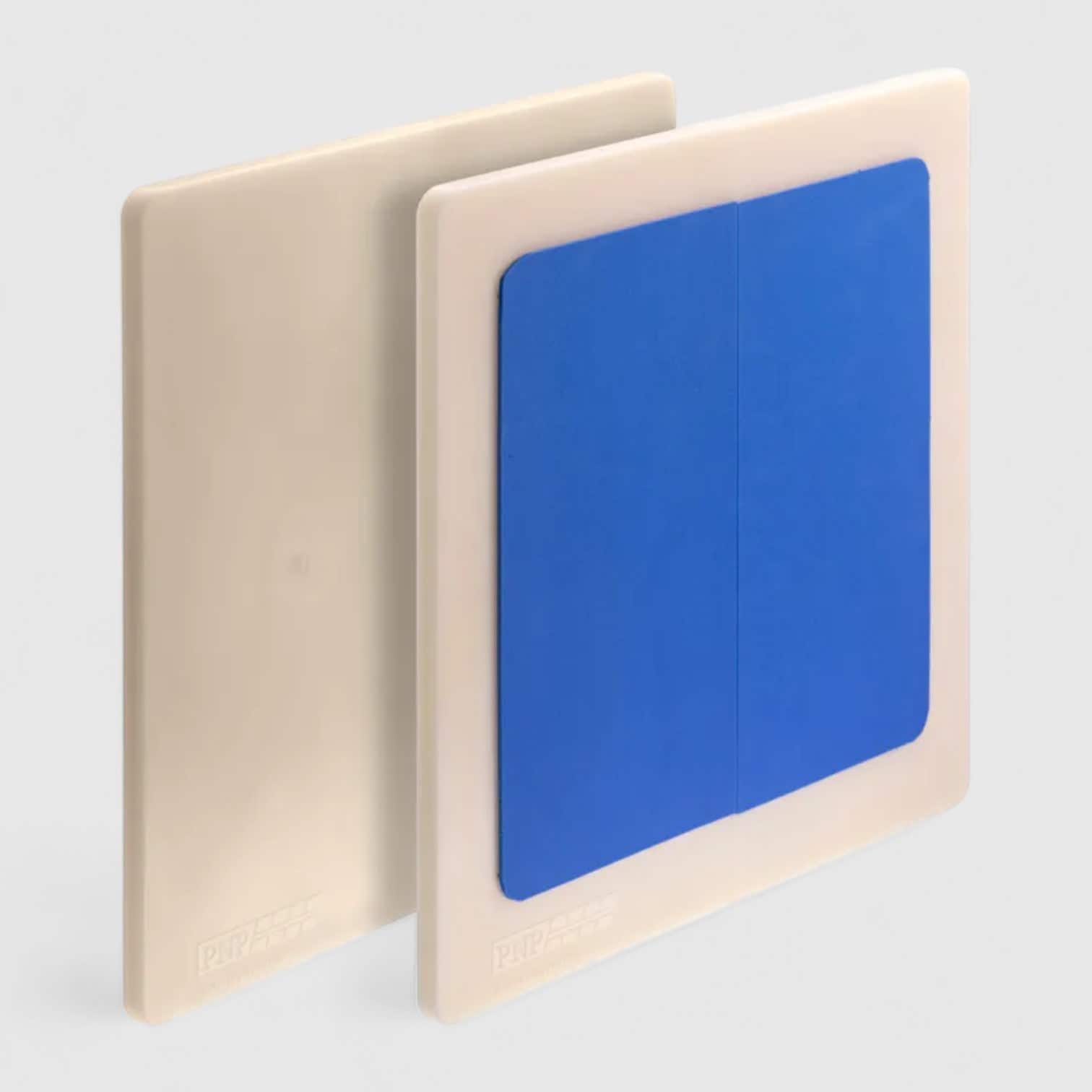
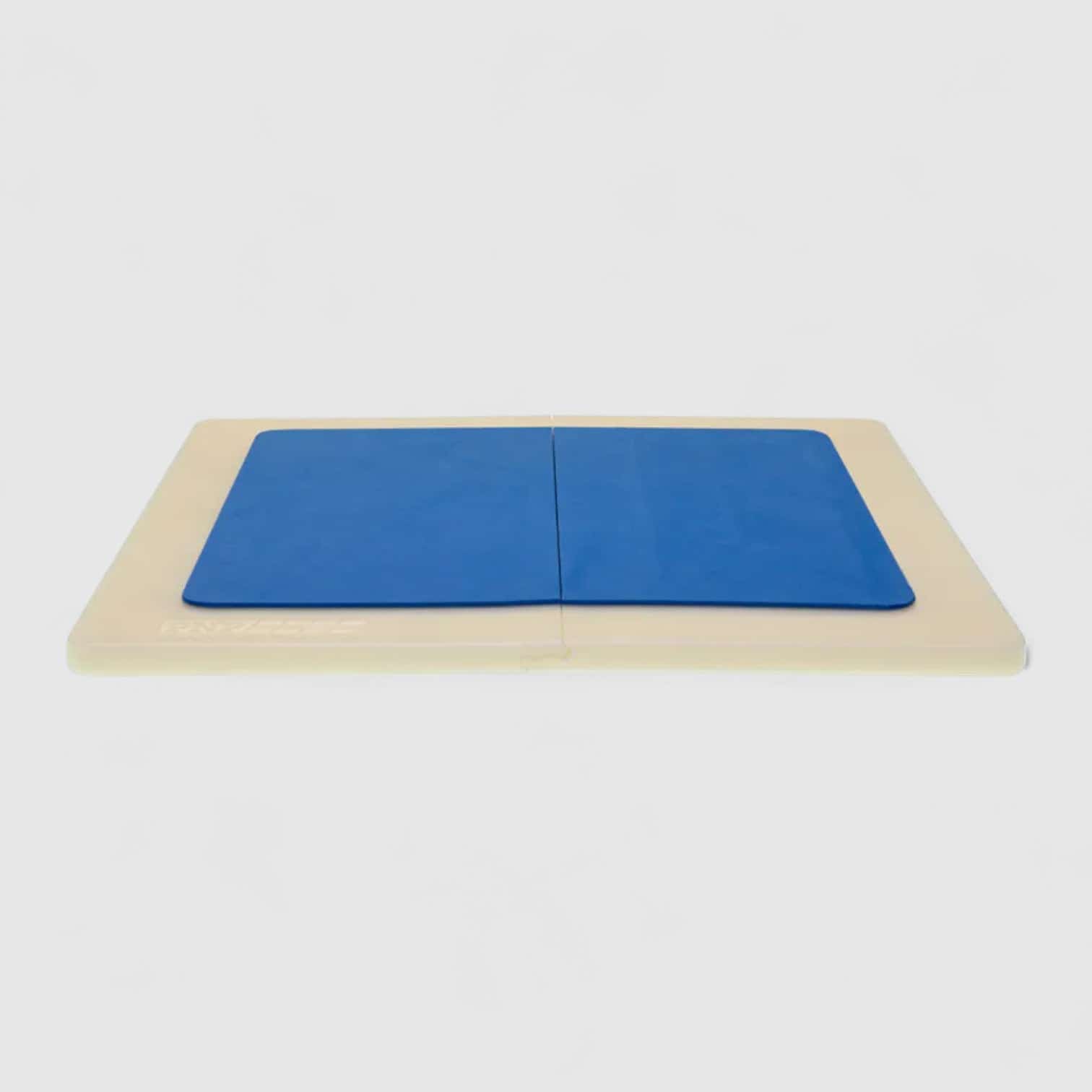
Double the resistance, still with a pad. The bridge from 12.5 to 25 without a pad.
Level 3 – grading
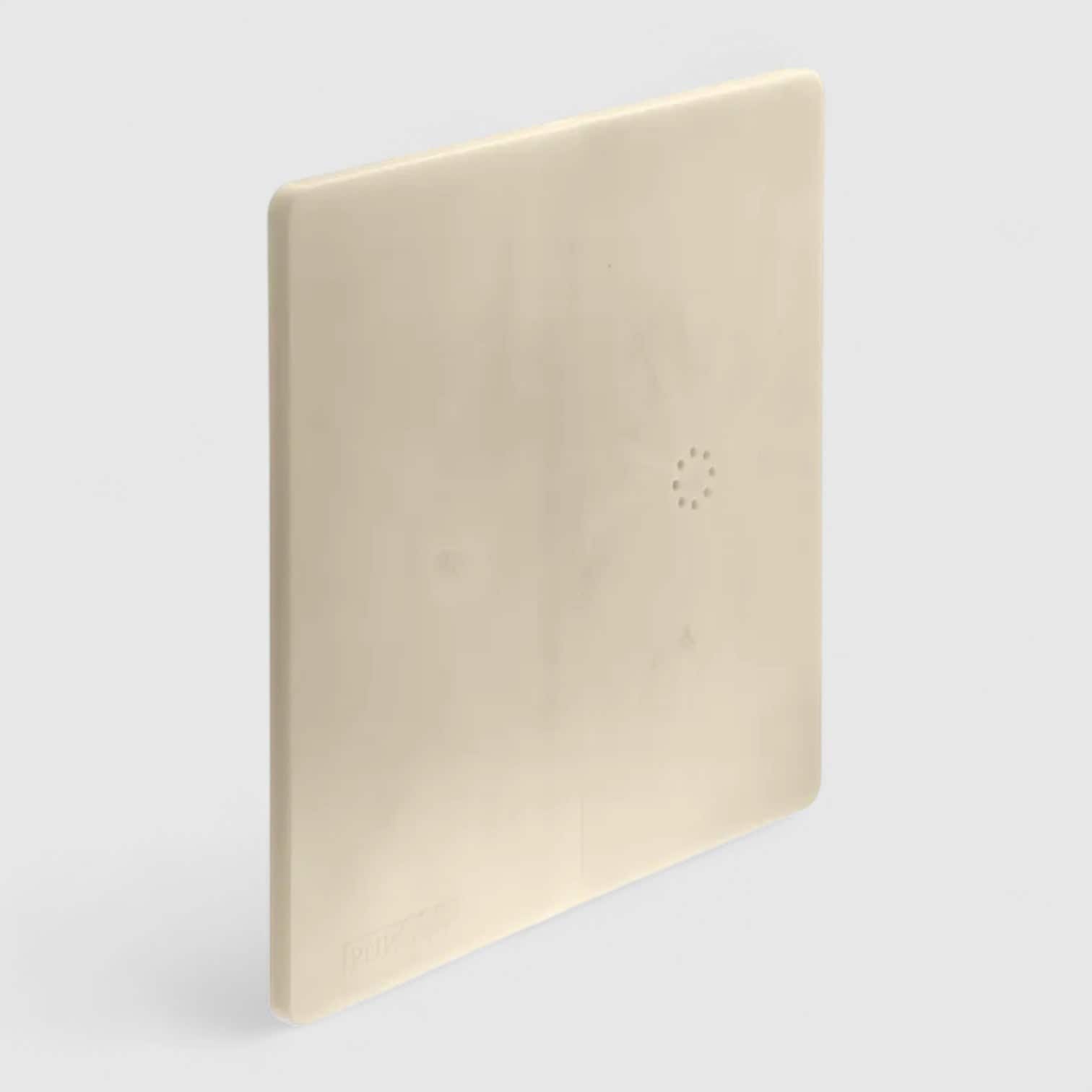
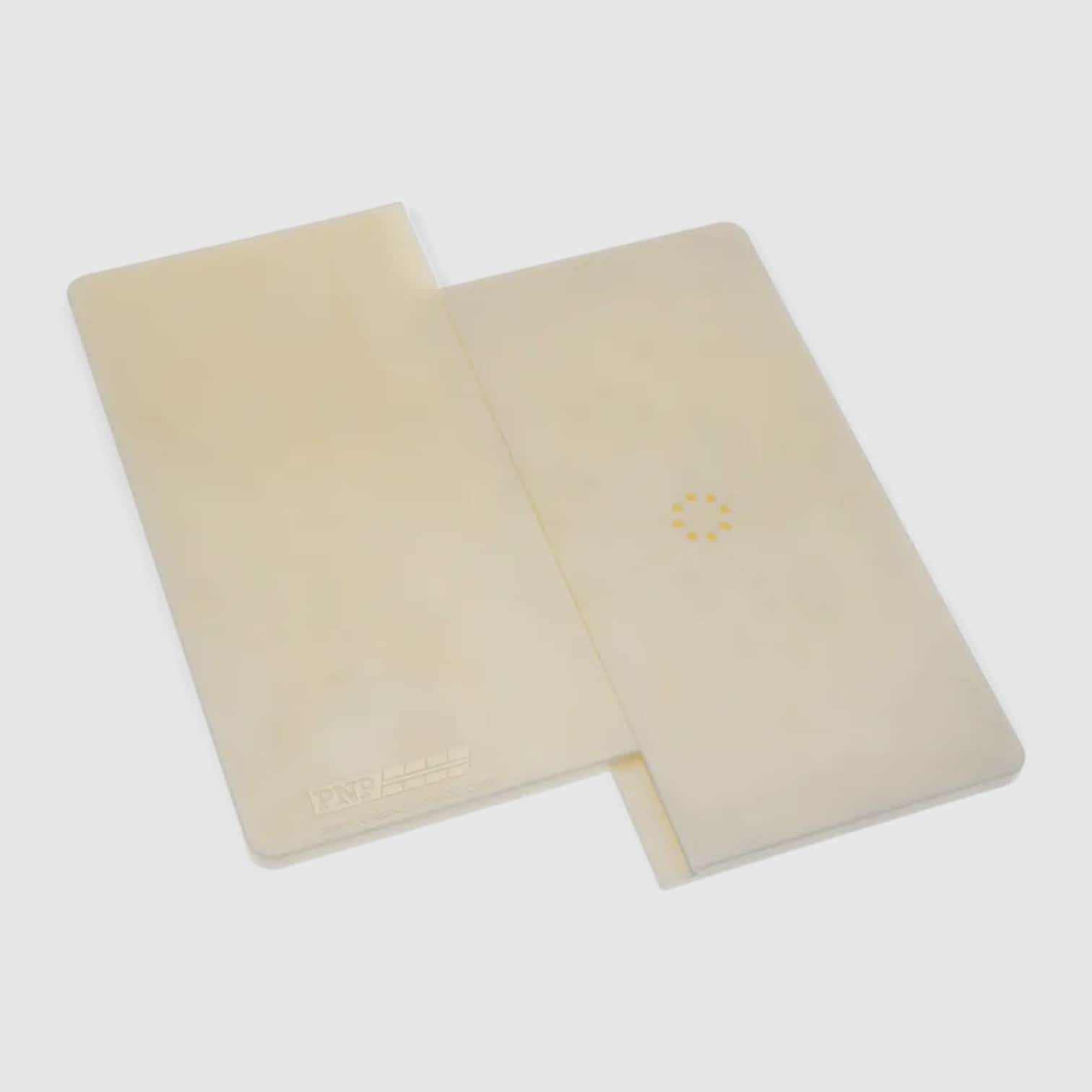
25 ft-lb without a pad. Used at gradings and as the deciding board in competition.
Level 4 – ITF-approved
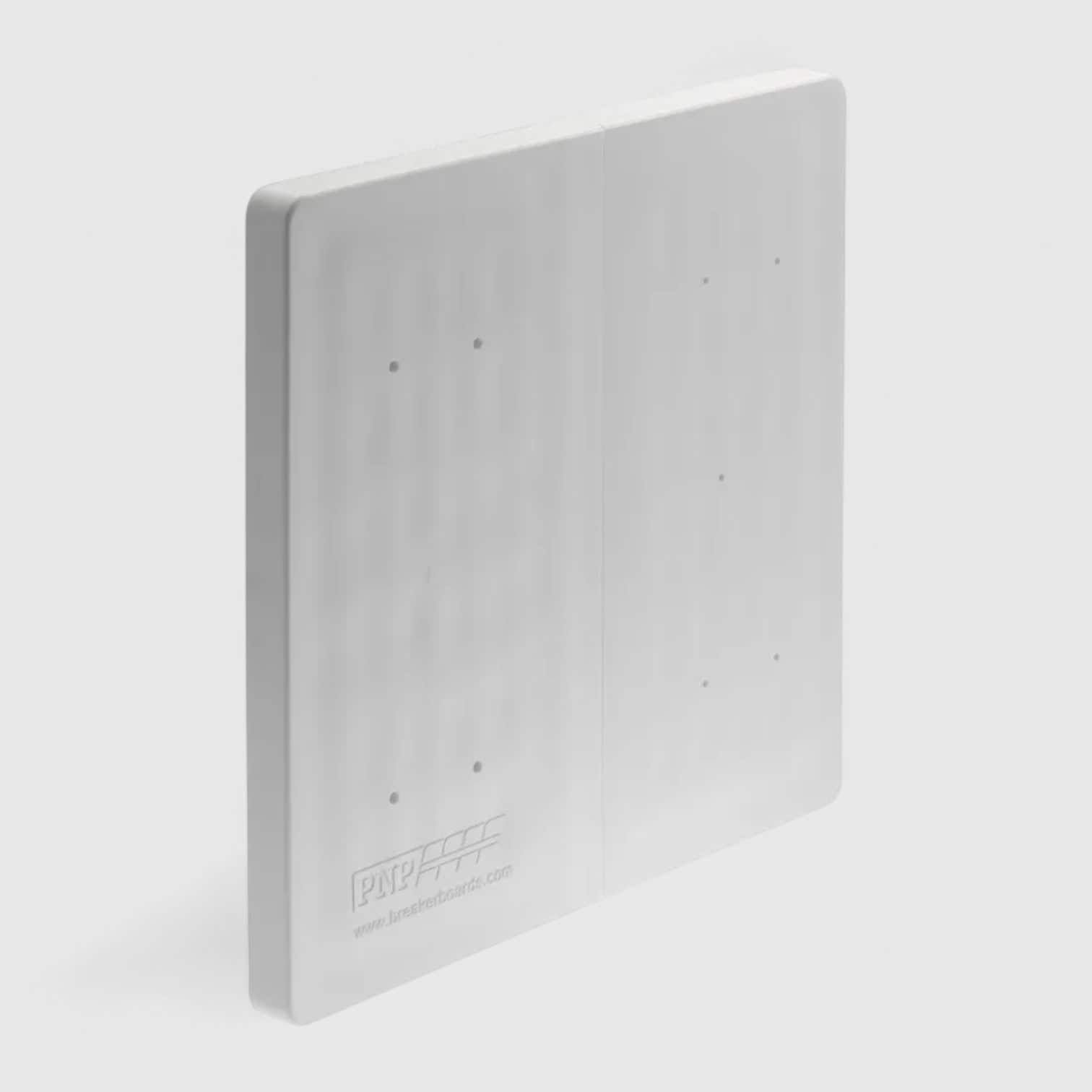
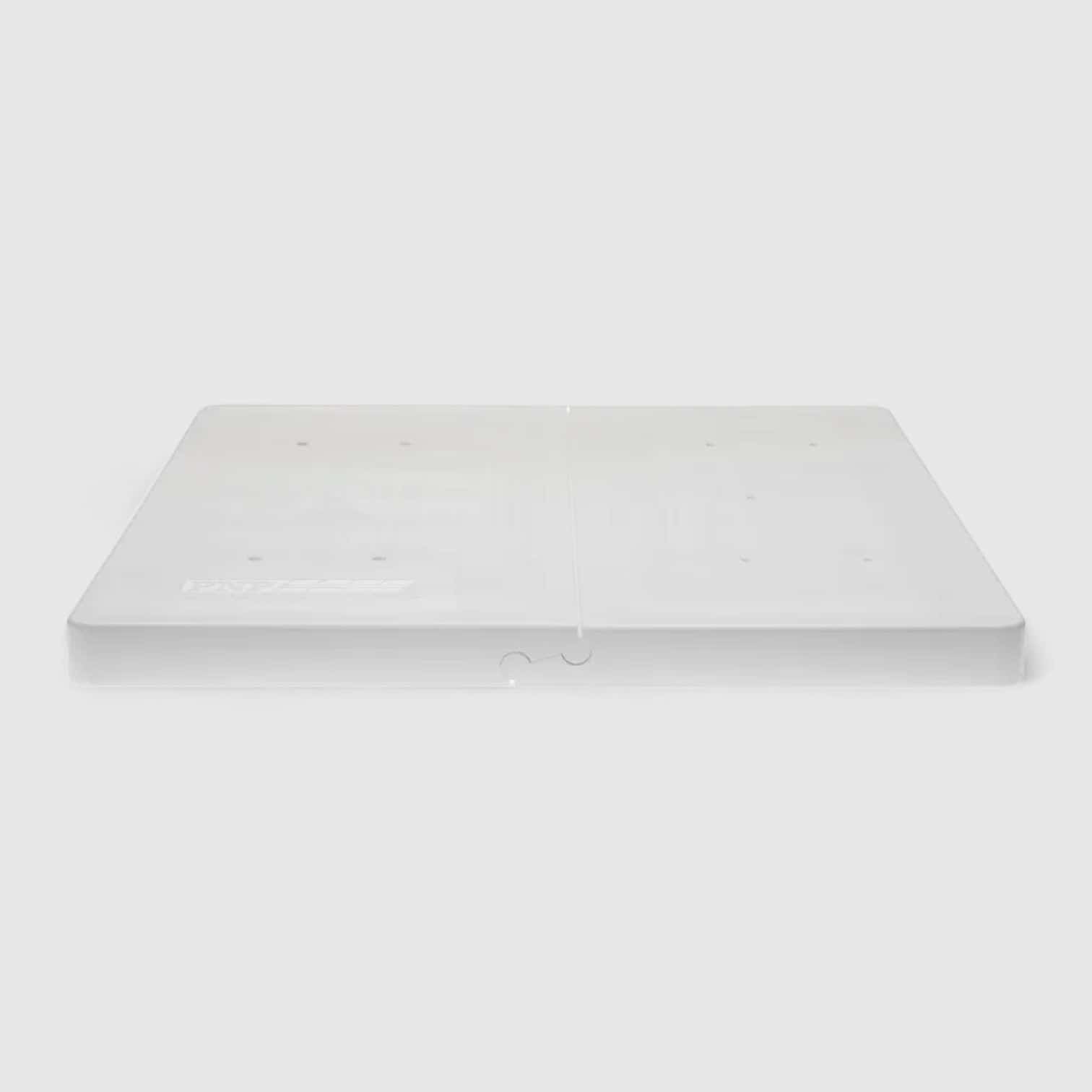
The only ITF-approved board in the series. For advanced athletes, competition and demonstrations.
Level 5 – power breaking
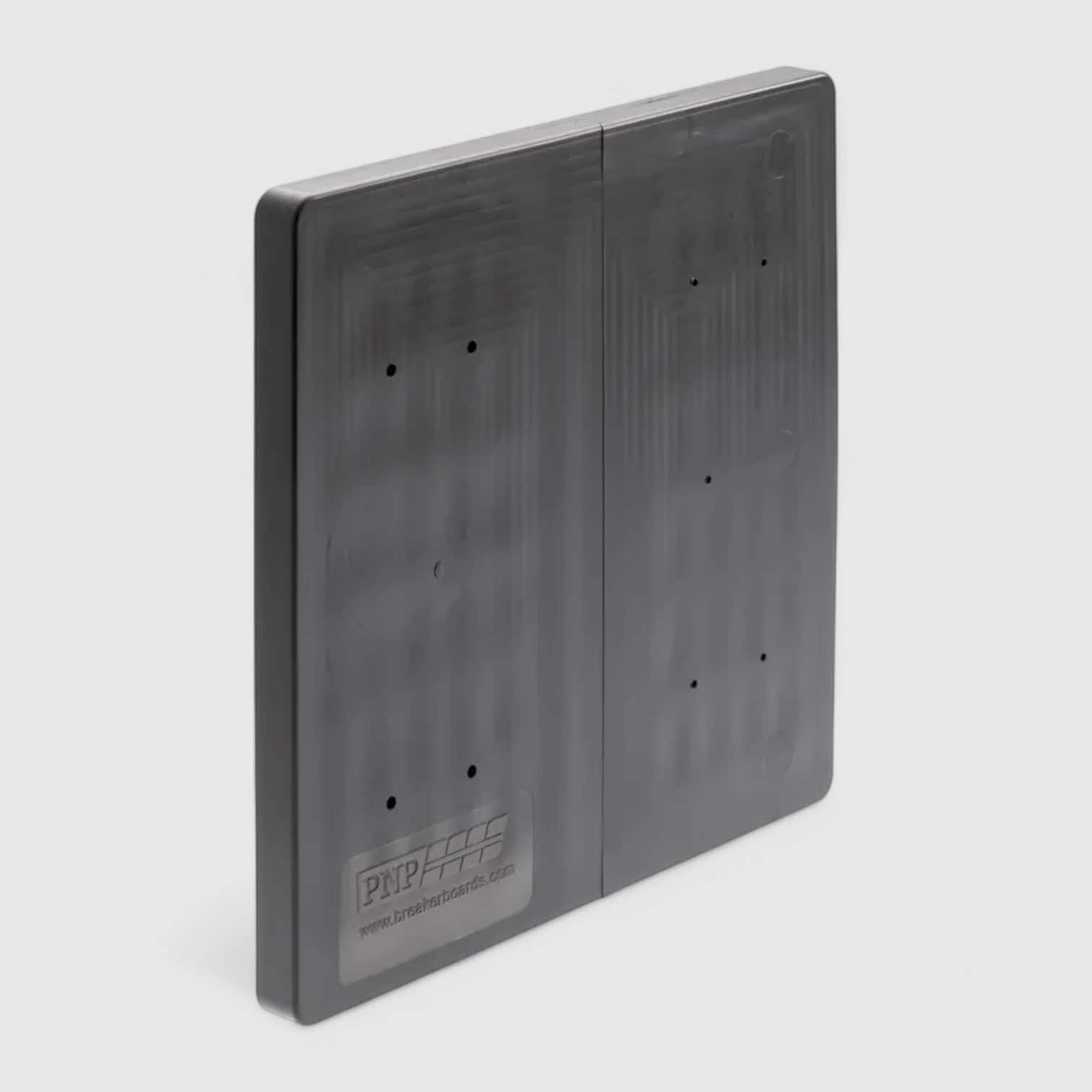
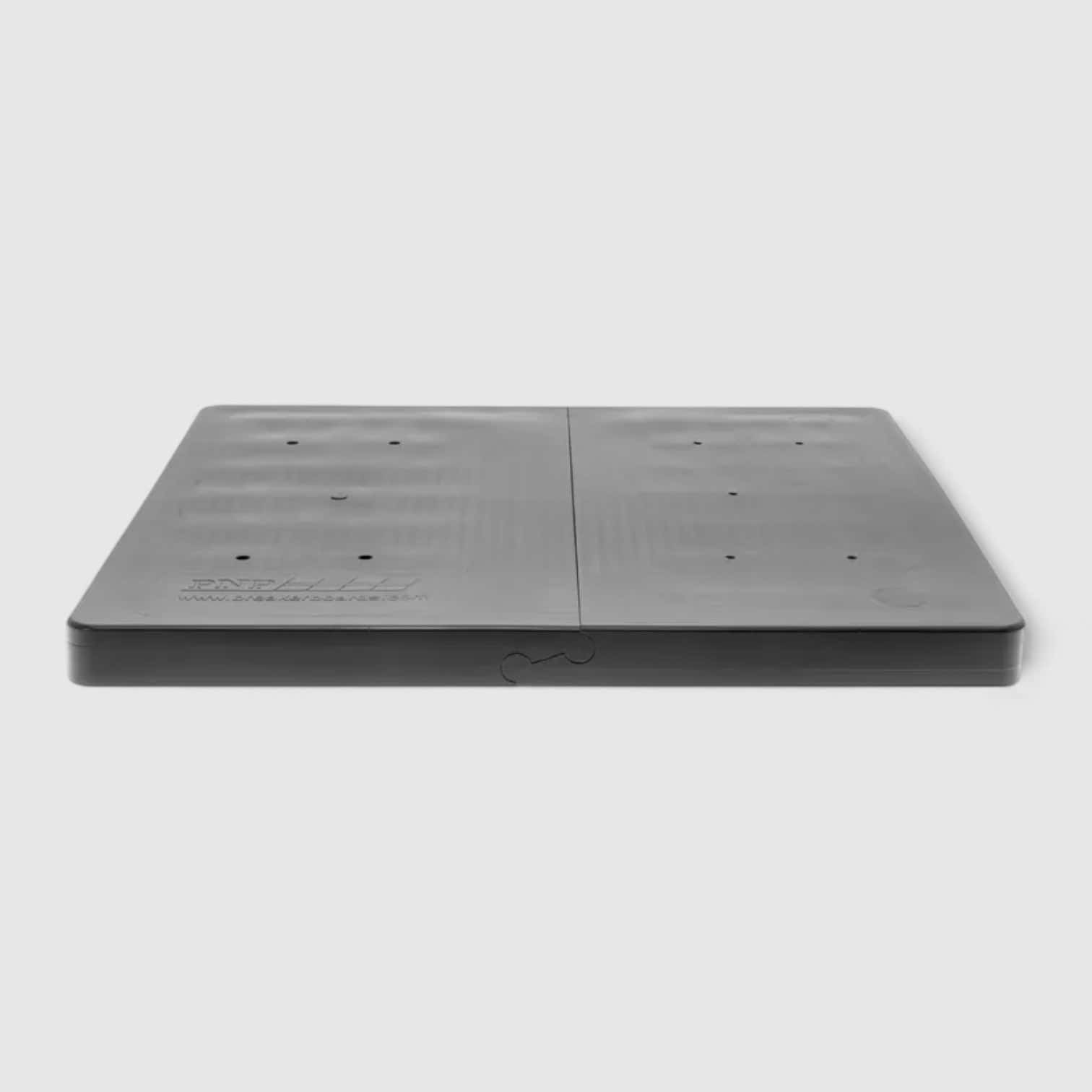
The hardest board in the series. For elite athletes and power breaking – not for beginners.
See all from PNP Breaker Boards
Frequently asked questions
Which breaking board should a child start with?
Level 1 with the yellow pad, 12.5 ft-lb. It is made for children from age 4 and for beginners, and should always be used under the supervision of an instructor.
What is the difference between the two 25 boards?
The resistance is the same. The blue one has a foam pad that cushions the impact, while the natural one has no pad and a slimmer profile, the way the board feels at gradings and in competition.
Which board is ITF-approved?
Only the white 50 board (level 4). The other levels are for training, gradings and demonstrations.
What does ft-lb mean?
Foot-pound, a measure of how much energy it takes to break the board. 12.5 ft-lb is approx. 17 joules, 25 approx. 34 joules, 50 approx. 68 joules and 80 approx. 108 joules.
How long does a board last?
According to the manufacturer, the boards are designed to withstand around 100 successful breaks in normal use, after a short break-in period. Always check that the halves lock properly together before you strike.
Do I need a holder?
A breaking board holder gives a steady target and keeps fingers out of the way. If you do not have a holder, the board must be held at the outer edges by an experienced person.
Ready for the first break – or the next one?
Whether you are buying for the club's children's group or preparing for an ITF competition, you will find the whole series in one place with us. If you are unsure about the level, ask your instructor – or get in touch with us, and we will help you.